Search by topic
- archaeology
- Building of Local Interest
- chapel
- charity
- church
- crime
- dressmaker
- fire
- Great Eastern Railway
- Listed building
- Mapping Relief
- medieval
- oral history
- poverty
- Public House
- Religious House
- Roman
- scholar
- school
- Then and Now
- tudor
- women
- work
- world war one
- world war two
Search by text
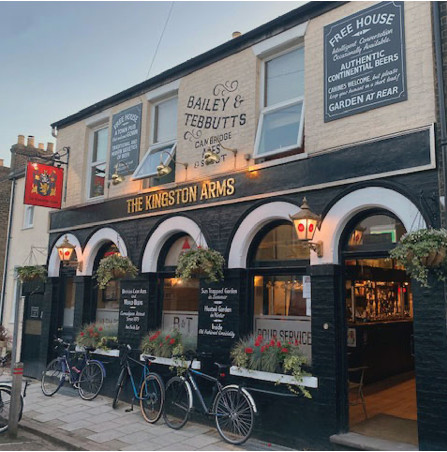 Kingston Arms, Cambridge (thekingstonarms.co.uk)
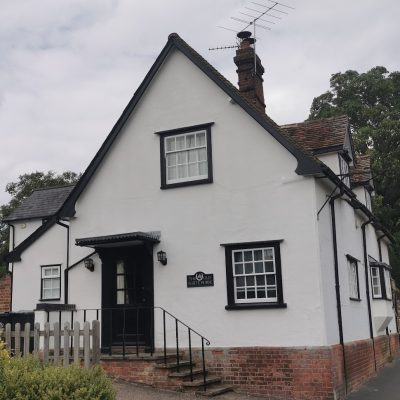
Legacies of Windrush: Kingston Arms, 33 Kingston Street, Cambridge
Legacies of Windrush - The Kingston Arms
Many who have attempted to write the history of the Arms have told it as a tale of its changing ownership, for the hands that ran it shaped its character profoundly. According to its own website, the first incarnation of the Arms was a brewery with an off-licence built by George William Todd from the Crown in Cross Street in 1871–72. However, owing to the rapid rise of Mill Road and its neighbouring streets in the late nineteenth century, Todd soon acquired an on-sales beer licence to serve the growing urban population. He later leased the brewery to James and Caroline Haslop, and legend has it that they renamed the pub the Haslop Arms (although there is no evidence of this!). By the end of the century, following Todd’s death, the brewery was sold to Panton Brewery and subsequently passed down through several generations.
Yet the Arms’ story is not only one of ownership. Over the years, it has been a house of community, warmth, food, laughter, and music. Though tucked away in a corner, the pub is part of a larger shared tradition of Mill Road establishments such as the Midland Tavern (now the Devonshire Arms), Man in the Moon, and the White Swan. It has been said that Albert Gordon, regarded as Cambridge’s first Black landlord, was friends with a gay couple who ran the Kingston Arms in the 1970s. Customers from both pubs often mingled, helping to make the streets of Mill Road a vibrant hub of cosmopolitan life. This cluster of pubs became an iconic center of Caribbean and Black culture.
With the Midland Tavern reportedly becoming the first pub in the country to obtain a dance licence in 1970, the sounds of reggae and soul soon lit up the route to the train station in the latter half of the twentieth century. Victor Ramsey, one of the Windrush Elders and a pioneer of steel band music in Cambridge, fondly recalls the Black music scene along Mill Road, of which the Kingston Arms was an integral part. As the first to introduce the steel drum to Cambridge, Ramsey performed across colleges, May Balls, and pubs in the 1960s and 70s. When asked where Black people used to gather, he recalled:
“There was a Labour Club on Norfolk Terrace—it’s still there, Norfolk Street, init. There was a bit of a splinter group, the Man on the Moon, yeah, they started having some going there. And then there was one across the road, down from the Midland Tavern, Devonshire Road — just across the road… I used to go there.”
While referring, perhaps, to the owner of the Kingston Arms, Ramsey added, “Yes, he started playing, he started having music — Black music — in there.”
Although the electric atmosphere of the 1960s and 70s is no longer to be found, residents of Cambridge continue to remember the streets of Mill Road as iconic centers of music, dance, and culture. Though the Kingston Arms closed during the pandemic, it reopened in 2023 after rebranding while maintaining its traditional roots. In recognition of its enduring commitment to community and serving quality beer, the pub has been awarded the CAMRA Pub of the Year Award 2025.
Sources:
https://thekingstonarms.co.uk/
https://davidjesudason.substack.com/p/the-midland-tavern-the-joyful-world
Cambridge & District Branch Newsletter Issue 402 March 2023, https://www.cambridge-camra.org.uk/wp-content/uploads/pdf/ale402.pdf
https://www.cambridge-news.co.uk/news/cambridge-news/cambridges-first-black-pub-landlord-19033127
For more information:
Visit the Legacies of Windrush Exhibition at the Museum of Cambridge
Projects
Contribute
Do you have any information about the people or places in this article? If so, then please let us know using the Contact page or by emailing capturingcambridge@
Licence
This work is licensed under CC BY-NC-SA 4.0