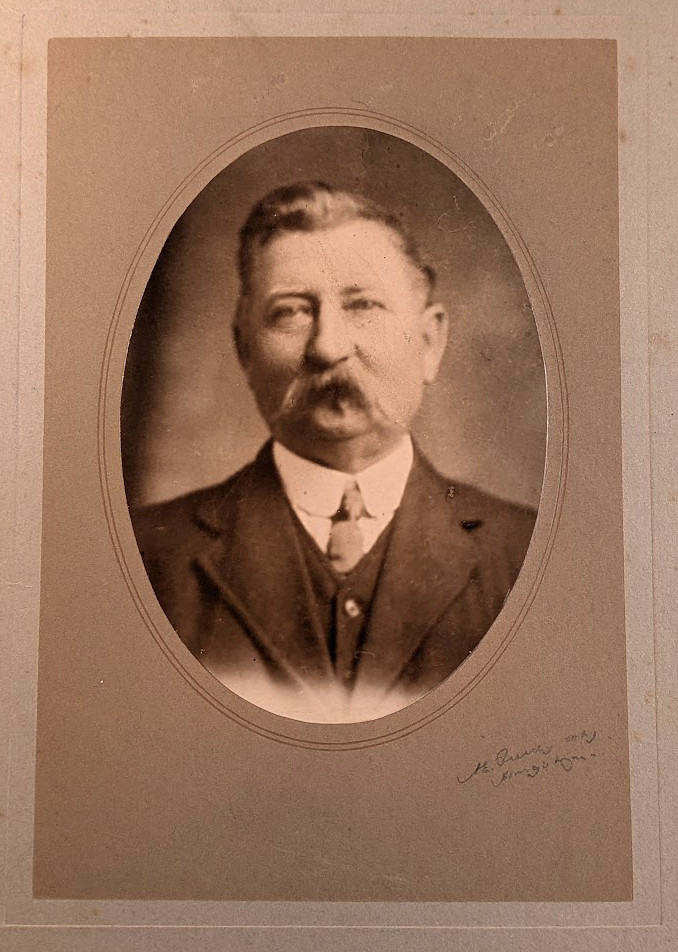
Alexander Stewart Turbett
Locomotive Works, Melton Constable
History of Locomotive Works, Melton Constable
Alexander Stewart Turbett, born Edinburgh, was in charge of the railways works at Melton Constable, Norfolk.
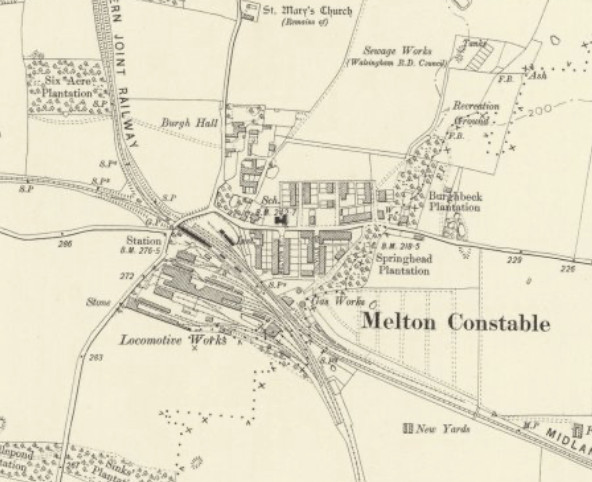
Melton Constable OS 1901
He was the father of nine children, six boys and three girls, of whom Louisa Turbett was the youngest.
The family lived at Chudleigh in the main street of the town.
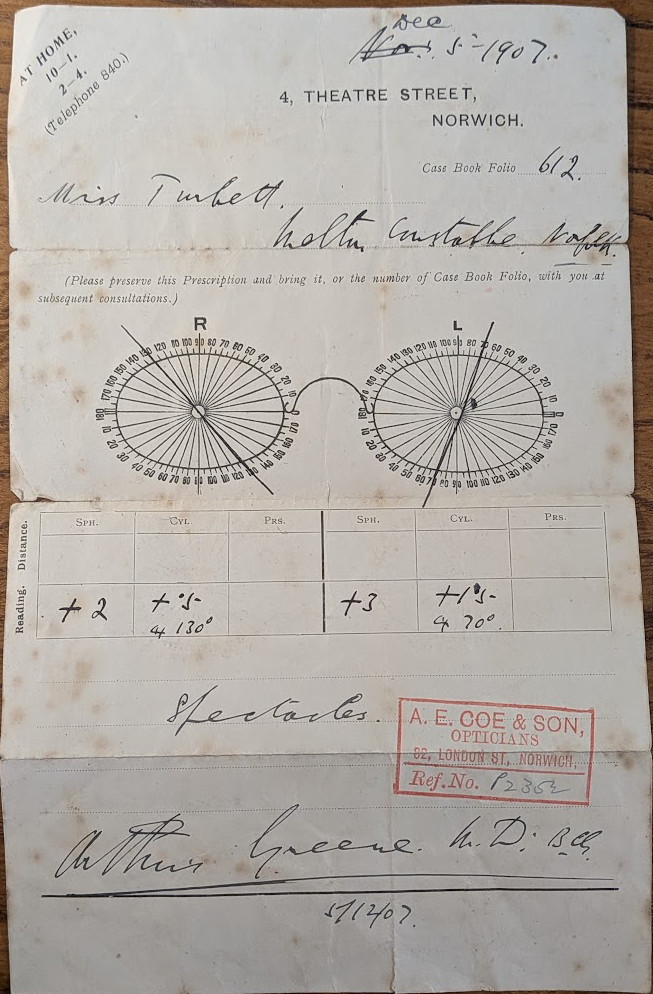
Louisa Turbett spectacle prescription, 1907
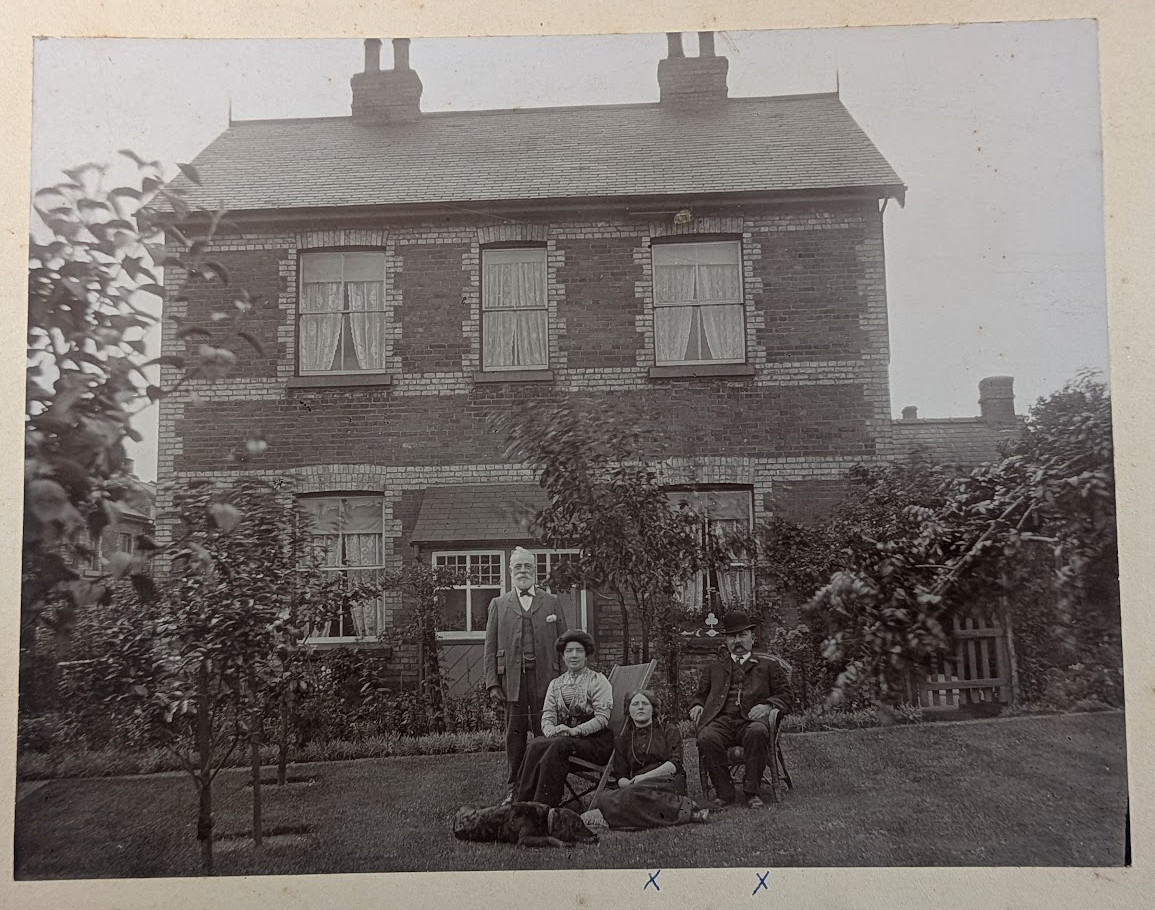
The Turbett family at Chudleigh, Melton Constable, date unknown.
1911
Alexander Stewart Turbett, 57, widower, railway locomotive Day Foreman, b Edinburgh
Henry Bull, boarder, 67, railway locomotive night foreman, b Derbyshire
Watson Turbett, 20, engineers apprentice, b King’s Lynn
Louisa Turbett, 19, b King’s Lynn
The photo shows Alexander Turbett seated, Louisa, his daughter, and another couple, a great aunt and uncle.
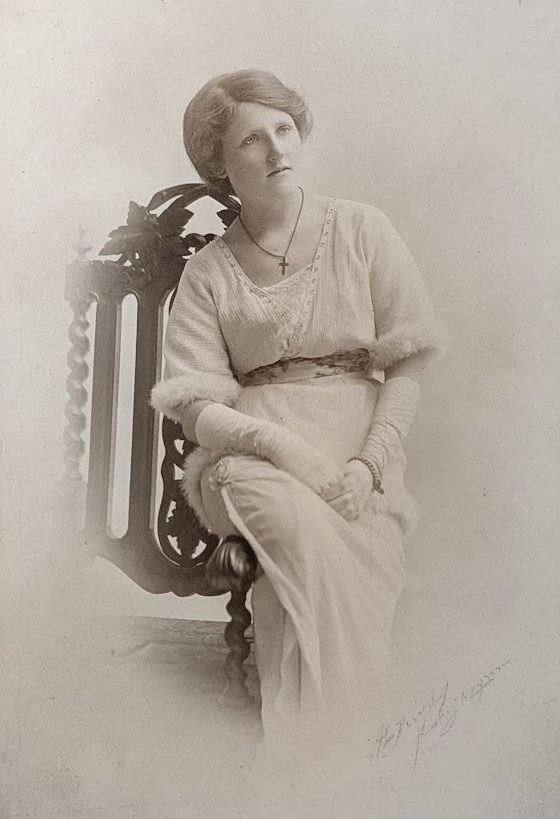
Louisa Turbett circa 1914 at Melton Constable
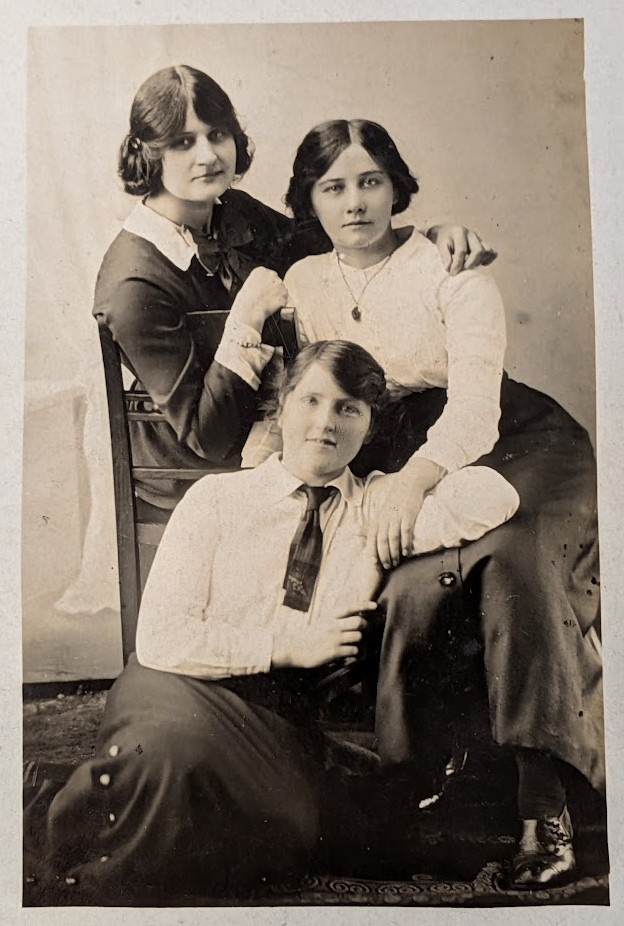
Louisa Turbett date unknown
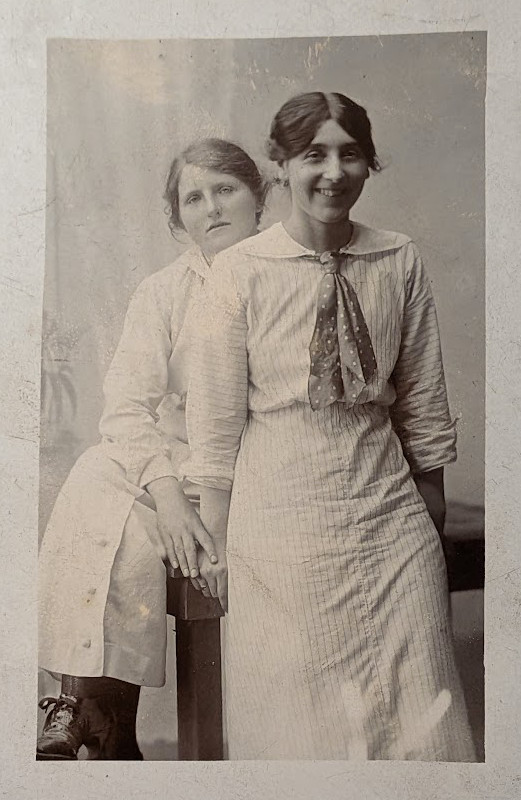
Louisa Turbett date unknown
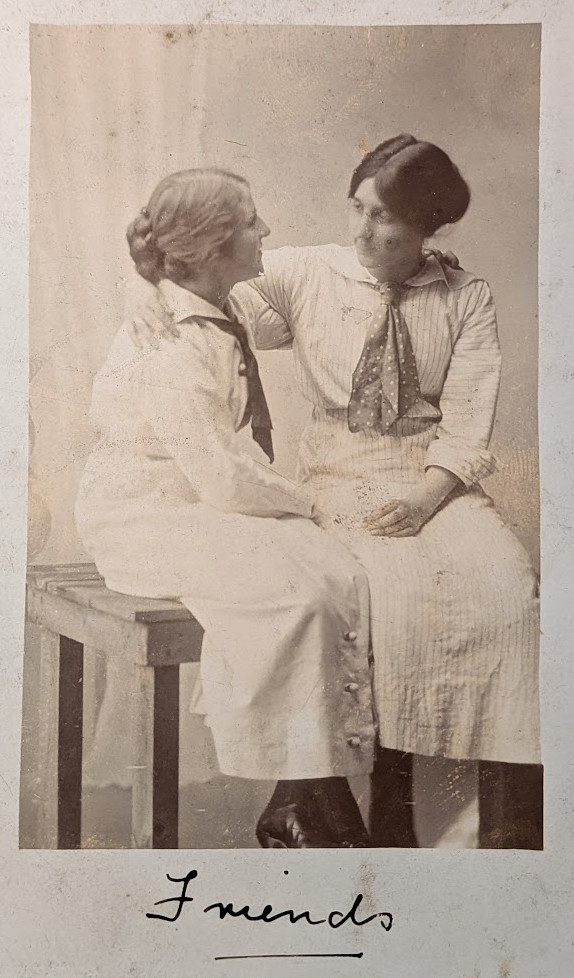
Louisa Turbett, date unknown
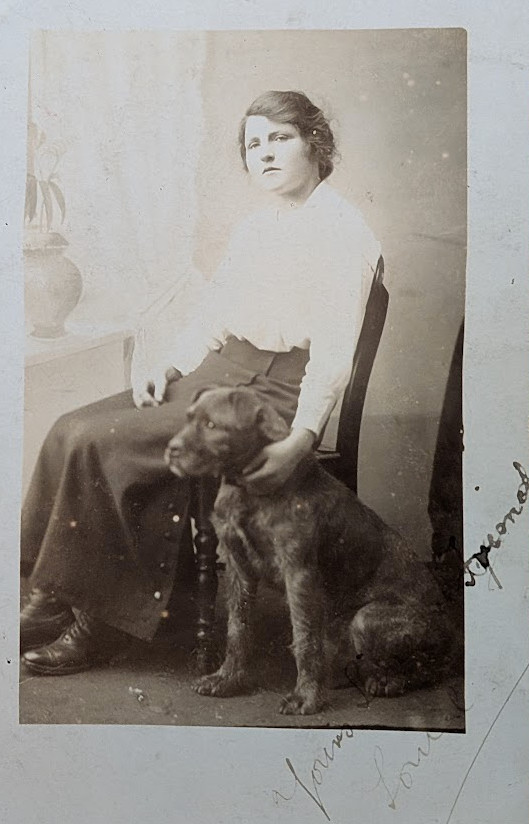
Louisa Turbett, pre 1914
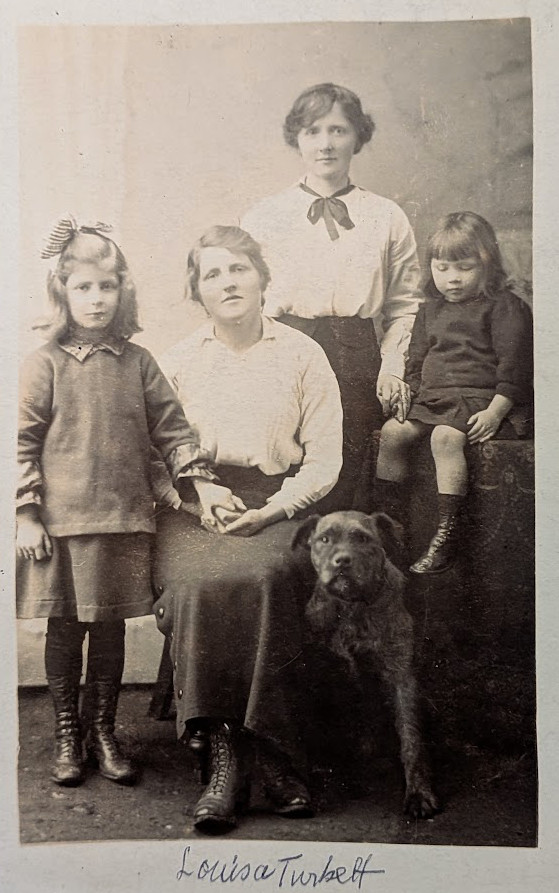
Louisa and Christina Turbett (plus two young children and dog) 1914
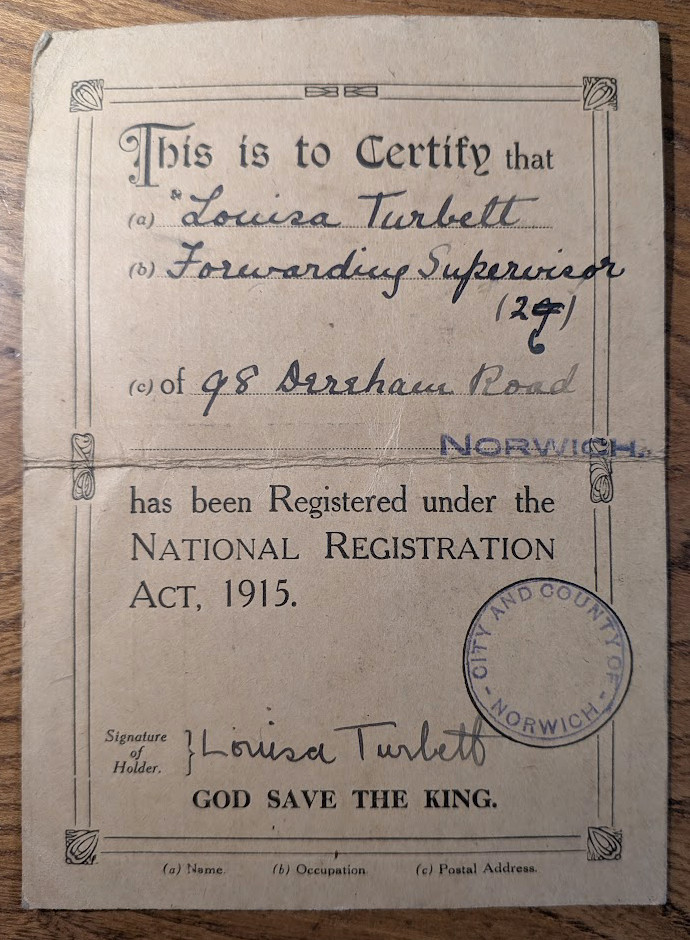
Louisa Turbett registration 1915
Louisa, then at 98 Dereham Road, Norwich was registered. AI notes:
This is Louisa Turbett’s First World War national registration certificate. The City and County of Norwich stamp shows that the local authority registered her under the National Registration Act 1915. The certificate records her address as 98 Dereham Road, Norwich, and her occupation as “Forwarding Supervisor”, a title that likely involved overseeing the dispatch or onward transport of goods. Her employer isn’t named. National Registration Day was 15 August 1915. The government required most men and women aged 15 to 65 to register so it could identify the people and skills available for the war effort. The register helped the government plan wartime staffing and later administer military conscription. Louisa’s certificate was her proof of registration as a civilian. For family history, its value is that it puts Louisa at a specific Norwich address and records her holding a supervisory job during the war. It also preserves her signature. Most of the original registration forms were destroyed, so a certificate kept by the family can preserve details that are otherwise difficult to recover.
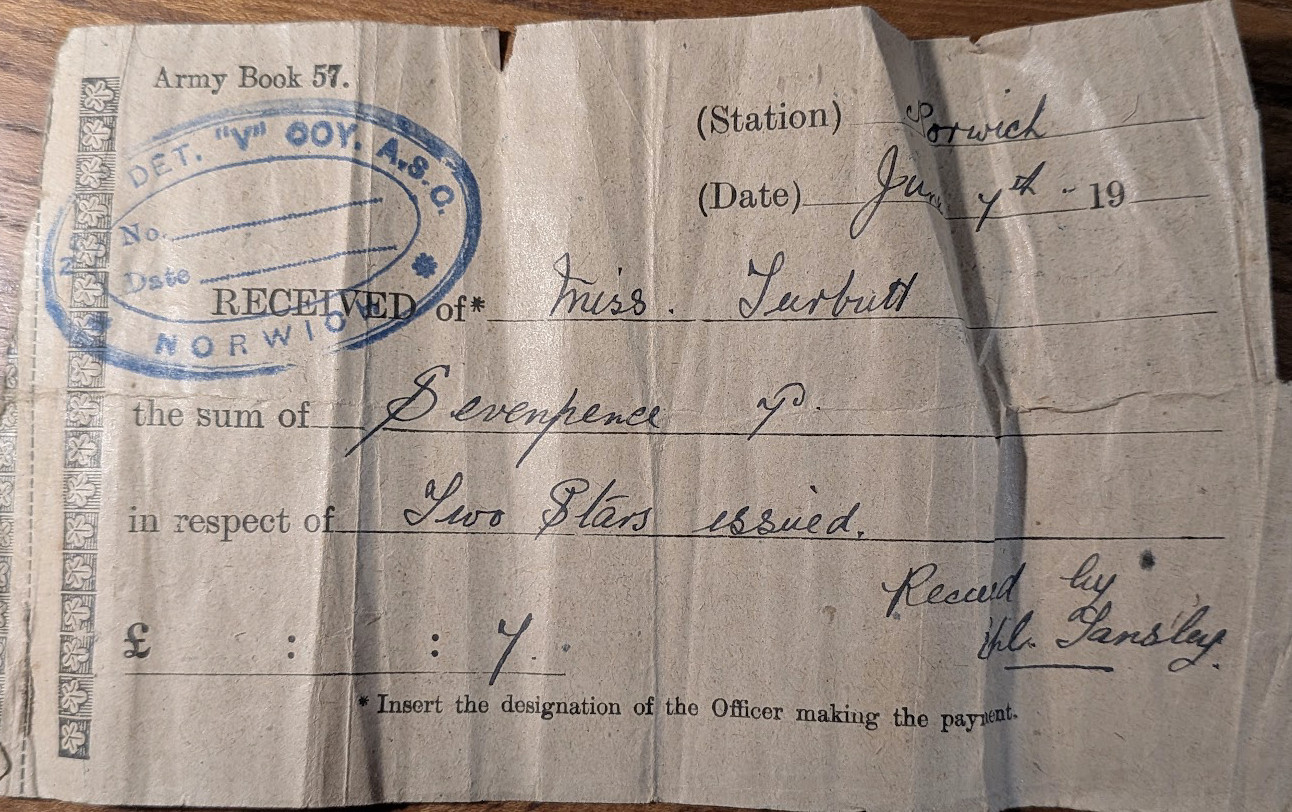
Louise Turbett receipt for payment for two starts
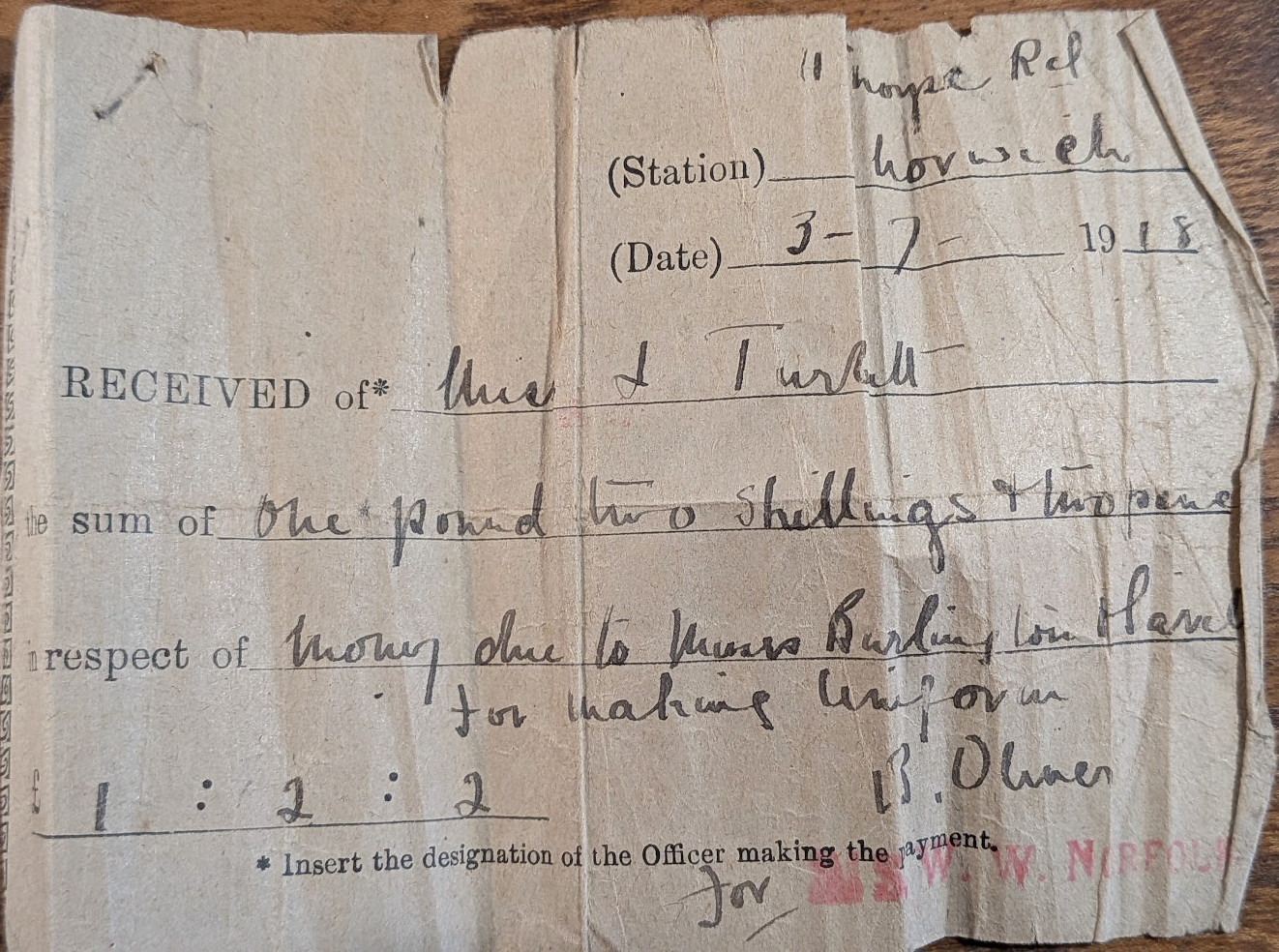
Bill for cost of Forage Army uniform, £1 2s 2d, 3rd July 1918.
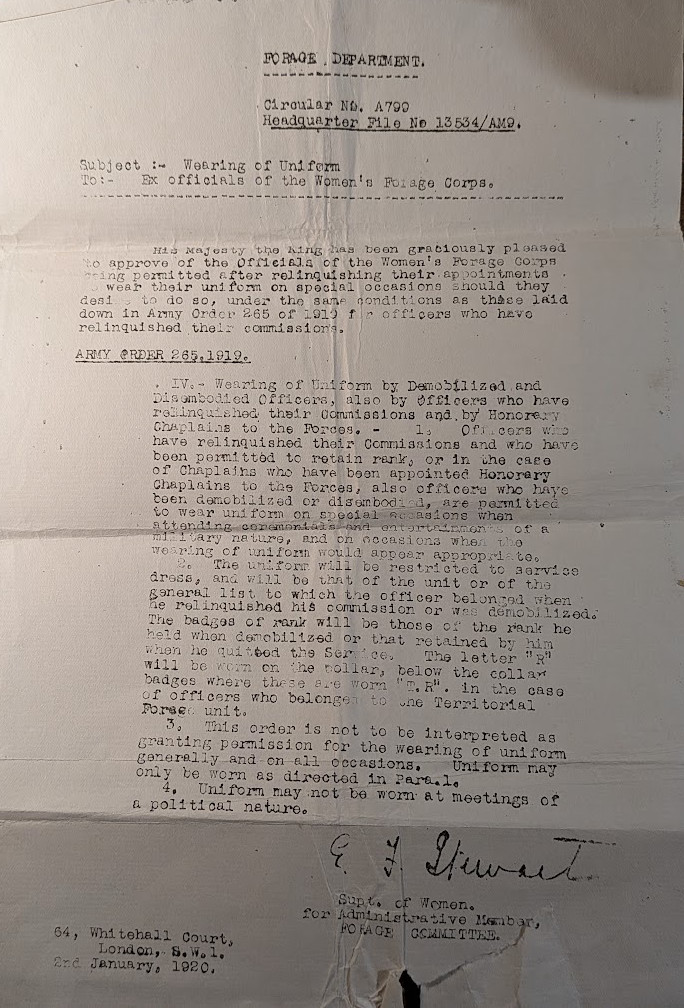
Instructions for wearing of uniforms, 1920
FORAGE DEPARTMENT.
Circular No. A790
Headquarter File No 13534/AM2.
Subject:– Wearing of Uniform
To:– Ex officials of the Women’s Forage Corps.
His Majesty the King has been graciously pleased to approve of the Officials of the Women’s Forage Corps being permitted after relinquishing their appointments to wear their uniform on special occasions should they desire to do so, under the same conditions as those laid down in Army Order 265 of 1919 for officers who have relinquished their commissions.
ARMY ORDER 265, 1919.
IV.—Wearing of Uniform by Demobilized and Disembodied Officers, also by Officers who have relinquished their Commissions and by Honorary Chaplains to the Forces.—
Officers who have relinquished their Commissions and who have been permitted to retain rank, or in the case of Chaplains who have been appointed Honorary Chaplains to the Forces, also officers who have been demobilized or disembodied, are permitted to wear uniform on special occasions when attending ceremonies and entertainments of a military nature, and on occasions when the wearing of uniform would appear appropriate.
The uniform will be restricted to service dress, and will be that of the unit or of the general list to which the officer belonged when he relinquished his commission or was demobilized. The badges of rank will be those of the rank he held when demobilized or that retained by him when he quitted the Service. The letter “R” will be worn on the collar, below the collar badges where these are worn “T.F.” in the case of officers who belonged to the Territorial Force unit.
This order is not to be interpreted as granting permission for the wearing of uniform generally and on all occasions. Uniform may only be worn as directed in Para. 1.
Uniform may not be worn at meetings of a political nature.
[Signed] E. [J.?] Stewart
Supt. of Women.
for Administrative Member,
FORAGE COMMITTEE.
64, Whitehall Court,
London, S.W.1.
2nd January, 1920.
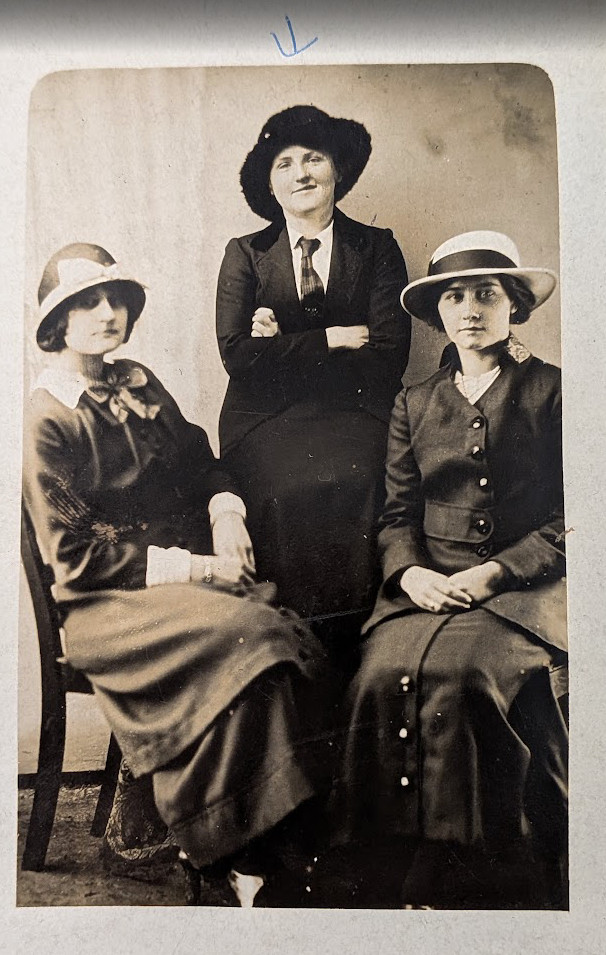
Louisa Banner and two others (Enid Mills?)
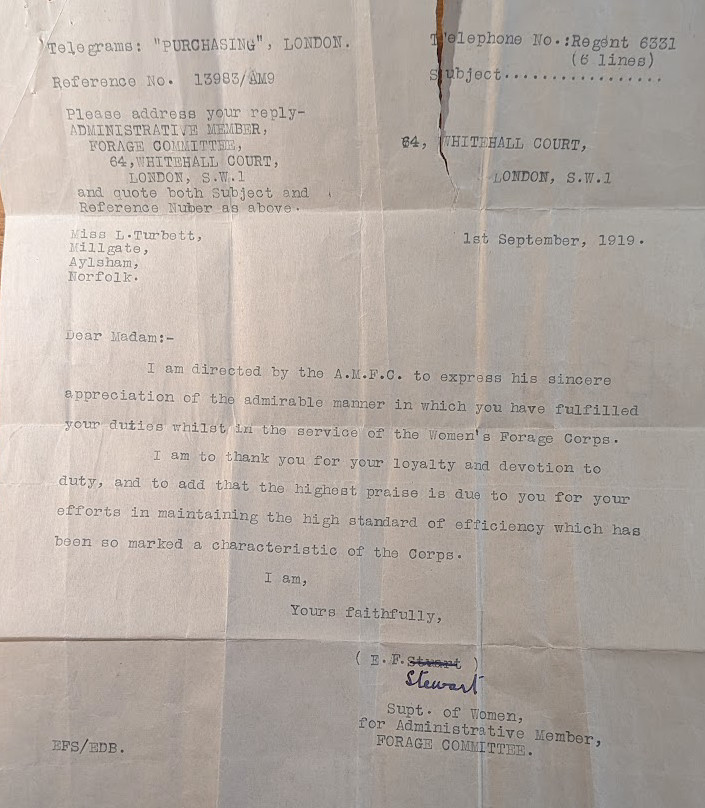
Louise Turbett – letter of thanks for service in Women’s Forage Corps
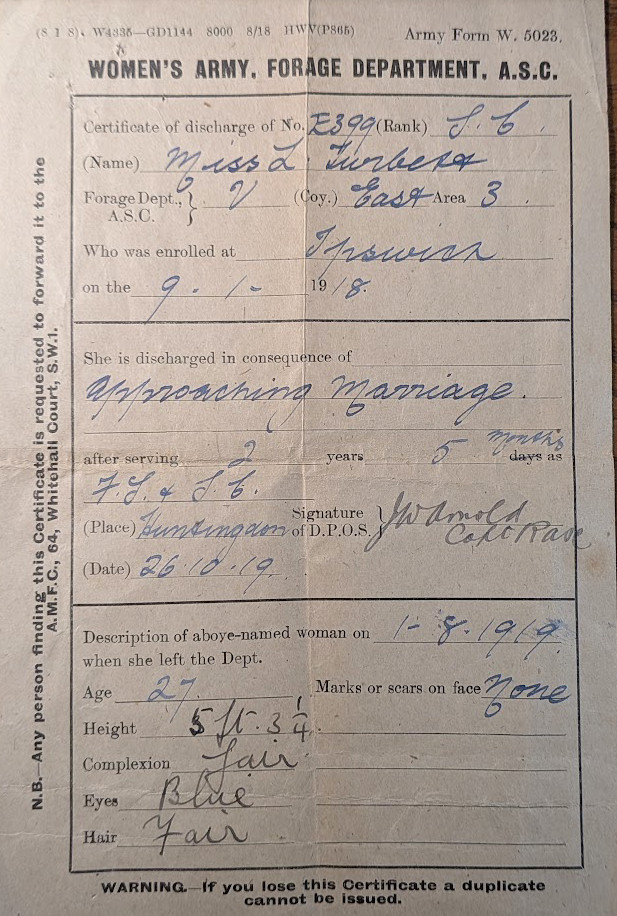
Louisa Turbett discharge from Women’s Army Forage Department 1918
On her marriage in 1919 to William Banner, Louisa seems to have moved to Wymondham.
Projects
Contribute
Do you have any information about the people or places in this article? If so, then please
let us know using the Contact page or by
emailing capturingcambridge@
Licence
The text on this page is licensed under CC BY-NC-SA 4.0


 .