Search by topic
- archaeology
- Building of Local Interest
- chapel
- charity
- church
- crime
- dressmaker
- fire
- Great Eastern Railway
- Listed building
- Mapping Relief
- medieval
- oral history
- poverty
- Public House
- Religious House
- Roman
- scholar
- school
- Then and Now
- tudor
- women
- work
- world war one
- world war two
Search by text
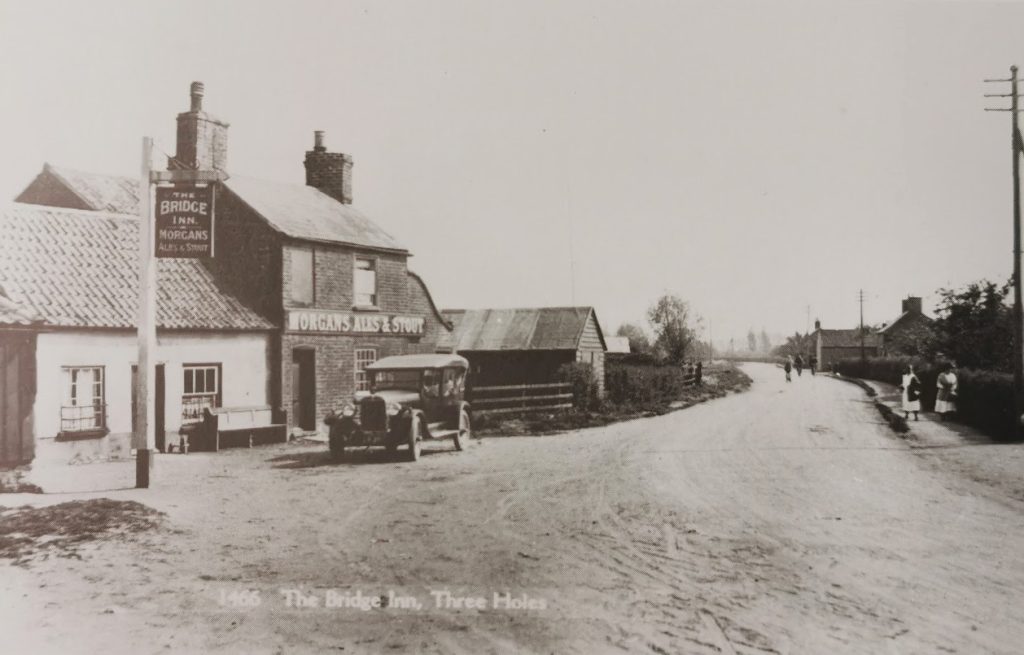 The Bridge Inn, Three Holes, Upwell c1920s
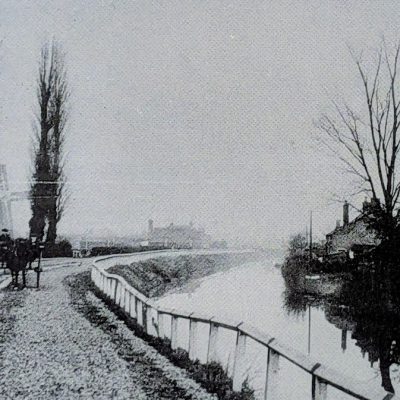
Three Holes, Upwell
History of Three Holes
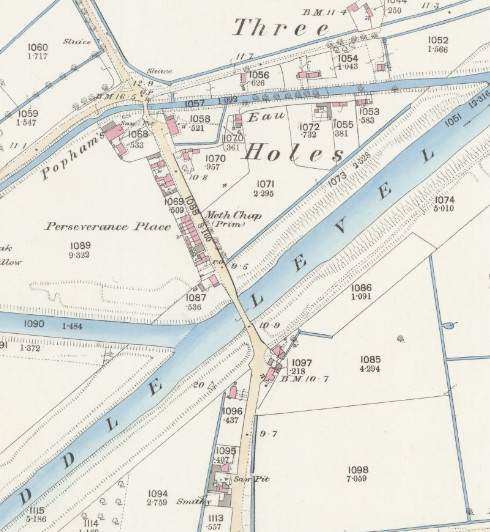
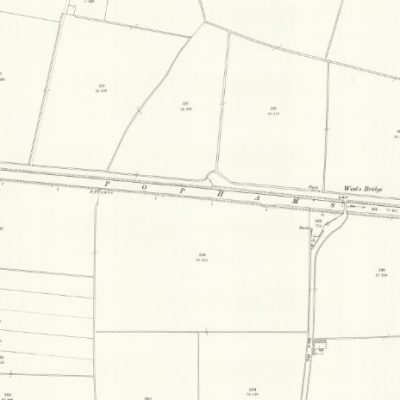
Three Holes, Upwell OS 1885
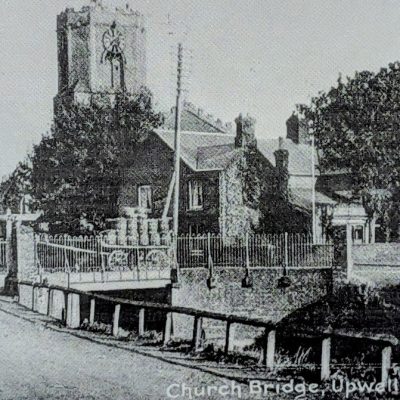
The hamlet is named after the shape of the bridge over the Sixteenfoot Drain. Built in 1610, it has three arches eaah 8ft broad.
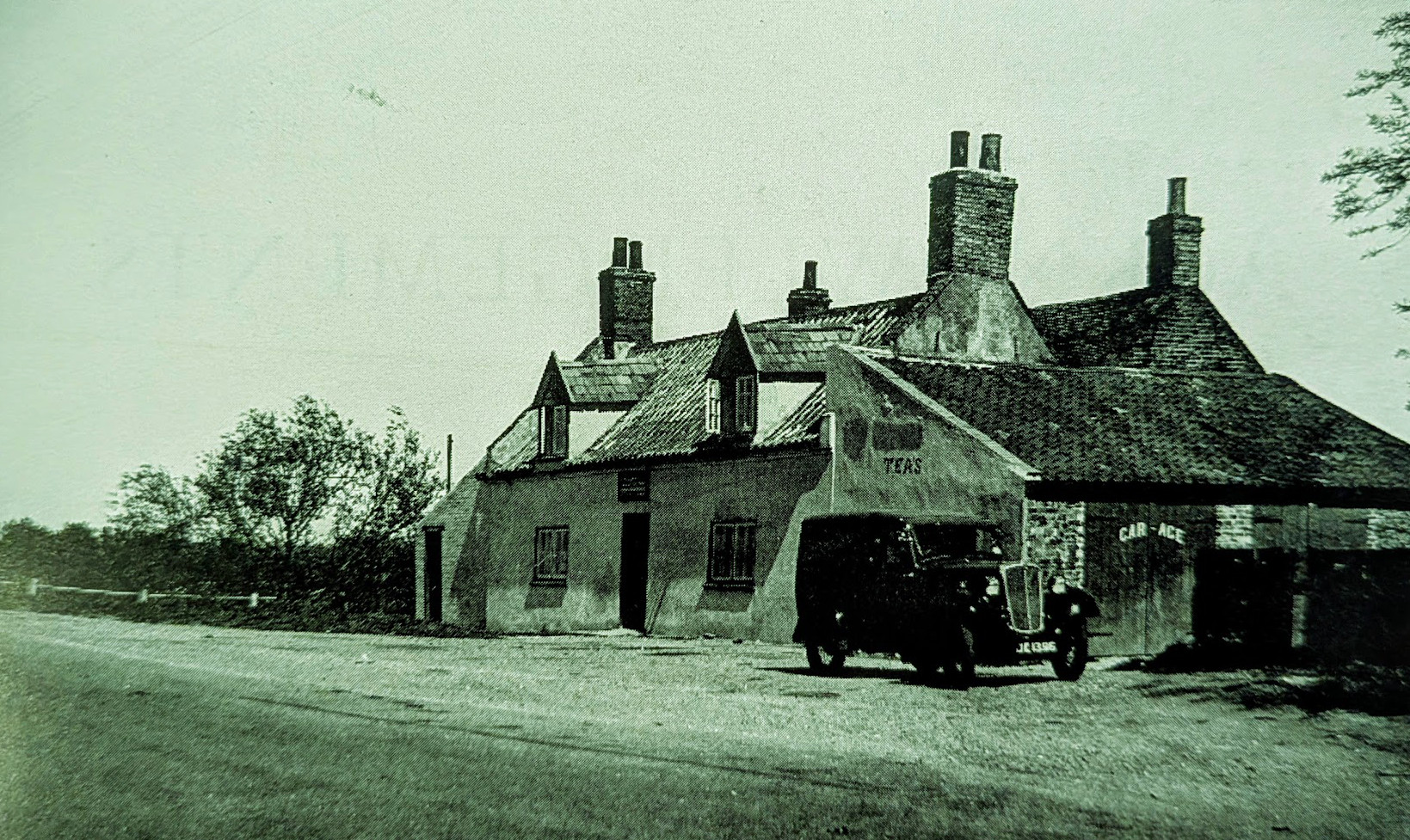
The Red Hart, Three Holes c1930
In the 1920s the landlord was Robert Chapman.
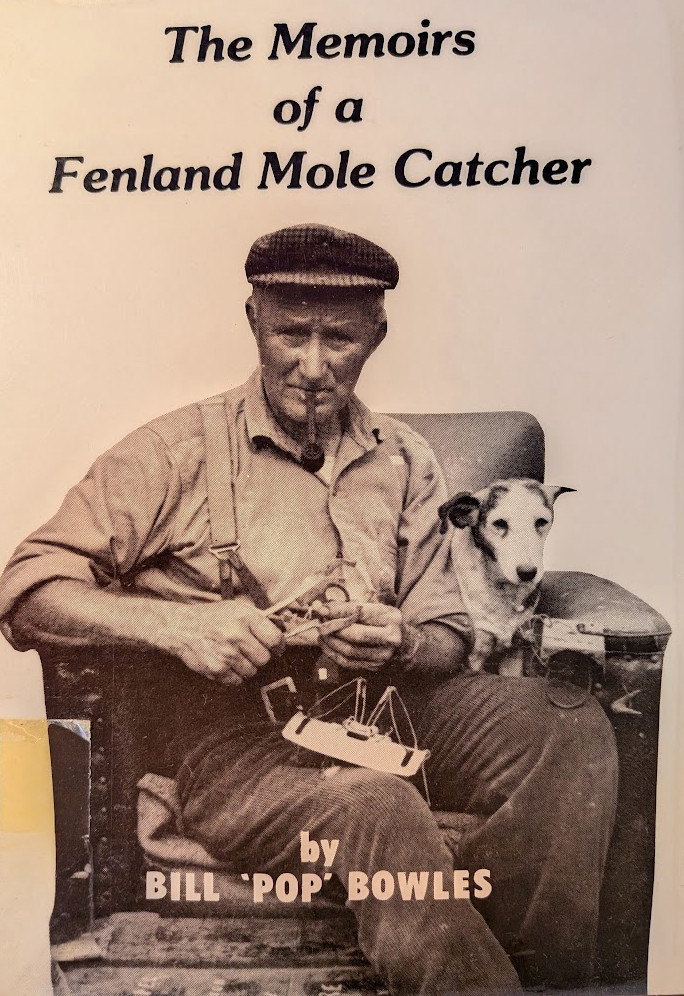
Autobiography of Bill Bowles, Mole Catcher, Three Holes
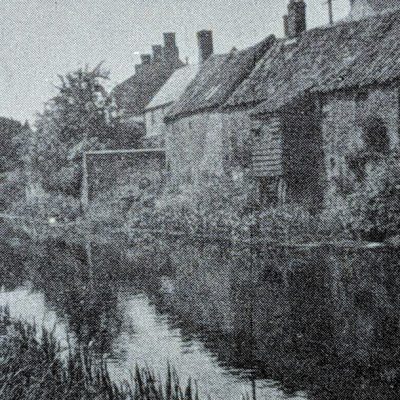
Bill ‘Pop’ Bowles published his autobiography in 1986. he was born in 1911 and describes the family living in a little black cottage in Three Holes by the river bank. Grandfather was the butcher and baker, and his father was a fruit grower. In order to make a bit more money his father would also catch vermin – rats and rabbits.
Bill took to catching moles when he realised that this also brought a profit, 1d a mole skin. Just after WWI mole catchers were known as ‘Missen.’ They were secretive about their methods but Bill would watch them closely.
When he started catching moles his mother would take them to Wisbech to sell along with the rabbit skins his father had caught.
In the 1920s the family moved to Emneth. They grew raspberries but it cost £6 to have them picked and they sold at £4 a ton so lost money.
Bill then worked as a horse keeper at Terrington before taking on a small-holding at Flaggrass Hill near March. During the 1930s he was taught by Ernie Garner, one of the best mole catchers in the country. As a result Bill took on responsibility for an areas of about 7,000 acres for which he was paid £7 per month.
Projects
Contribute
Do you have any information about the people or places in this article? If so, then please let us know using the Contact page or by emailing capturingcambridge@
Licence
This work is licensed under CC BY-NC-SA 4.0