Search by topic
- archaeology
- Building of Local Interest
- chapel
- charity
- church
- crime
- dressmaker
- fire
- Great Eastern Railway
- Listed building
- Mapping Relief
- medieval
- oral history
- poverty
- Public House
- Religious House
- Roman
- scholar
- school
- Then and Now
- tudor
- women
- work
- world war one
- world war two
Search by text
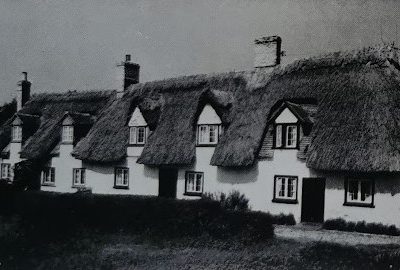
 Nine Chimneys house after restoration, 1930 (photo W M Palmer) (Cambridgeshire Collection)
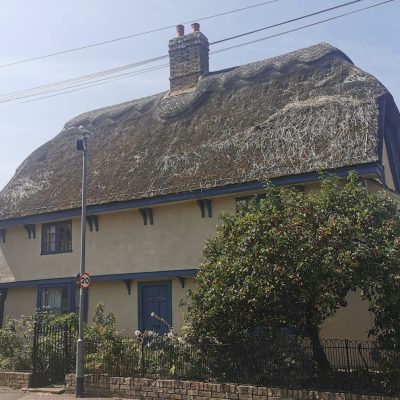
Nine Chimneys House, Thomas’s Farm, Tudor Cottages, Balsham
History of Nine Chimneys House
Listed Building:
House. Late C16. Exposed timber frame and tiled roof. The house was probably built in c.1583 for Thomas Sutton, the Master of the Ordnance to Queen Elizabeth I.
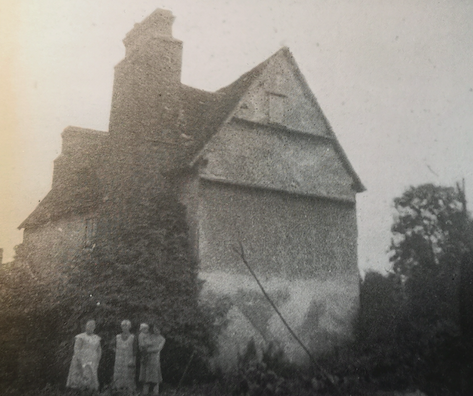
Nine Chimneys house before restoration, 1930 (photo W M Palmer) (Cambridgeshire Collection)
The house was originally a great E-shaped building with nine chimneys, six of which survive.
There is a rumour that the original fine staircase is now at Audley End House.
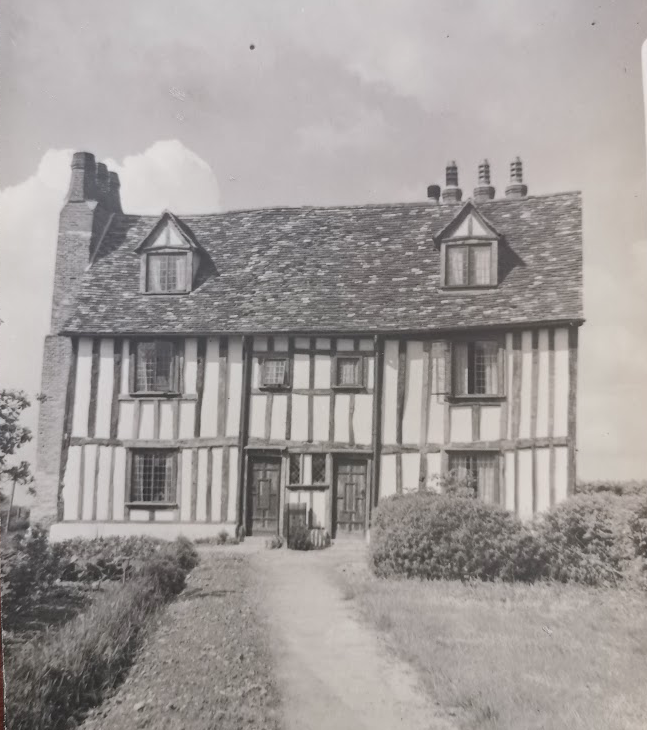
Nine Chimneys, Balsham (MoC114/57)
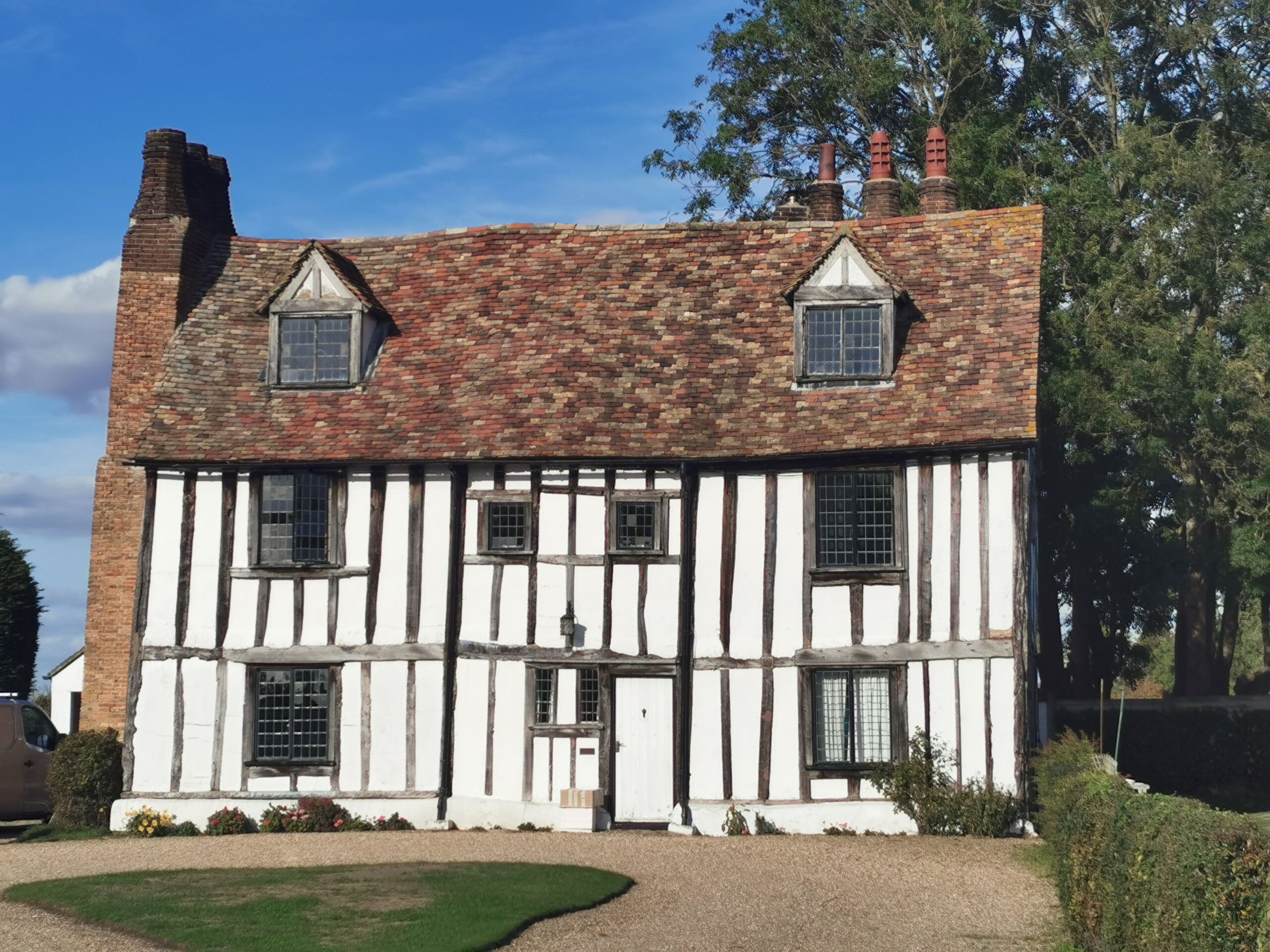
Nine Chimneys House (RGL 2022)
According to Balsham A Village Story 1617 – 2017, this is believed to be the oldest building in the village. It was probably built in 1585 by Thomas Sutton who obtained the lease around 1575. The site may have been that of the old palace of the Bishops.
It is marked on the 1617 map of Balsham. It had 60 acres and was at one time known as Thomas’s Farm. It is first called Nine Chimney House in 1755.
In the 18th century it was occupied by the Burrows family.
1801 The enclosure map shows that the house had an ‘E’ footprint.
In the 19th century is was occupied by the Symonds family.
1815 after death of Thomas Symonds it was sold at auction at the Fox and Hounds.
The house passed into the ownership of Robert Symonds and fifty seven acres to John Prince the Elder.
1844 Millington occupied the house and the house was gradually absorbed into Yole farm.
1874 Much of the house had been demolished and now consisted of two cottages occupied by William Lofts and John Clarke.
1920s the building was in serious disrepair until 1930 when a grant of £200 was obtained by the Linton Rural District to carry out restoration.
There had been an underground passage to the church which may have been blocked up about this time.
1939 The site was called Tudor Cottages. Bought by Commander Ronald Scott-Miller.
1963 House sold to Mr and Mrs John Coates.
1967 Purchased by Joanna and William Sanders.
2000 Restoration revealed some wall paintings in one of the bedrooms.
Projects
Contribute
Do you have any information about the people or places in this article? If so, then please let us know using the Contact page or by emailing capturingcambridge@
Licence
This work is licensed under CC BY-NC-SA 4.0