Search by topic
- archaeology
- Building of Local Interest
- chapel
- charity
- church
- crime
- dressmaker
- fire
- Great Eastern Railway
- Listed building
- Mapping Relief
- medieval
- oral history
- poverty
- Public House
- Religious House
- Roman
- scholar
- school
- Then and Now
- tudor
- women
- work
- world war one
- world war two
Search by text
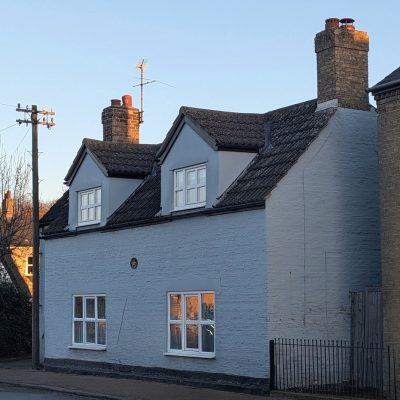
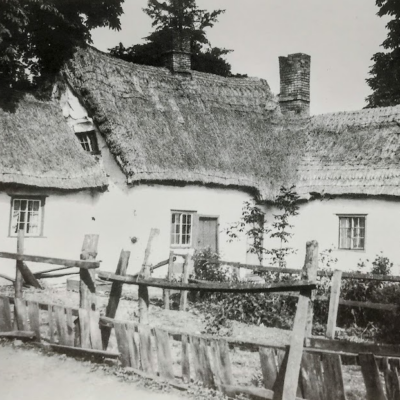
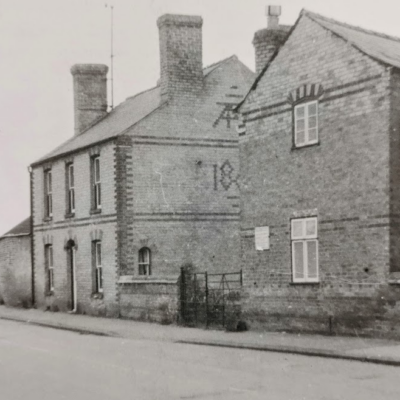
Wesleyan Chapel, Cottenham
History of the Wesleyan Chapel
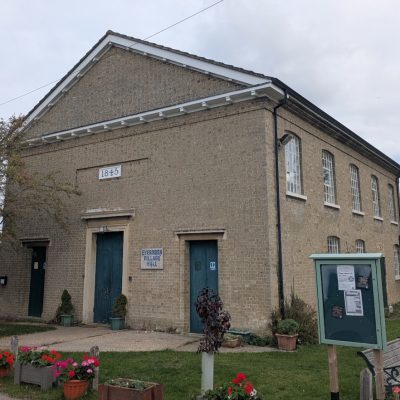
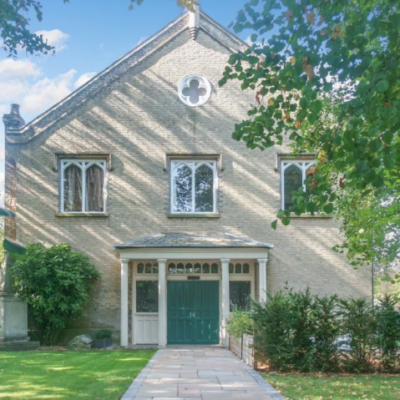
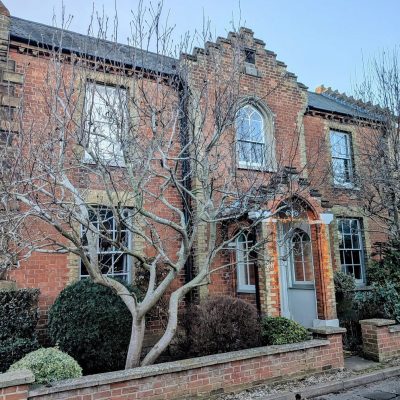
Then chapel was built in 1864 and the house in 1866. Cottenham in Focus tells the story of Thomas Ivatt, an Anglican, who married a Baptist, Mary Ann Goode. Their first child who died in the 1840s at the age of six had not been baptised. The rector of the parish refused to bury the child and a Baptist minister had to read the funeral service outside the churchyard. Mr Ivatt invited Methodists from Cambridge to hold services in the village and lent them a barn until premises in Telegraph Street were found. (See Cottenham in Focus, 2002)
1894 The astronomer Annie Walker gave a talk about the moon at the chapel to raise money for an organ. MS noted in 2025:
She is believed to be only the second female astronomical observer in the UK and has recently had an asteroid named after her. Her manager and mentor, Andrew Graham, was a Wesleyan preacher who is likely to have preached at Cottenham Wesleyan Chapel and Annie may have been a worshipper there or came with him when he was getting older. She is unlikely to have had a Cottenham connection apart from this.
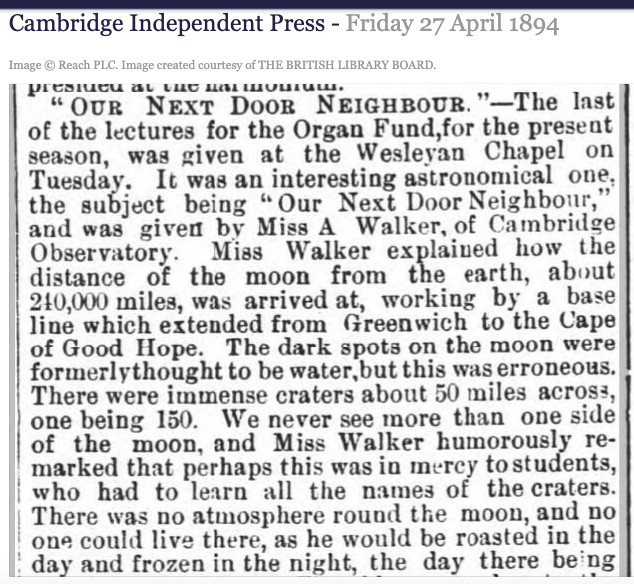
Annie Walker lecture 1894
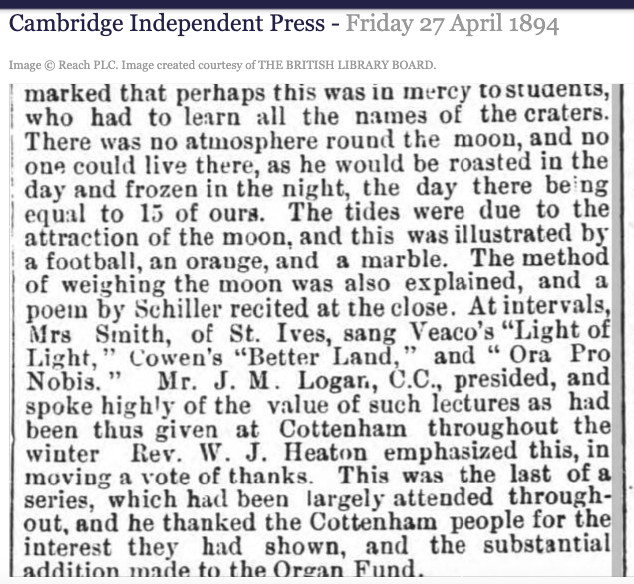
Annie Walker lecture 1894
1901
William Gawtrey, 61, market gardener, b Cottenham
Sarah, 62, b Over
Edna, 24, b Cottenham
Projects
Contribute
Do you have any information about the people or places in this article? If so, then please let us know using the Contact page or by emailing capturingcambridge@
Licence
This work is licensed under CC BY-NC-SA 4.0