Search by topic
- archaeology
- Building of Local Interest
- chapel
- charity
- church
- crime
- dressmaker
- fire
- Great Eastern Railway
- Listed building
- Mapping Relief
- medieval
- oral history
- poverty
- Public House
- Religious House
- Roman
- scholar
- school
- Then and Now
- tudor
- women
- work
- world war one
- world war two
Search by text
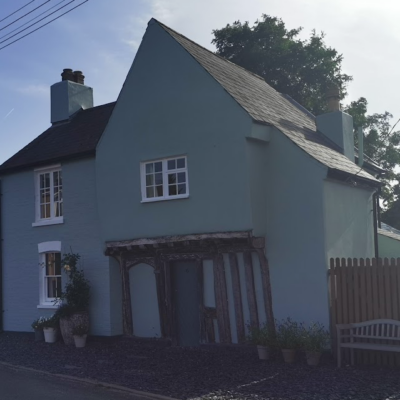
Mill Farm House, Pampisford
History of Mill Farm House
Old Pampisford by O C Mayo has an article about Mill Farm House.
The Enclosure map of 1801 shows land in this area as owned by William Parker-Hamond I who held the manor of Pampisford. The present Mill Farm House was built as a tenanted farm house. It was probably built shortly after 1812.
O C Mayo writes about the lives of Hannah Tapfield and Thomas King at Mill Farm, 1824-1831. Hannah had been born in 1807 in Bene’t Street, daughter of Peter Tapfield and Mary Lawson. Her father was Steward of the Earl of Godolphin whose estates was on the Gog Magog Hills.
Thomas Owen King of Dernford Farm Sawston married Hannah in 1824. They lived at Mill Fam, Pampisford. According to Mayo, it is something a mystery as to whether the house they lived in was the house that survived in to the 20th century. During the 1820s an 1830s there were a number of disastrous harvests and much rural poverty. There were numerous local arson attacks; the Kings moved back to Dernford farm in 1831.
In the 1840s Hannah learned about the Mormon religion from Lois Bailey, her dressmaker. Hannah was baptised in 1850 into the Church of the Latter Day Saints. Thomas did not accept the new faith but was prepared to follow his wife when she decided to emigrate to Salt Lake City. In 1853 they sold everything at Dernford and sailed to New Orleans, boarding a steamer to Keokuk in Iowa. The King family were relatively well off and were able to buy wagons, horses, oxen and cows for the rest of their journey. They set up home in Salt Lake City where Thomas King died in 1875. Hannah lived on for another nine years. Their son Thomas Owen King made a name for himself as one of the first Pony Express Riders.
1890 Richard Driver signed an agreement with Eastern Counties Leather to hire Mill Farm and its 58 acres at a rent of £89 per annum.
In the early 1960s the fields and orchards nearby were cut through by the Sawston by-pass. Mr Albert Vyse bought the house and sold it to Mr and Mrs Moreton. Mr and Mrs Robin Lee bought the house in 1982.
In the 1980s, after the owner removed the modern wallpapers from the walls, it was discovered that the original plaster had bee painted with elaborate Greek-style designs, imitating marble.
Projects
Contribute
Do you have any information about the people or places in this article? If so, then please let us know using the Contact page or by emailing capturingcambridge@
Licence
This work is licensed under CC BY-NC-SA 4.0