Search by topic
- archaeology
- Building of Local Interest
- chapel
- charity
- church
- crime
- dressmaker
- fire
- Great Eastern Railway
- Listed building
- Mapping Relief
- medieval
- oral history
- poverty
- Public House
- Religious House
- Roman
- scholar
- school
- Then and Now
- tudor
- women
- work
- world war one
- world war two
Search by text
50 Kingston Street, Cambridge
Bidwell's Butchers & Gilbert's Butchers
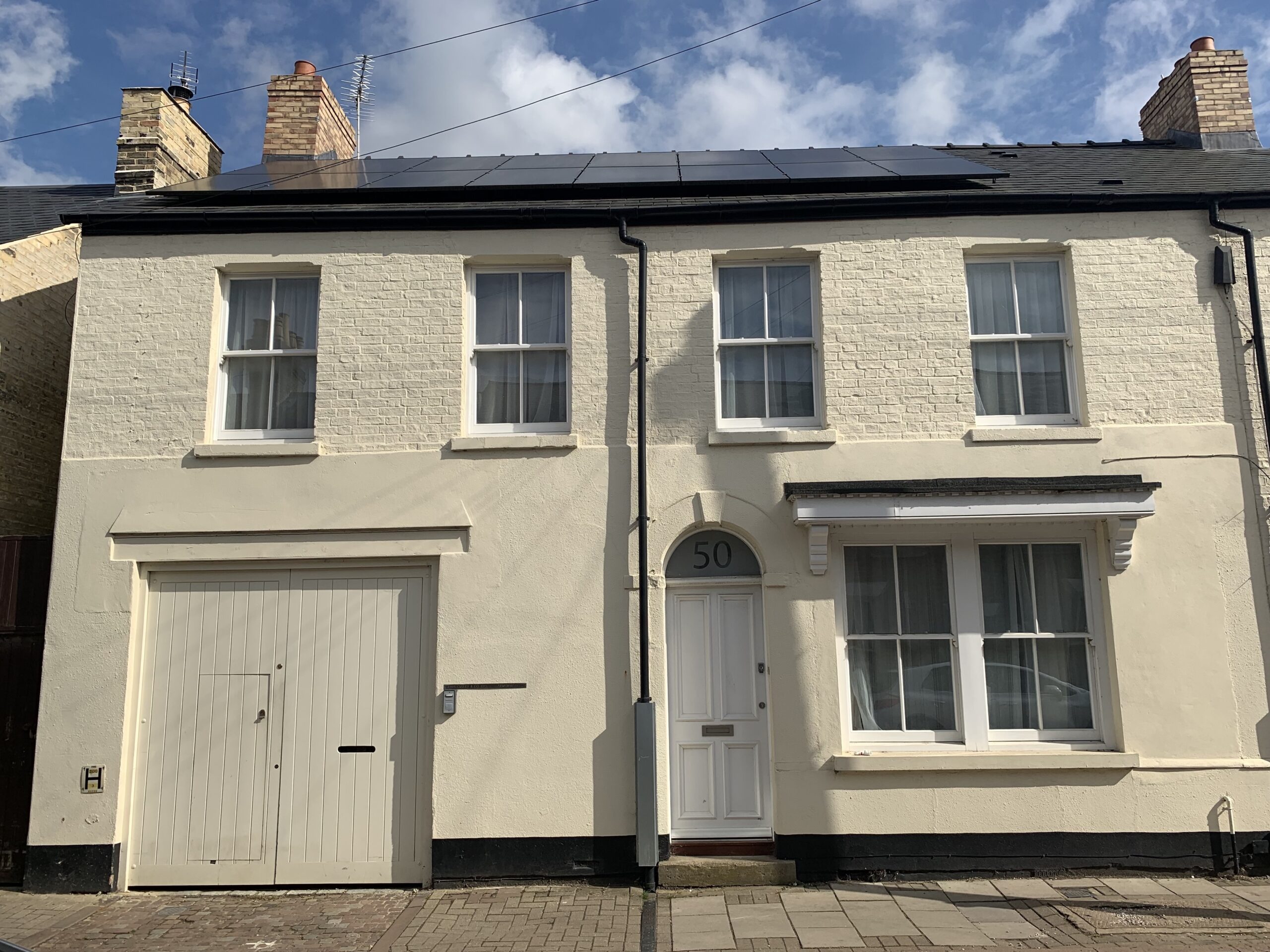
50 Kingston Street was a butcher and slaughter house
1881
On the 1881 census this property is listed as 50 & 52.
Head of Household isThomas Bidwell junior, a 33 year old butcher, who was born in Cambridge. He is married to Cambridge-born Ann, also 33. The couple have four small children, Thomas, 6, Florence, 4, Elizabeth, 3, and Ethel, 1. The eldest two children both attend school. To help about the house they have hired a servant, 16 year old Hannah Green from Stoke in Suffolk. They also have a lodger, Hannah Carter, 68, from Carmarthenshire. She is recorded as a “butler’s wife”.
1891
In 1891, 50 Kingston Street is still home to the large Bidwell family. Ann and Thomas Bidwell, are now 43, and run the Butcher’s shop together. By this time they have six children: the eldest, 16 year old Thomas, who helps in the butcher’s; Florence, aged 15; Ann, aged 13; Jessy, aged 10; Edith, aged 6; and Victoria, aged 3. The household general servant is now 15 year old Matilda Goodman.
1901
By 1901, Thomas Bidwell has sadly passed away, leaving 53 year old Ann Bidwell a Widow. She is now in charge of the butcher’s shop, with Jessie, now 19, working as the Clerk for the shop. Thomas, Florence and Ann have now left home, though Grace, now aged 18, who was not present on the last census, and Edith, now 16, work as teachers. Victoria, now 13, is too young to work. The family have got a new servant, Annie Linsey, a 13 year old from Cottenham.
1911
In 1911, 50 Kingston Street is home to the large Gilbert family. 30 year old Betsy Gilbert is married to 35 year old Cornelius George Gilbert, who ran the butchers shop together. They had five children: Elsie, aged 9, and Gladys, aged 7, are both in school; and then George and William, both aged 3, and Rosalie, aged 1, are too young for school.
Sources: 1881, 1891, 1901, 1911 Uk Census
1939
Nos 48, 50, & 52 were Cambridge Mantle Company (Spaldings)
Projects
Contribute
Do you have any information about the people or places in this article? If so, then please let us know using the Contact page or by emailing capturingcambridge@
Licence
This work is licensed under CC BY-NC-SA 4.0