Search by topic
- archaeology
- Building of Local Interest
- chapel
- charity
- church
- crime
- dressmaker
- Great Eastern Railway
- Listed building
- Mapping Relief
- medieval
- oral history
- poverty
- Public House
- railway worker
- Religious House
- Roman
- scholar
- school
- Then and Now
- tudor
- women
- work
- world war one
- world war two
Search by text


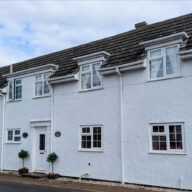
The Glover’s House, 30 Glover Street (Meeting House Lane), Over
History of 30 Glover Street
For many years the Bicheno family are listed as ‘as a glover being in tenure.’ The house is described as c.1730-40.
Bicheno – A family from Over, Cambridgeshire by Jean Nelson and Eileen Webster, was published in 1992.
It notes that James Bicheno was left land by his mother, 3 roods of marsh and 1 of meadow in the fen called South Fen of Over. He had been born in 1690, and married Elizabeth Hanley in 1704.
William Bicheno was baptised in 1723. His father died in 1725. In 1744 William is living in Haddenham as a glover. In 1779 William and his wife Sarah are living in The Glovers House in Glover Street. He was a tenant to the Fisher family until James bought it in 1797.
James Bicheno was baptised in 1752. Aged 16 he was a glover in Cambridge attending services at Stone Yard. he was further baptised at Whittlesford Mill in 1768. He was then tricked into going to America and sold as a slave for two years. In 1774 he was back in England at Royston.
Robert Bicheno was baptised 1754, the third son of William and Elizabeth Bicheno.
George was born about 1774 at Over, the eldest son of William and Sarah. He was a farmer living at Glovers House. In 1806 he married Ann Sainty at Cottenham. They went on to have six children.
Projects
Contribute
Do you have any information about the people or places in this article? If so, then please let us know using the
Contact page or by emailing
capturingcambridge@
Licence
This work is licensed under
CC BY-NC-SA 4.0


 not including content on external links as indicated
by
not including content on external links as indicated
by .
.