Search by topic
- archaeology
- Building of Local Interest
- chapel
- charity
- church
- crime
- dressmaker
- Great Eastern Railway
- Listed building
- Mapping Relief
- medieval
- oral history
- poverty
- Public House
- railway worker
- Religious House
- Roman
- scholar
- school
- Then and Now
- tudor
- women
- work
- world war one
- world war two
Search by text


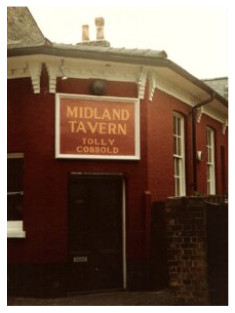 Midland Taverb, 1 Devonshire Road
Legacies of Windrush: 1 Devonshire Road, Midland Tavern
Legacies of Windrush: The Midland Tavern
”Mr Gordon finds his mixture of traditional English pub… included in a Caribbean-style bar with discotheque has proved a multi-racial success.”
CEN, 25 August 1976
A Welcoming Pub in the 1960s
When the Windrush community first arrived in Cambridge in the early 1960s, they gathered regularly at either the Durham Ox on Mill Road in Cambridge or the Midland Tavern on Devonshire Road in Cambridge. Finding a pub that was open and friendly naturally attracted more members of the Caribbean community.
Dominoes and Community at the Midland Tavern
In the mid-1960s, Albert Gordon often visited the Durham Ox with fellow Jamaican Speedy Wright to play dominoes and watch the West Indies play cricket on TV. When the landlord Jack left the Durham Ox, the Midland Tavern became the main gathering place for Cambridge’s Caribbean community. The welcoming atmosphere made it a favourite spot for lively domino games in the front bar. Vincentian-born Desmond Cuffy, a regular at the Midland from 1961, recalled that it was mainly the Jamaicans who were the most passionate players.
The Midland Tavern: Birthplace of the Cambridge West Indian Cricket Club
In 1967 the Cambridge West Indian Cricket Club was granted permission to hold its monthly meetings in the quiet, relatively unused, back bar of the Midland Tavern. These meetings were always well attended, and after the formal discussions, some of the players would stay on to play music together.
The club also held its Annual General Meetings (AGMs) at the Midland, where the whole team gathered to celebrate and present awards for outstanding performances.
The Midland soon became an essential hub for the CWICC, a place that nurtured both the team’s organisation and its vibrant social life. Reflecting in 2025, Albert Gordon fondly recalled:
“That’s where it all started, in the back bar of the Midland. It was the beginning of our cricket club! The back bar soon became popular as some of the guys would play music after the meetings.”
A Home Away from Home
The Midland was more than just a place to hold meetings – it became a space where the team could relax, play dominoes, listen to music, socialise, and feel part of a welcoming community.
Desmond Cuffy remembers the early 1960s at the Midland, when only four Vincentians would gather there. Each year, more West Indians joined them, filling the pub with laughter, music, and the sound of familiar voices. For Cuffy, it was a joy to watch the small group grow into a vibrant community – a little piece of home in the heart of Cambridge.
When Albert Gordon became landlord in 1971, he reflected proudly in a local interview: “This had already been a West Indian pub for a long time…………………. A lot of the boys come in here and they wouldn’t dream of going to another pub.” (The International Pub, Cambridge Evening News, 10 July 1971)
From Strangers to Family
Once strangers in a new land, the West Indian cricketers and their friends and family found in the Midland Tavern a familiar and welcoming gathering place where lasting friendships were formed. People from across the Caribbean – Jamaica, Barbados, St Lucia, Trinidad, St Vincent, Grenada and beyond – came together not just to play cricket, but to build a sense of belonging.
On the pitch and in the pub, they learned from one another, navigating the subtle differences in culture, humour, and sayings that came with being from different islands. As Desmond Cuffy reflected:
“We had to get to know each other, otherwise how would we have got along!”
Despite these differences, they were united by a shared pride in being West Indian and by the common experience of arriving in England and finding their place in a new society – while holding on to the culture, warmth, and spirit of home.
Albert Gordon and the Midland Tavern
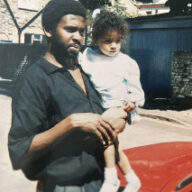
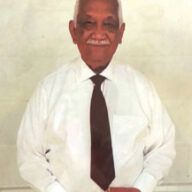
Jamaican-born Albert Gordon became landlord of the Midland Tavern in 1971, just eight years after arriving in England. Known for his warm and welcoming nature, Gordon quickly transformed the pub into a vibrant hub of music and community.
On Friday and Saturday nights, the Midland came alive – more reminiscent of a West Indian blues party than a typical English pub. As word spread, the crowds grew, and the venue was soon packed every weekend with people coming from near and far to enjoy the lively atmosphere.
Gordon fondly recalled customers dancing to the sounds of Ken Boothe’s Everything I Own, Carl Douglas’s Kung Fu Fighting, and Bob Marley’s No Woman No Cry, among many other classics.
In an interview with the Cambridge Evening News in 1976, Gordon reflected on the success of his unique approach: “Integration is a double-edged process. On the plus side, there is the Midland Tavern in a town where there is still no dance hall. Mr Gordon finds his mixture of traditional English pub, hand-pumped ale included, in a Caribbean-style bar with discotheque has proved a multi-racial success.” (CEN, “Why West Young West Indians Don’t Want to Play Ball,” 25 August 1976)
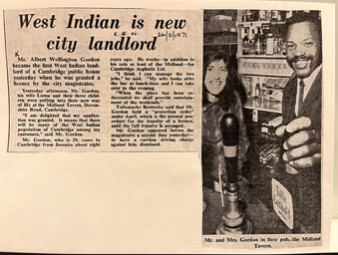
Midland Tavern, Cambridge
Saturday Night Style and Sounds
The men looked effortlessly cool with their Afros, waistcoats, denim shirts, hats, and flared trousers or jeans. The women were equally striking – glamorous in their Saturday night best, dressed to impress and ready to dance the night away.
Albert Gordon often hosted special events where a steel band would play, and Caribbean favourites like patties, fried fish, and dumplings were served. On Friday and Saturday nights, the energy was electric.
Albert Gordon recalled that it could take him at least an hour to persuade everyone to leave at closing time – people simply didn’t want the night to end. For some, it didn’t: the celebrations often carried on with late-night lock-ins, domino and poker games, and “blues” house parties, keeping the music and laughter going into the early hours.
The West Indies at Fenner’s
Fenner’s Ground in Cambridge welcomed the touring West Indies cricket team on several occasions during the 1960s and 1970s. These matches offered a rare chance for local fans to see international stars up close. Matches included:
1963 West Indies vs Cambridge University — West Indies won by an innings and 203 runs.
1966 West Indies vs Cambridge University — West Indies won by 174 runs.
1976 West Indies vs combined Oxford & Cambridge Universities team.
After these matches, the International team often headed to the Midland Tavern, to relax, celebrate, and meet members of Cambridge’s Caribbean community. International stars that visited the Midland Tavern included as Michael Holding, Viv Richards, Joel Garner, Clive Lloyd, and Gordon Greenidge.
Desmond Cuffy recalled one memorable evening when he spoke with the legendary fast bowler Michael Holding, who, in his broad Jamaican accent, offered him and everyone else in the Midland a drink. Cuffy asserts:
“It was clear that whenever the West Indies Cricket Team played at Fenner’s, they would head straight to the Midland Tavern after every match.”
Changing the Name: From the Midland Tavern to the Devonshire Arms
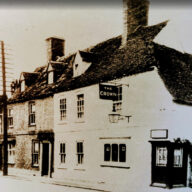
The Midland Tavern originally took its name from the nearby Midland Railway line, which once connected Cambridge with towns such as Kettering, Kimbolton, and St Ives. Reflecting its close ties to the local community, the pub even featured an arrival and departure board displaying train times inside – a reminder of its early role as a welcoming stop for commuters who often waited for their trains over a pint.
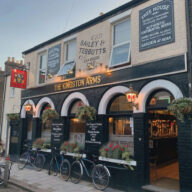
In the early 1980s, the pub was officially renamed the Devonshire Arms by its succeeding landlord, Jamaican born, Trevor Jones, a former barman at the Midland, who took over in 1982. The new name reflected its location on Devonshire Road, but the spirit of the place remained the same. Under Jones’s stewardship, which lasted over a decade (1982–1992), the tradition of lively Friday and Saturday nights – filled with music, laughter, and community – proudly continued. For many within the Caribbean community, however, it would always be the Midland Tavern. Even after the name change, locals and former players continued to refer to it affectionately as the Midland, and the Cambridge West Indian Cricket Team was still known as the Midland.
Black Landlords at the Midland Tavern
The Midland Tavern has a long history of Caribbean landlords, reflecting its central role in Cambridge’s West Indian community. (approx. dates)
Albert Gordon (1971–1979) – though he worked at the pub from 1969, Gordon became a popular and welcoming landlord, transforming it into a vibrant social hub.
Winston Lewis (1979–1982) – continued the tradition of community and hospitality.
Trevor Jones (1982–1993) – oversaw the pub’s renaming to the Devonshire Arms while maintaining its lively Friday and Saturday nights.
Charlie Douglas (1993–2005) – successfully upheld the pub’s role as a social and cultural hub.
Tony Shaw (2003–2010) – continued the legacy of welcoming Cambridge’s Caribbean community.
The succession of Black landlords helped make the Midland Tavern a home away from home, keeping its spirit alive across generations.
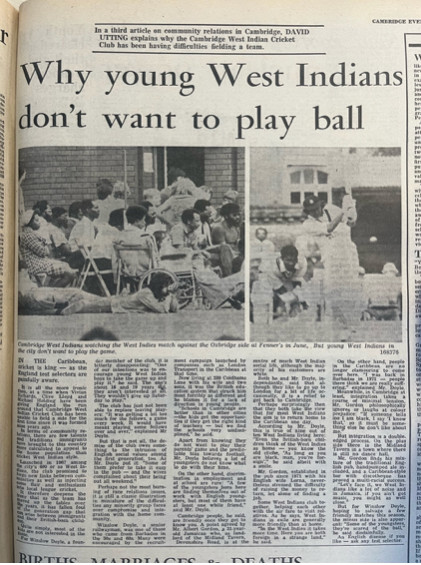
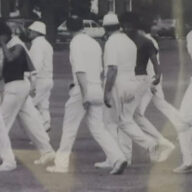
Fenner’s Cambridge 1976
This photograph shows members of the Cambridge Caribbean community watching the West Indies play a warm-up match against Cambridge University Cricket Club at Fenner’s Ground – before the locals and international stars headed down to the Midland Tavern. Taken from the Cambridge Evening News, 25 August 1976, the image captures the excitement and pride of the local Caribbean community as
Projects
Contribute
Do you have any information about the people or places in this article? If so, then please let us know using the Contact page or by emailing capturingcambridge@
Licence
This work is licensed under CC BY-NC-SA 4.0