Search by topic
- archaeology
- Building of Local Interest
- chapel
- charity
- church
- crime
- dressmaker
- Great Eastern Railway
- Listed building
- Mapping Relief
- medieval
- oral history
- poverty
- Public House
- railway worker
- Religious House
- Roman
- scholar
- school
- Then and Now
- tudor
- women
- work
- world war one
- world war two
Search by text


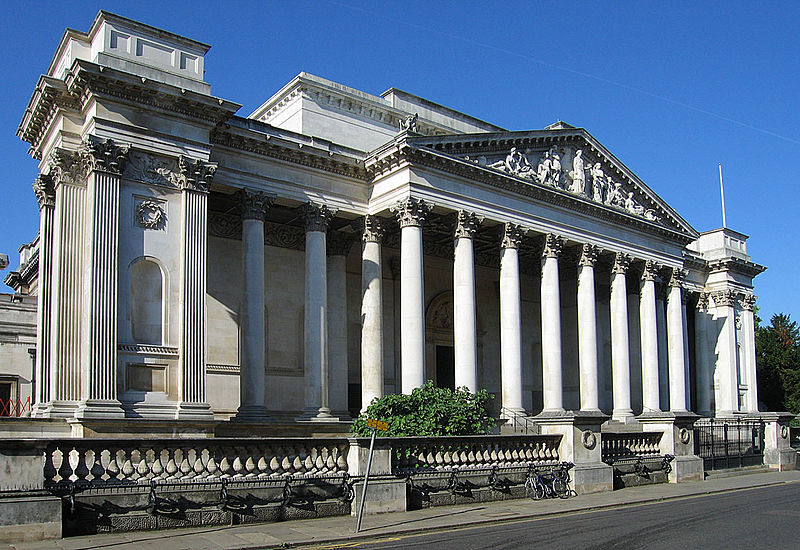 CC BY-SA 2.0, https://commons.wikimedia.org/w/index.php?curid=1167708
Fitzwilliam Museum
History of the Fitzwilliam Museum
General information about the Fitzwilliam Museum can be found on Wikipedia.
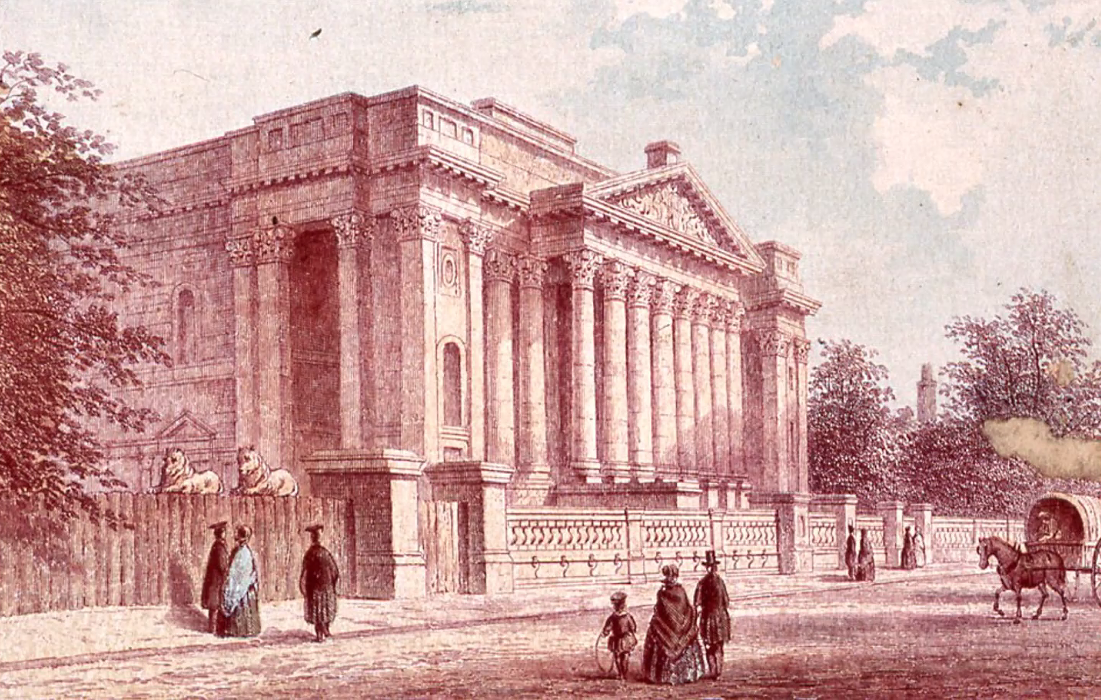
Fitzwilliam Museum circa 1840
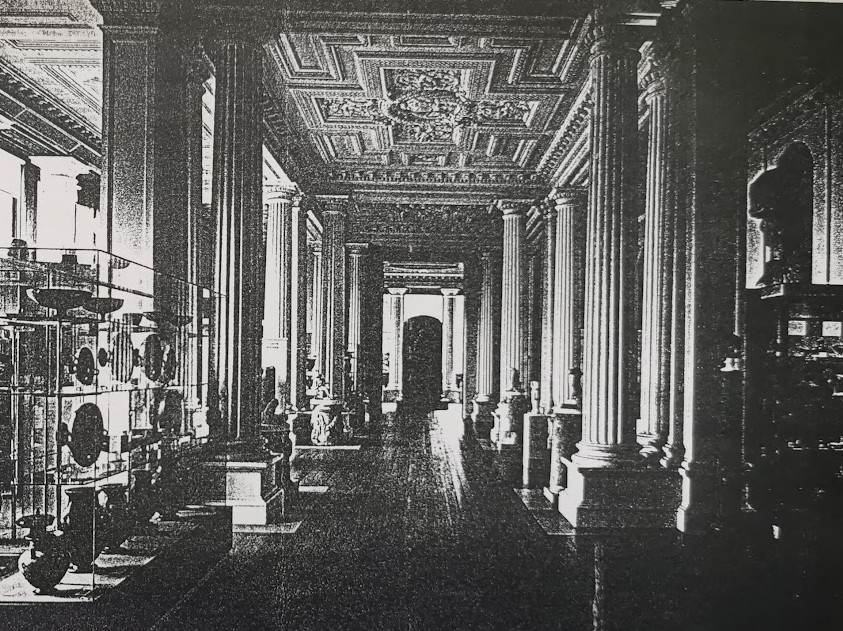
Lower Gallery where William Pyle worked as a plasterer in the 1840s

Fitzwilliam Museum circa 1908
The museum’s own web site can been reached on this link:
http://www.fitzmuseum.cam.ac.uk/
The following picture from March 1904 shows King Edward VII and Queen Alexandra leaving the Fitzwilliam Museum.

King Edward VII & Queen leaving museum
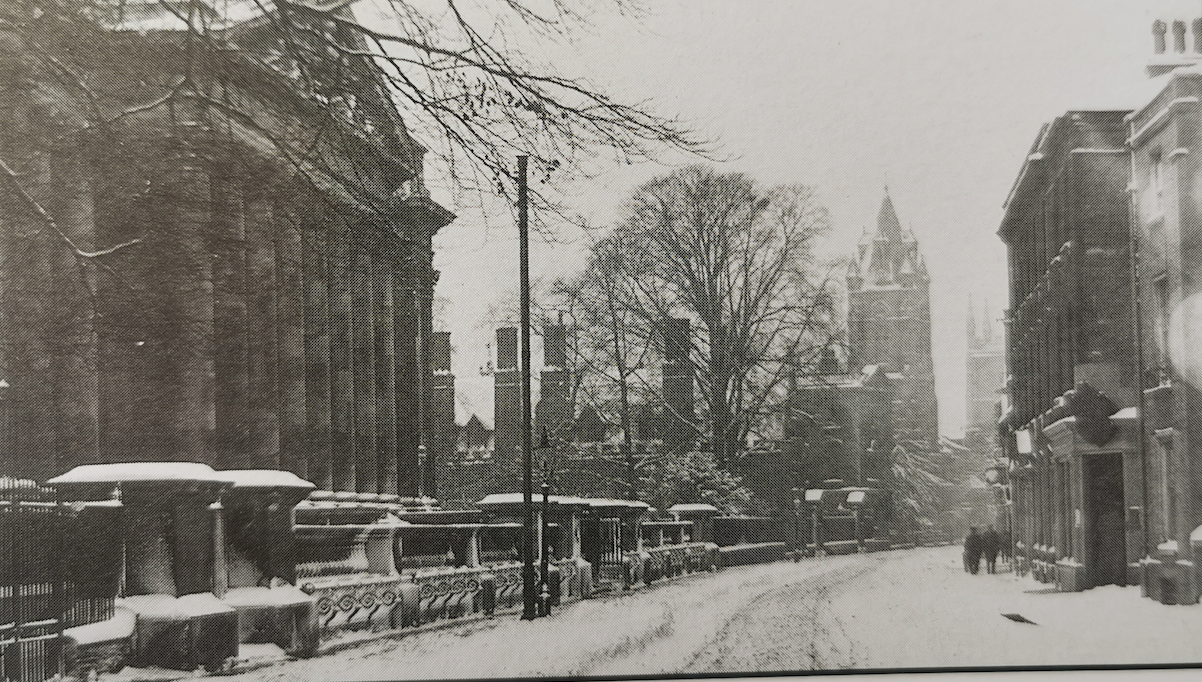
Trumpington Street, 26 December 1906 (photo H A Chapman)
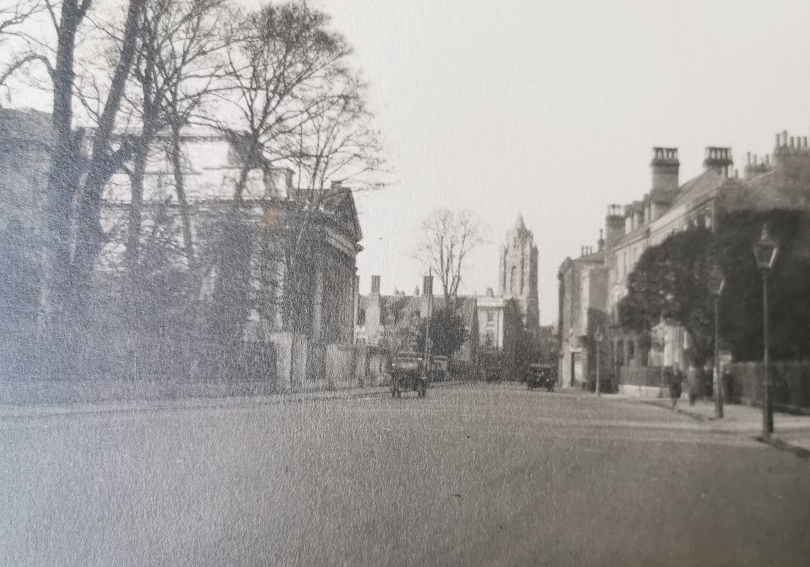
Fitzwilliam Museum (MoC)
1907
CDN 20.6.1907: A University Report: The Director of the Fitzwilliam Museum should be present at three hours a day when it was open, keeping a diary recording his hours. His salary should be decreased from £300 to £250 and the money used to pay for anther member of staff.
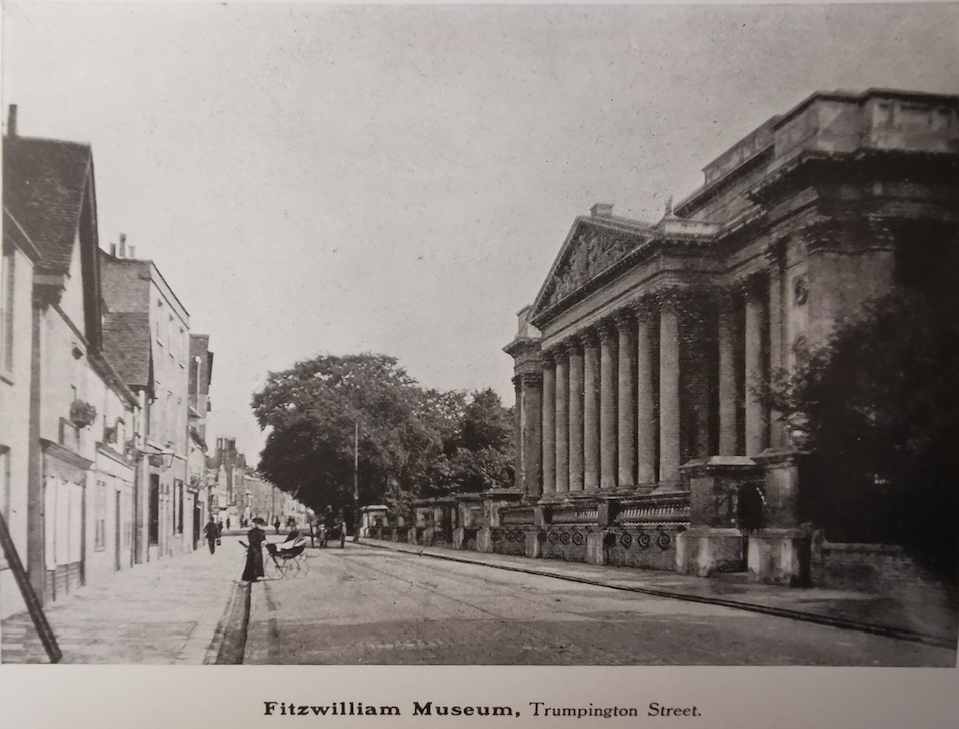
Fitzwilliam Museum c.1917
Information about the decorative lions at the museum can be found here:
http://www.creatingmycambridge.com/history-stories/lions-fitzwilliam-museum/
Susan Gaisford was born in Cambridge in 1943 and lived at 35 Trumpington Street. She reminisced about her childhood in 2020 and wrote this:
I can tell you that the lions who lived at the Fitzwilliam Museum didn’t go to drink in the conduits. They went at midnight to the Cam. I was told that if I saw them at midnight, they couldn’t go. As a child, you can imagine, I couldn’t resist this, so went to a front window overlooking the Fitzwilliam, and they were still there. So – the story was real. I always hoped that the lions saw the light go off and were able to go to the river.
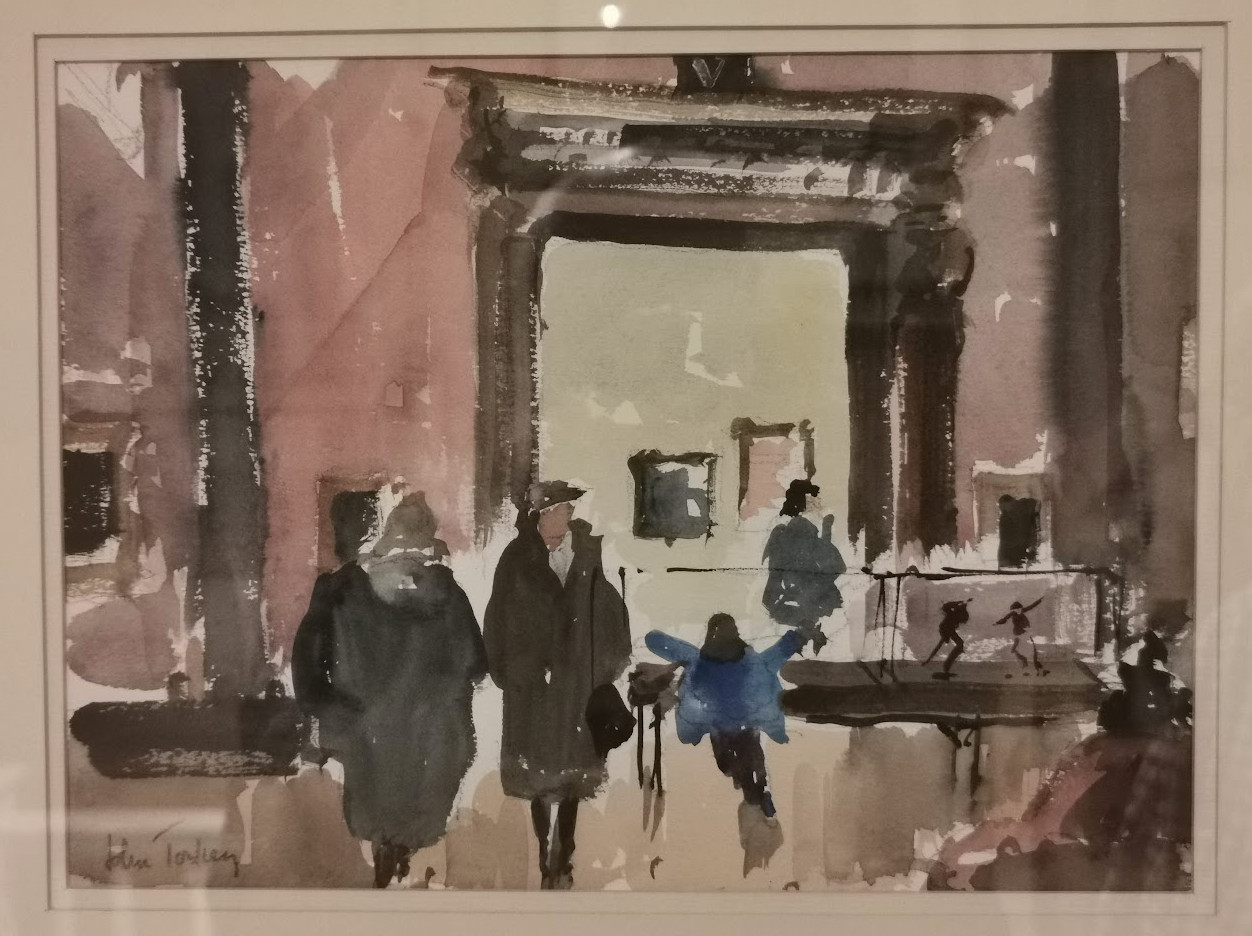
Fitzwilliam Museum (courtesy C Tongue)
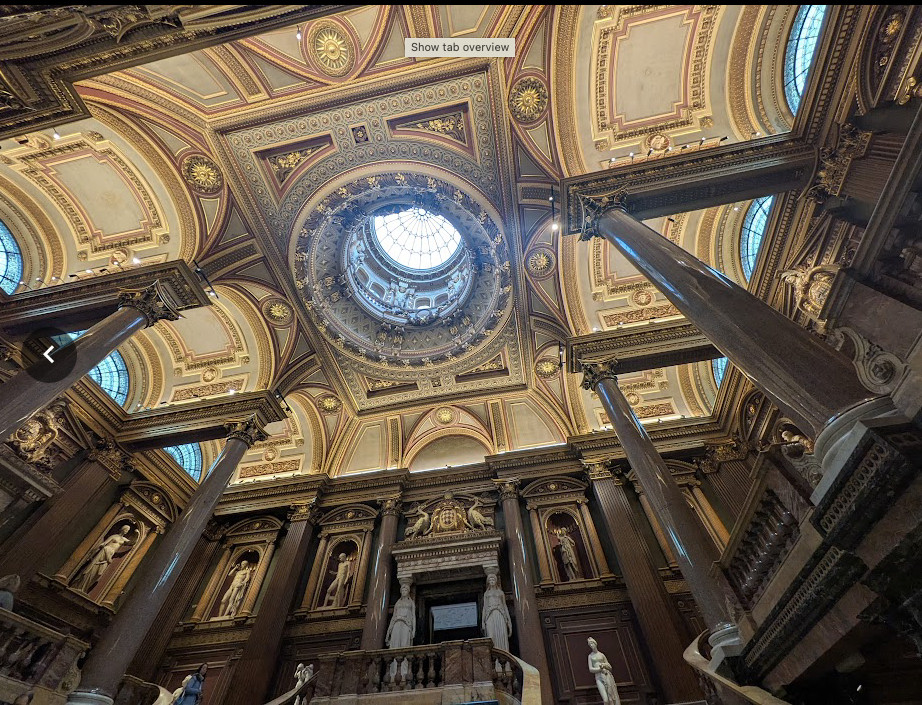
Fitzwilliam Museum (RGL2025)
Projects
Contribute
Do you have any information about the people or places in this article? If so, then please let us know using the Contact page or by emailing capturingcambridge@
Licence
This work is licensed under CC BY-NC-SA 4.0