Search by topic
- archaeology
- Building of Local Interest
- chapel
- charity
- church
- crime
- dressmaker
- Great Eastern Railway
- Listed building
- Mapping Relief
- medieval
- oral history
- poverty
- Public House
- railway worker
- Religious House
- Roman
- scholar
- school
- Then and Now
- tudor
- women
- work
- world war one
- world war two
Search by text


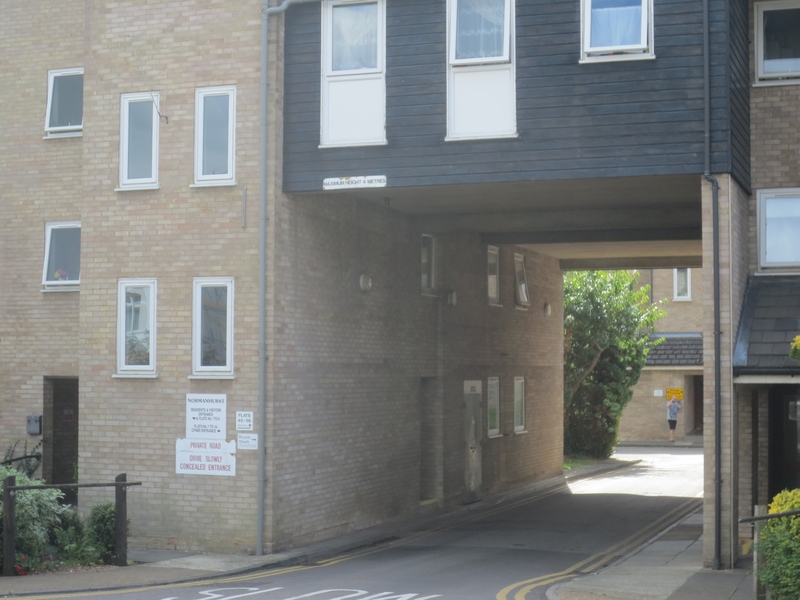 Normanhurst, Cherry Hinton Road, Cambridge (RGL 2016)
Normanhurst, 112 Cherry Hinton Road, Cambridge
History of Normanhurst
1891
Edward Eph, Marsh, 70, retired grocer
Rachel
Miriam
Alfred Fred Marsh, 18, gardener, born Cambridge
Herbert James, 21, grocer’s assistant, born Cambridge
Louisa Huckson, servant, 28, born Glos.
1901
Edward E Marsh, widower, 81, retired grocer, born Hunts
Rachel
Miriam
William H, son, 33, born Cambridge
Margaret G Robinson, 24, servant, born London
1911
Rachel Marsh, 47, head, single, small private means, born Cambridge
Miriam Marsh, 45, head, single, small private means, born Cambridge
Grace Annie Birchley, servant, 21, single, general servant, born Kent
Normanhurst was one of the first large houses built in this western end of Cherry Hinton Road. The first resident recorded is Edward Marsh retired grocer in the 1891 and 1901 census. In 1911 and 1913 Miss Rachel Marsh is recorded as head of the household. Edward Ephraim Marsh b.1820 had previously lived at Rose Crescent in the city with his wife and seven children. In February 1870 the Cambridge Ind. Press reported that Mr Marsh was charged with allowing his chimney to be accidentally on fire. Mr Marsh admitted this was true but said that he was away at the time so the case was dismissed.
In the later part of the twentieth century it was one of four houses demolished to make space for the Normanhurst residential home.
Sources: UK Census, British Newspaper Archive
Sources
- 1891 census
- 1901 census
- 1911 census
Projects
Contribute
Do you have any information about the people or places in this article? If so, then please let us know using the Contact page or by emailing capturingcambridge@
Licence
This work is licensed under CC BY-NC-SA 4.0