Search by topic
- archaeology
- Building of Local Interest
- chapel
- charity
- church
- crime
- dressmaker
- Great Eastern Railway
- Listed building
- Mapping Relief
- medieval
- oral history
- poverty
- Public House
- railway worker
- Religious House
- Roman
- scholar
- school
- Then and Now
- tudor
- women
- work
- world war one
- world war two
Search by text


Godmanchester (Durovigutum) Data
History of Godmanchester
A fort was built here shortly after the Roman invasion of AD43. It was burnt down during the Boudiccan Revolt but was quickly rebuilt.
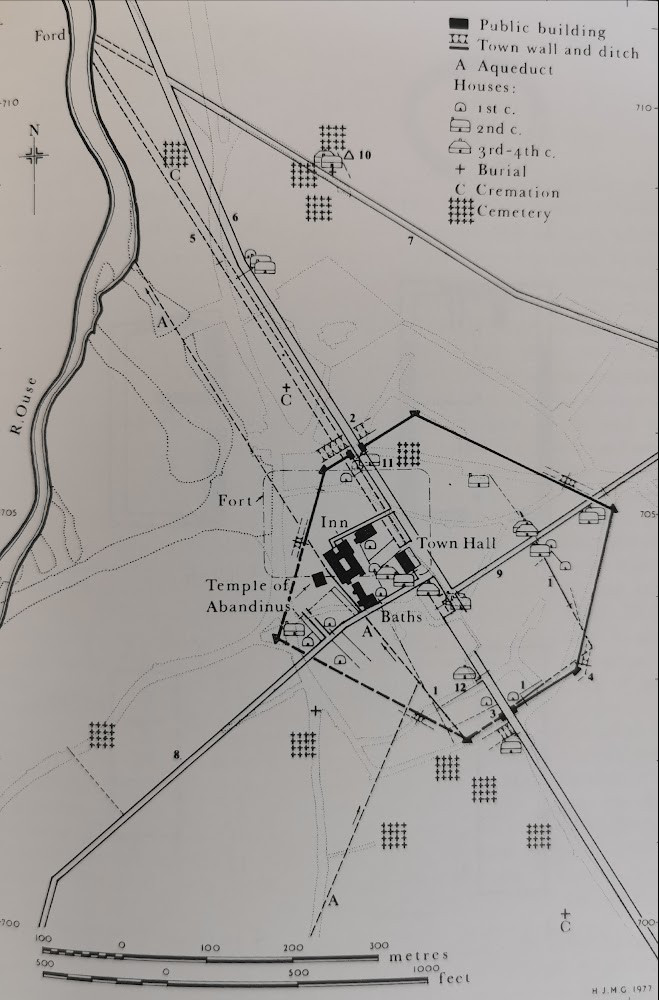
Roman town of Godmanchester (HJMG 1977)
The area of the Roman mansio in Pinfold Lane was excavated in 1969.
http://www.roman-britain.co.uk/places/godmanchester/
See Defending Cambridge, Mike Osborne, (2013) for a detailed description of the important Roman fortification in the area.
Godmanchester, H J M Green, 1977
Godmanchester – A Celebration of 800 years, Pam and Ken Sneath, 2011
CAS Proceedings 1968 has a report on a Roman Farm settlement.
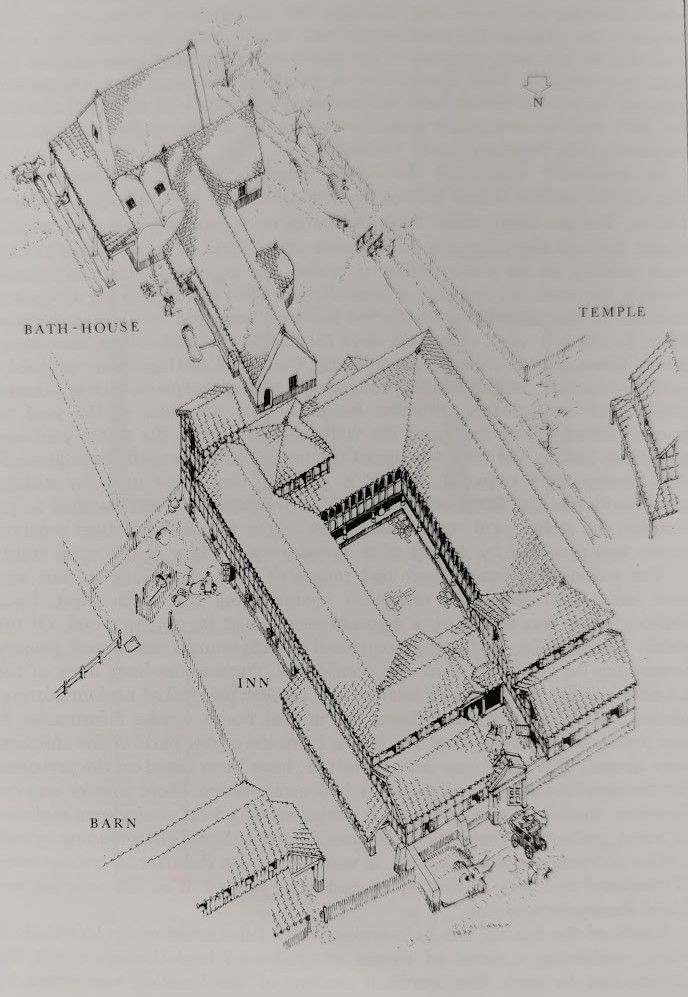
Reconstruction of Roman Inn, baths and temple of Adandinus (3rd cent), Godmanchester
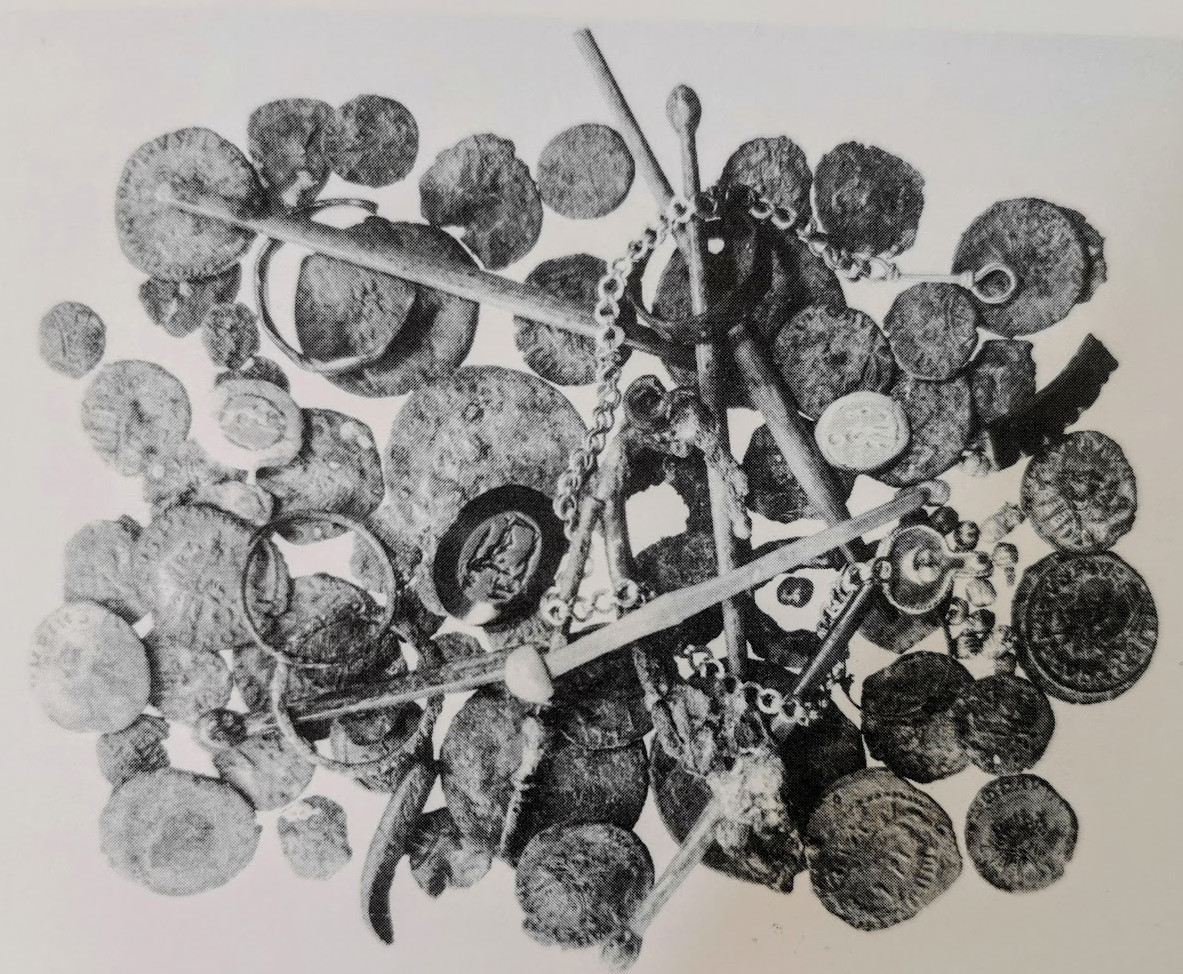
Coins and jewellery c AD 300, found at mansio, Godmanchester
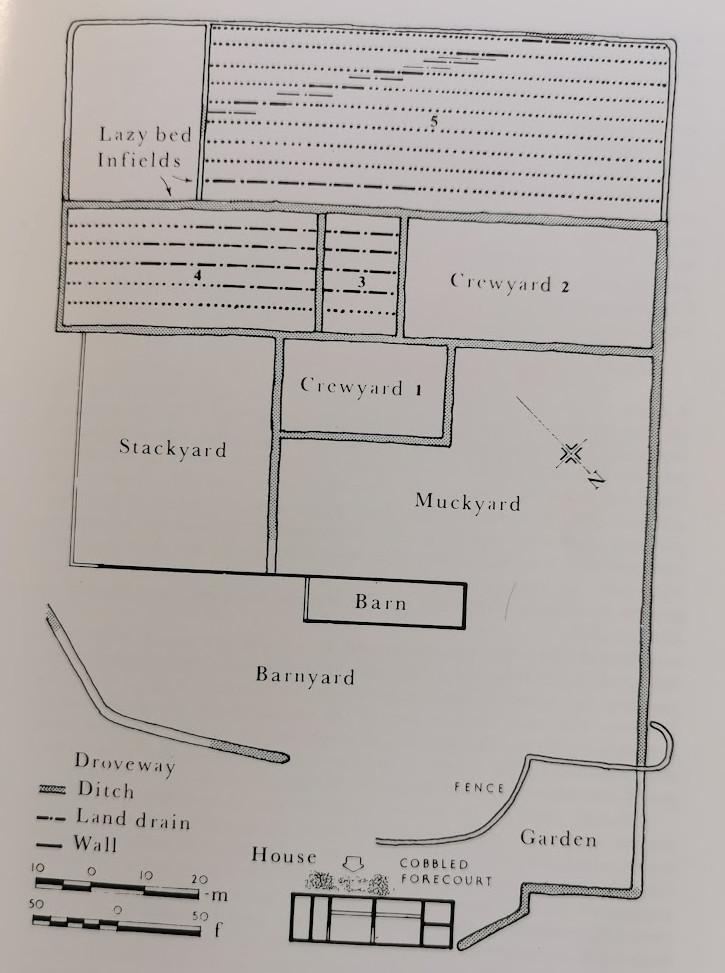
Roman villa at Rectory Farm, Godmanchester (mid 2nd cent. plan)
The parish church of St Mary is first mentioned in 969 and later in the Domesday Book (1086).
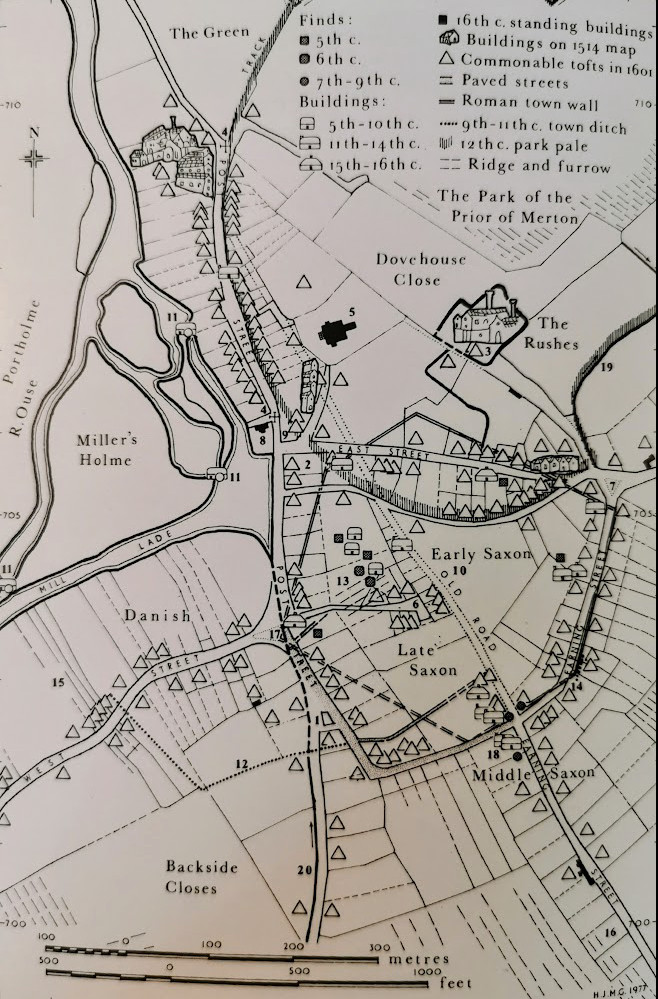
Medieval Godmanchester (HJMG 1977)
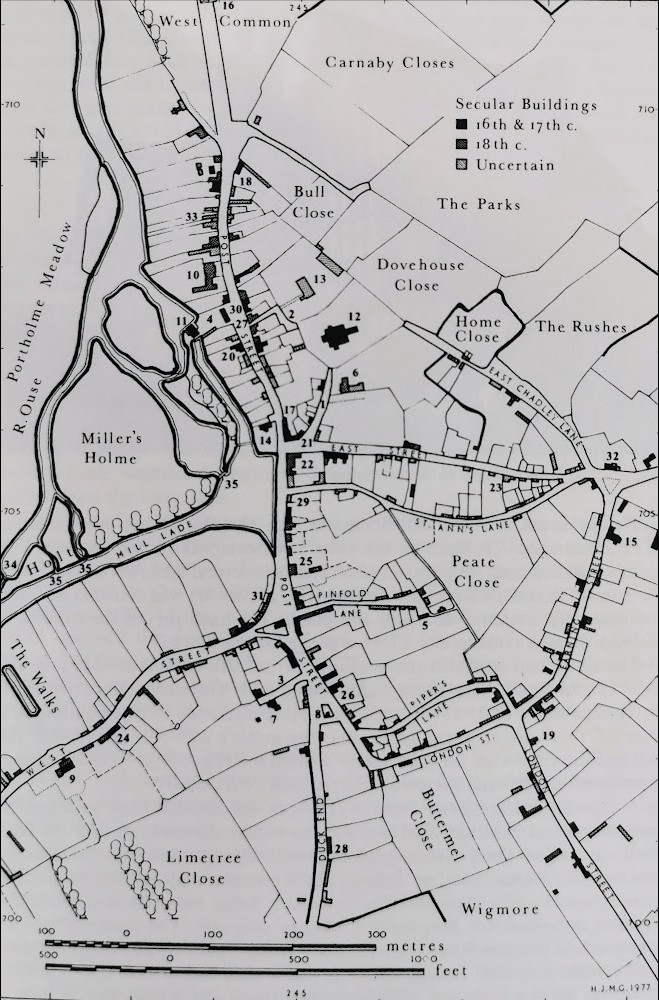
Godmanchester in 1803 (HJMG 1977)
Projects
Contribute
Do you have any information about the people or places in this article? If so, then please let us know using the Contact page or by emailing capturingcambridge@
Licence
This work is licensed under CC BY-NC-SA 4.0