Search by topic
- archaeology
- Building of Local Interest
- chapel
- charity
- church
- crime
- dressmaker
- Great Eastern Railway
- Listed building
- Mapping Relief
- medieval
- oral history
- poverty
- Public House
- railway worker
- Religious House
- Roman
- scholar
- school
- Then and Now
- tudor
- women
- work
- world war one
- world war two
Search by text


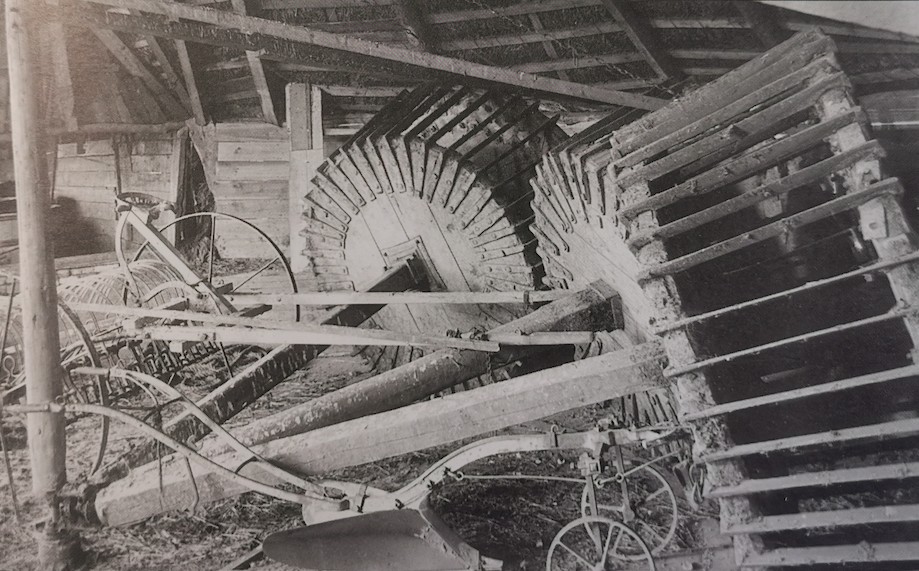
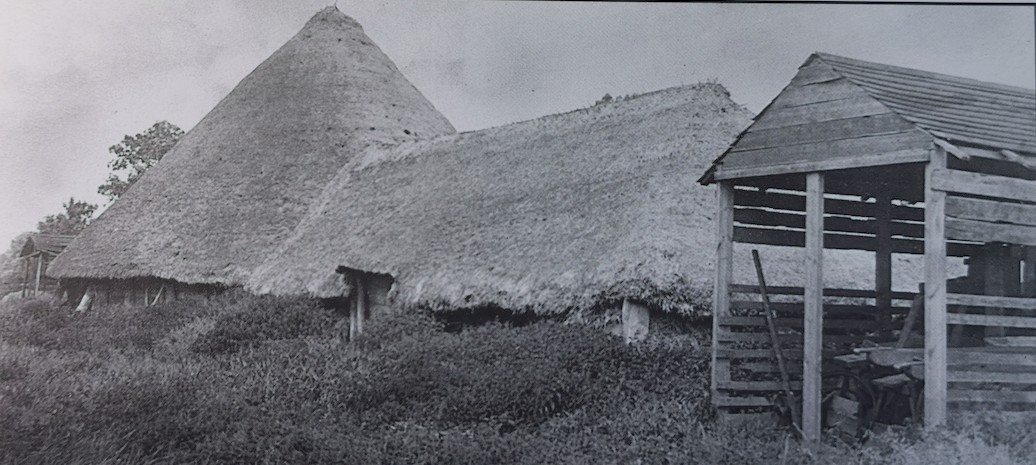 Woad Mill, Parson Drove c.1900 (photo J Palmer Clarke) (Cambridgeshire Collection)
Woad Mill, Parson Drove
History of the Woad Mill
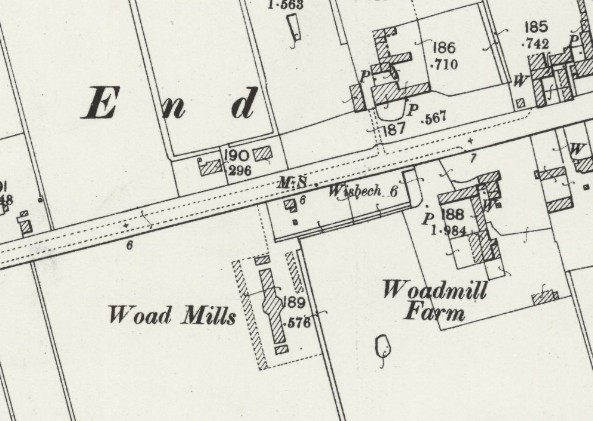
Woad Mill, Parson Drove OS 1900
An article about the woad mill appeared in the Daily Mail in 1900, (quoted in Vanishing Cambridgeshire p.153).
The atmosphere of this little pile of primitive and weather-beaten buildings suggests something distinctly apart from modern agriculture; and indeed, it might well do so. For the place is the only woad mill in the country where the woad is pulped and prepared for the dyers in the the fashions of centuries ago. At parson Drove the power employed is that of the plodding horse. During recent seasons ten acres of woad have been sufficient to keep the Parson Drove mill working at a profit.
Prof R Biffen noted: the conically thatched building at he end contains the mill proper; the low building in the centre in the ‘couching house’ where the fermentation process is carried on. The low walls built of turf and the thick thatch tend to keep the temperature more or less constant. In the foreground are the remains of a ‘drying range.’
Woad Cutters, Woad Mill, Parson Drove (photo J Palmer Clarke) (Cambridgeshire Collection)
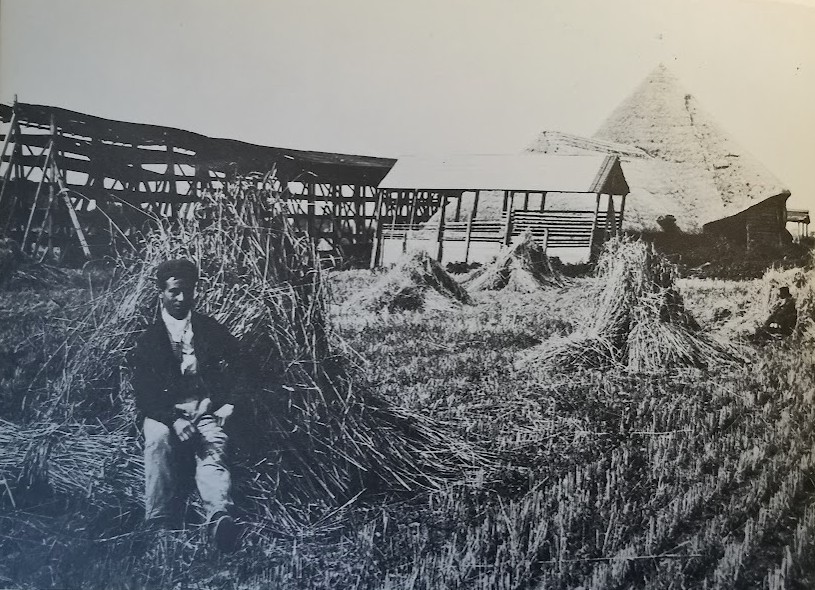
Harvesting woad at parson Mill, c.1880
The first harvest was made in June and the leaves crushed in the mill and the pulp made into balls. These were left to dry and then mixed with water and left to ferment in darkness for 20-30 days.
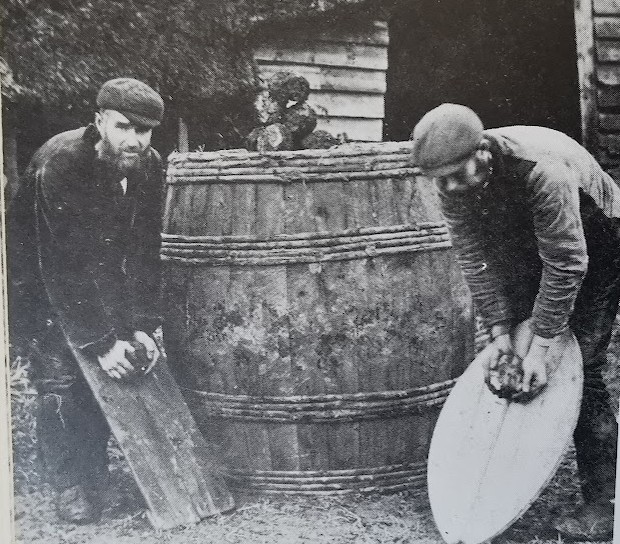
Balling woad at Parson Drove c.1890
The mill at Parson Drove closed in 1914.
‘Woad in the Fens’ by Norman T Wills (1979) contains the transcription of an interview with Arthur Jarvis, the Last Waddie of Parson Grove, made in September 1969 when he was 90 years old.
Projects
Contribute
Do you have any information about the people or places in this article? If so, then please let us know using the
Contact page or by emailing
capturingcambridge@
Licence
This work is licensed under
CC BY-NC-SA 4.0


 not including content on external links as indicated
by
not including content on external links as indicated
by .
.