Search by topic
- archaeology
- Building of Local Interest
- chapel
- charity
- church
- crime
- dressmaker
- Great Eastern Railway
- Listed building
- Mapping Relief
- medieval
- oral history
- poverty
- Public House
- railway worker
- Religious House
- Roman
- scholar
- school
- Then and Now
- tudor
- women
- work
- world war one
- world war two
Search by text


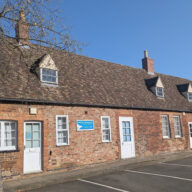
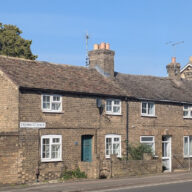
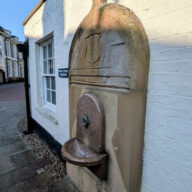
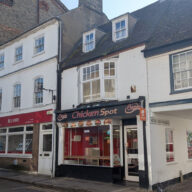
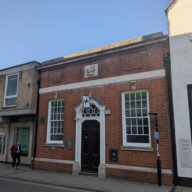
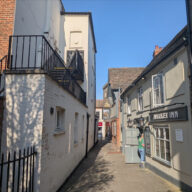
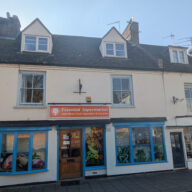
St John Street, Huntingdon
History of St John Street area
The area around St John’s Street-George Street, Huntingdon, was excavated in 2021. The report can be found here:
https://www.camantsoc.org/wp-content/uploads/2024/08/PCAS2024_WebSummaries.pdf
At the time of the Domesday survey this site lay on the periphery of Huntingdon. Relatively little evidence of settlement before this date has been uncovered. Huntingdon became prosperous after the Norman Conquest, primarily from tolls on traffic using its bridge and river-borne traffic for the St Ives fair. By 13th century the town had 16 churches, 2 priories, 3 hospitals and a friary. The decline of the town started during the 14th century as competitor market towns such as Ramsey and Kimbolton became stronger. The Black Death left a quarter of the town derelict and its population and economy did not really recover until the rise of the coaching trade in the 18th century. It also benefitted from the rise in arable production as the Fens were drained.
The excavation threw light on to land use to the west of the town during 13th-18th centuries. An 18th century brickyard was discovered that probably played an important role in the town’s Georgian construction boom.
Projects
Contribute
Do you have any information about the people or places in this article? If so, then please let us know using the Contact page or by emailing capturingcambridge@
Licence
This work is licensed under CC BY-NC-SA 4.0