Search by topic
- archaeology
- Building of Local Interest
- chapel
- charity
- church
- crime
- dressmaker
- fire
- Great Eastern Railway
- Listed building
- Mapping Relief
- medieval
- oral history
- poverty
- Public House
- Religious House
- Roman
- scholar
- school
- Then and Now
- tudor
- women
- work
- world war one
- world war two
Search by text
St. Edward’s Workhouse, Slaughterhouse Lane
History of St. Edward's Workhouse
According to the website workhouses.org.uk this workhouse was set up in around 1786 using two existing tenements in Slaughterhouse Lane and operated until around 1836 when the Union workhouse in Mill Road was opened. The building was then let out until eventually being demolished and replaced with the University medical school buildings.
The Baker’s map of 1830 shows a large building between St Andrew’s Hill and the Botanic Gardens that may be the workhouse, or it may have been part of the row of buildings just north of there.
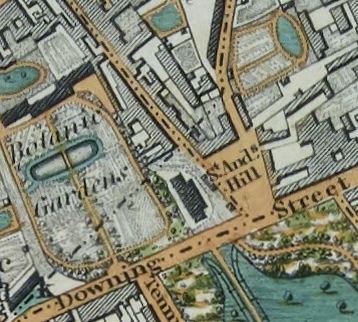
Excerpt of Baker’s Map, 1830 centred on St Andrew’s Hill. Courtesy Cambridgeshire Archives (KAR53/11A/2)
This was the final destination for the Cambridge eccentric, James ‘Jemmy’ Gordon. Son of the chapel clerk of Trinity College, he was articled to an attorney. However excessive drinking made this career impossible. The Cambridge Chronicle and Journal 23/9/1825 contained the following obituary. Note the reference to St Edward’s workhouse in Barnwell would appear to be an error by the reporter.
James, better known as ‘Jemmy’, an eccentric character, was the son of the chapel clerk of Trinity College, Cambridge, a man of some property, who gave him a good education, and articled him to an attorney. He began practice in Free School Lane, Cambridge, with fair prospects of success. Unfortunately his convivial talents led him into society where he learnt to drink to excess. To console himself for his disappointments, he became a confirmed sot, and fell into destitution. He was several times in the town gaol for drunken freaks. For many years he was kept from starvation by an annuity of a guinea a week left by a relative. He was induced to leave Cambridge for London, where he picked up a living by waiting at the coach offices. He returned, and used to pass the night in the grove at Jesus College and the barn at the Hoop hotel. A fall in a fit of drunkenness injured him so severely that he had to be taken to St Edwards’s workhouse at Barnwell, where he died on 16 Sept. 1825, when about sixty-three years old. He was a man of keen and ready wit, and several of his jests are preserved in Hone’s ‘Everyday Book,’ where there is a portrait of him . It is stated there that he had left a memoir of his life, which has not been published. Gunning gives some anecdotes of his thrusting his company during a university election upon Pitt in the senate house, and of his making money by writing Latin essays when in gaol. He was buried on 21st September 1825.
On Friday last, aged 63, the eccentric and well known James Gordon, of this town. In early life this extraordinary character had a fair prospect of excelling in his profession of an attorney; he was an excellent scholar, and possessed considerable attainments; a strong and ardent mind procured him the esteem of many friends, while his convivial talents, his wit and eloquence rendered him the delight of the social board. when severe disappointment crossed his path, and destroyed the hopes of his youth, the bottle unfortunately became his fatal resource. Then how rapid was his fall to the lowest state of misery and desolation. Although the inmate of a workhouse for the last few months, he owed not his sustenance to parochial relief; a small annuity bequeathed him by a relation having saved him from that degradation.
(Cambridge Chronicle and Journal – Friday 23 September 1825)
WILL OF JEMMY GORDON
Town Gaol August 31 1824
I, James Gordon, being of sound and disposing mind , do hereby give and bequeath to Alexander Scott Abbott Esq , Mayor of Cambridge, my body after my decease, for dissection or such other purposes as he shall think proper,upon condition that he gives me a coat, or suit of clothes, which he has done with, hoping that the cast off carcass will indemnify him for his cast off clothes – James Gordon
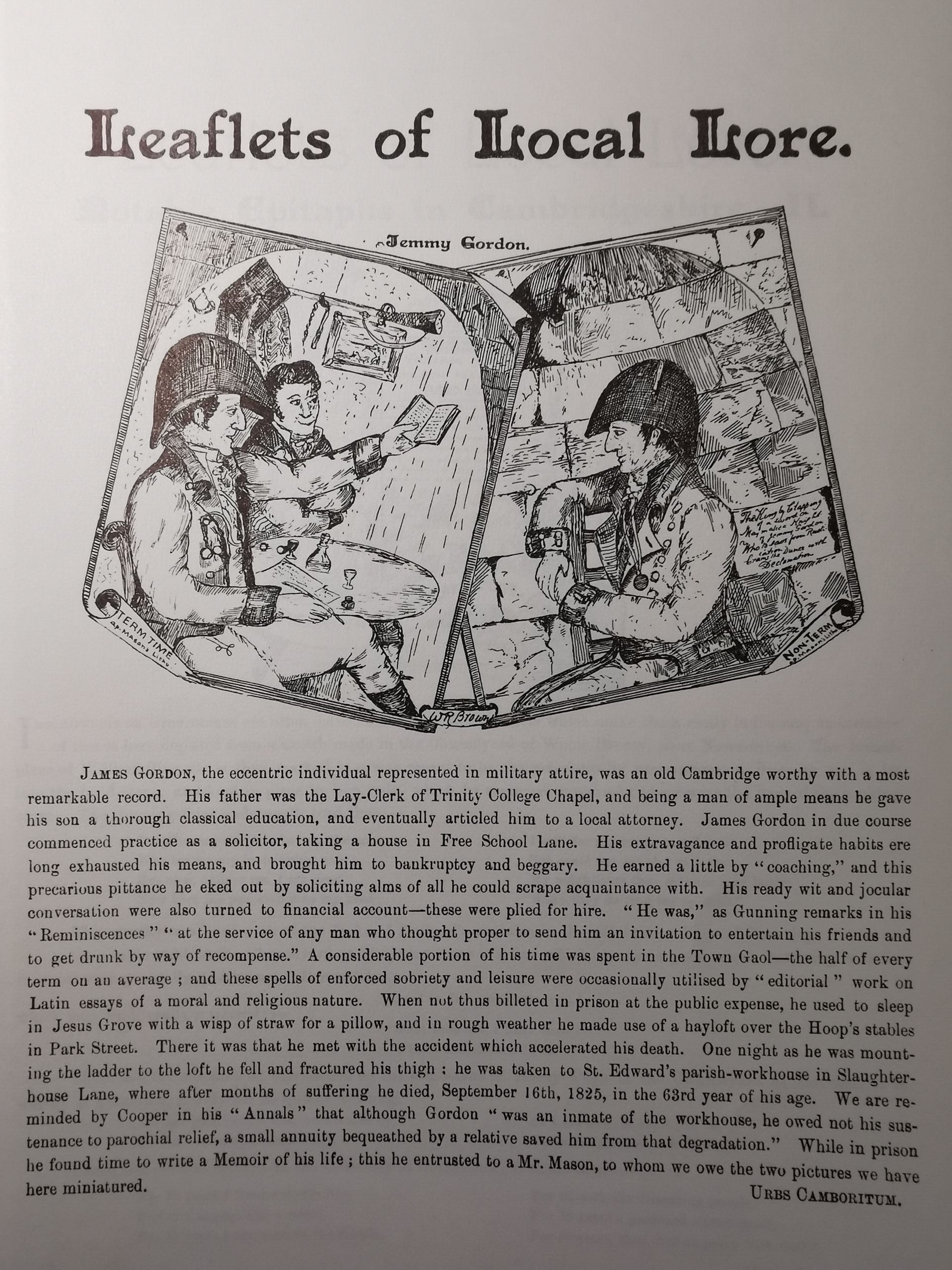
Jemmy Gordon: from Leaflets of Local Lore by Urbs Camboritum (Cambs Collection)
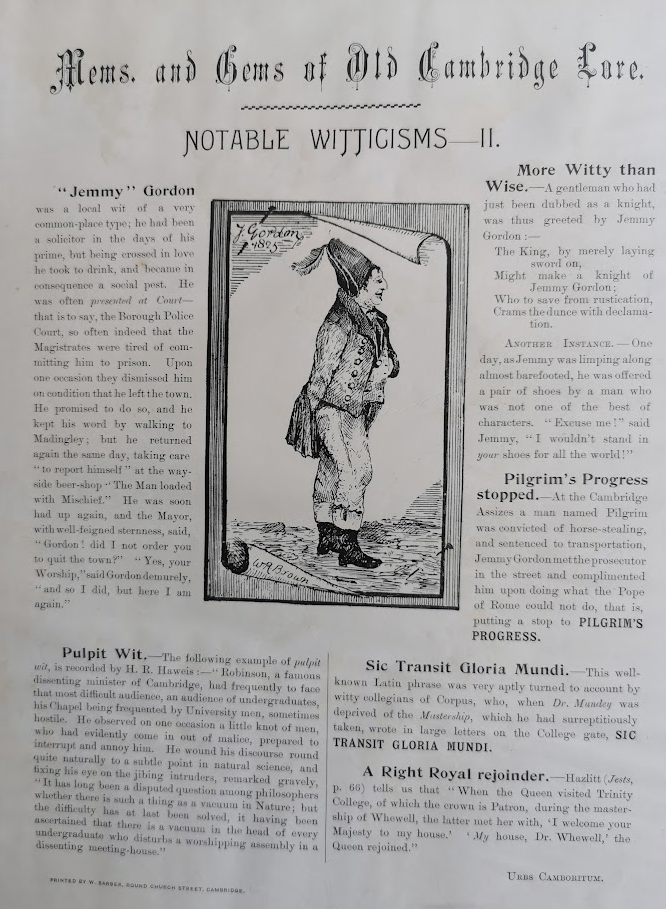
Urbs Camboritum, Jemmy Gordon
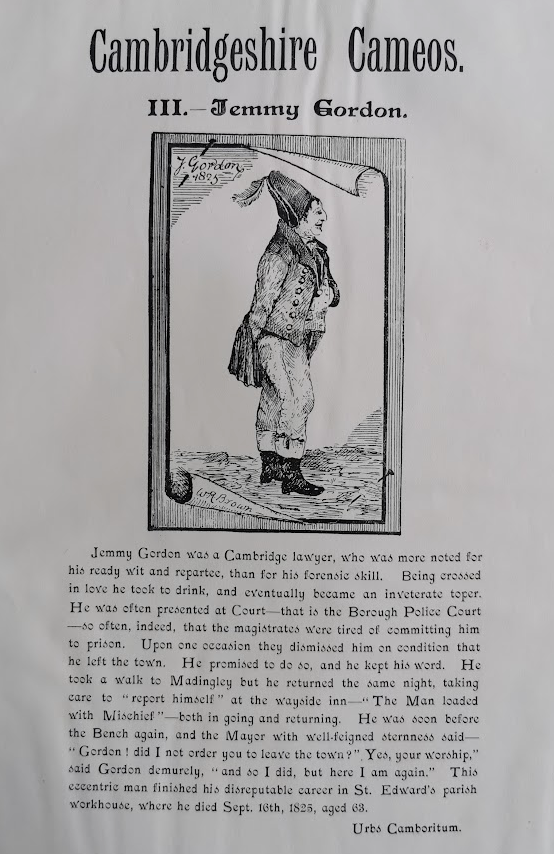
Urbs Camboritum, Jemmy Gordon
Projects
Contribute
Do you have any information about the people or places in this article? If so, then please let us know using the Contact page or by emailing capturingcambridge@
Licence
This work is licensed under CC BY-NC-SA 4.0