Search by topic
- archaeology
- Building of Local Interest
- chapel
- charity
- church
- crime
- dressmaker
- Great Eastern Railway
- Listed building
- Mapping Relief
- medieval
- oral history
- poverty
- Public House
- railway worker
- Religious House
- Roman
- scholar
- school
- Then and Now
- tudor
- women
- work
- world war one
- world war two
Search by text
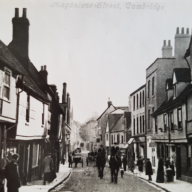
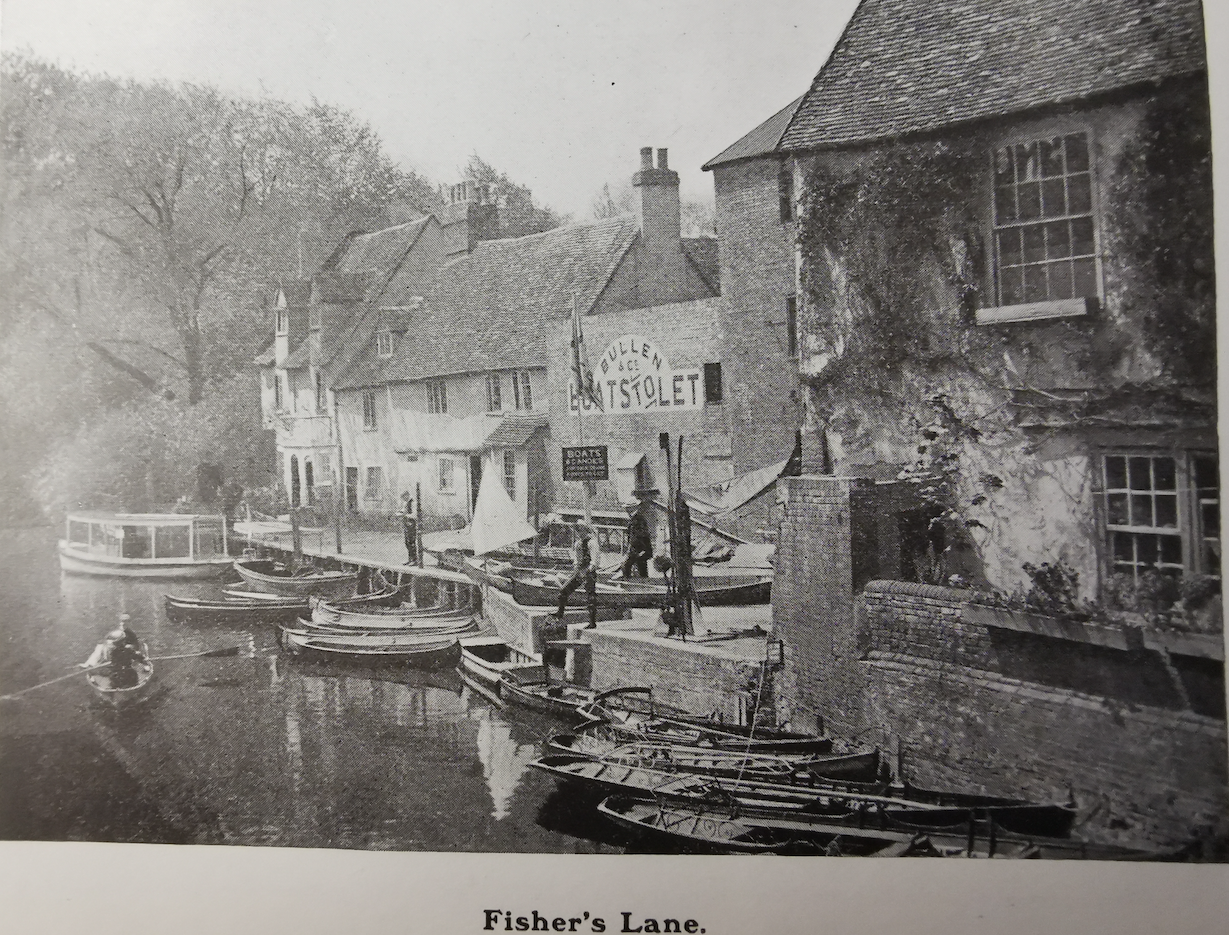 Fisher's Lane c1917
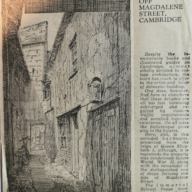
Fisher’s Lane, (Rea Lane) Magdalene Street
History of Fisher's Lane, Magdalene Street
The alternative name for the River Cam had been the Rea, the Celtic for water.
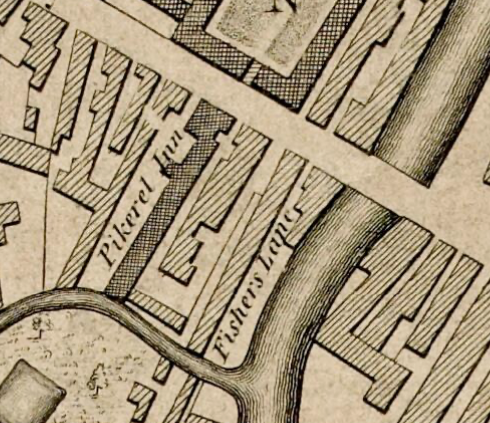
Custance map of Cambridge 1798
1861
(1) Elizabeth Faudham, 51, laundress, b Chesterton
(2) Mary Fletcher, 69, laundress, b Cambridge
(3) George Amos, 43, weaver, b Norwich
(4) Isaac Strange, 30, boat builder, b Linton
(5) Lydia Ison, 40, dressmaker, b Longstanton
(6) Rebecca Coulson, 51, nurse, b Hilton
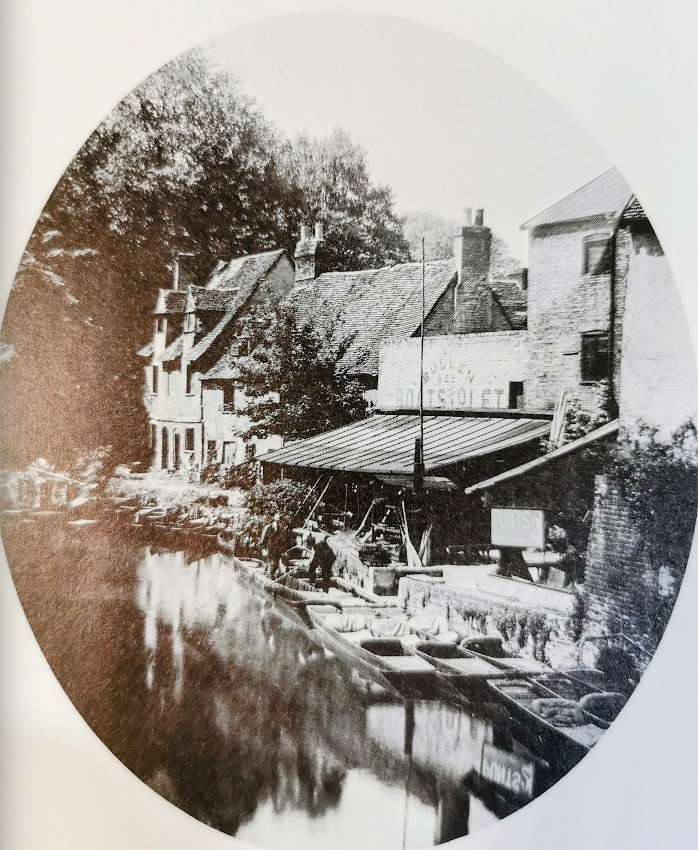
Bullen’s boatyard & Fisher Lane c.1880. Bargees lodged in these houses. (J Palmer Clarke)
1871
(1)
(2)
(3)
(4)
(5)
John Fry, 37, general smith, b Somerset
Ann, 37, b Cambridge
Alfred, 11, b Cambridge
Henry, 7, b Cambridge
Elizabeth, 3, b Cambridge
Anne, 1, b Cambridge
In 1861 the Fry Family were at 29 Prospect Row
(6) Alfred Smith, 27, cabinet maker, b Bedford
(7) Rebecca Coulson, 63, nurse, b Hilton
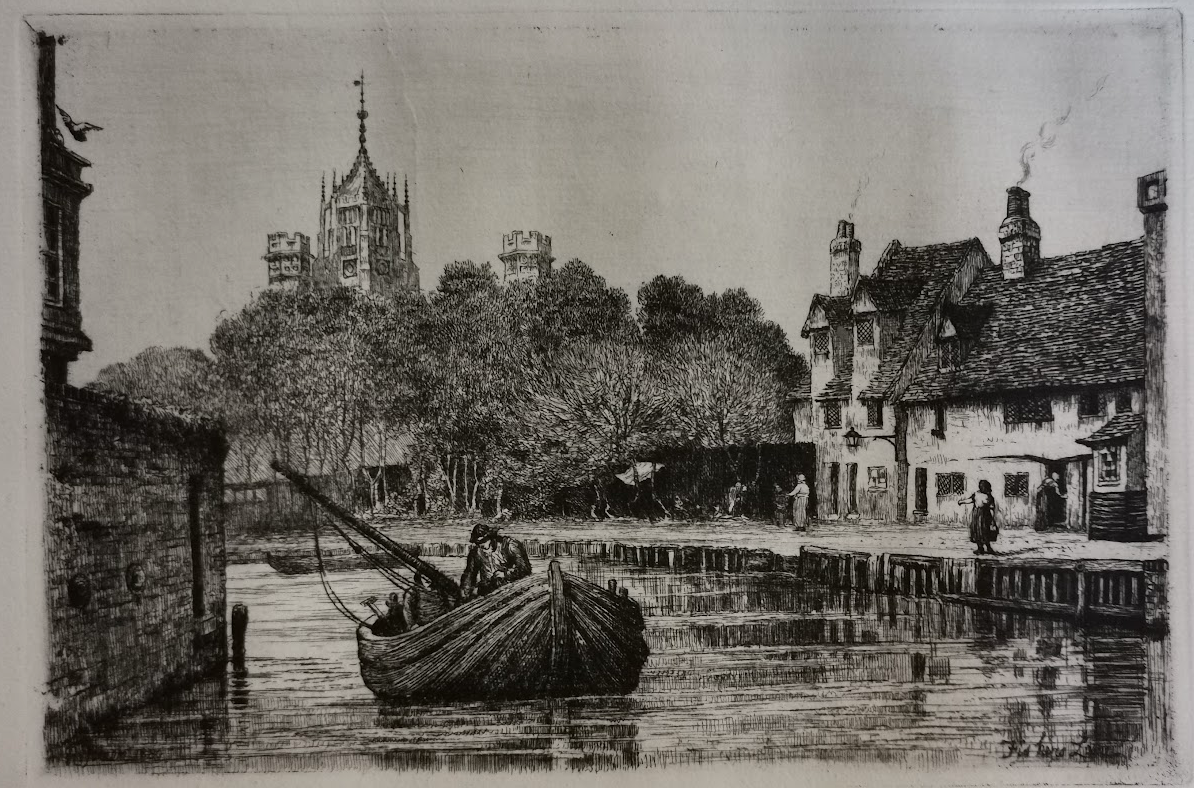
Fisher’s Lane, R Farren 1881
1881
(7)
John Fry, 47, general smith,
Ann, 46,
Albert, 22, college servant,
Harry, 17, general smith,
Elizabeth, 12,
Frank, 8, b Cambridge
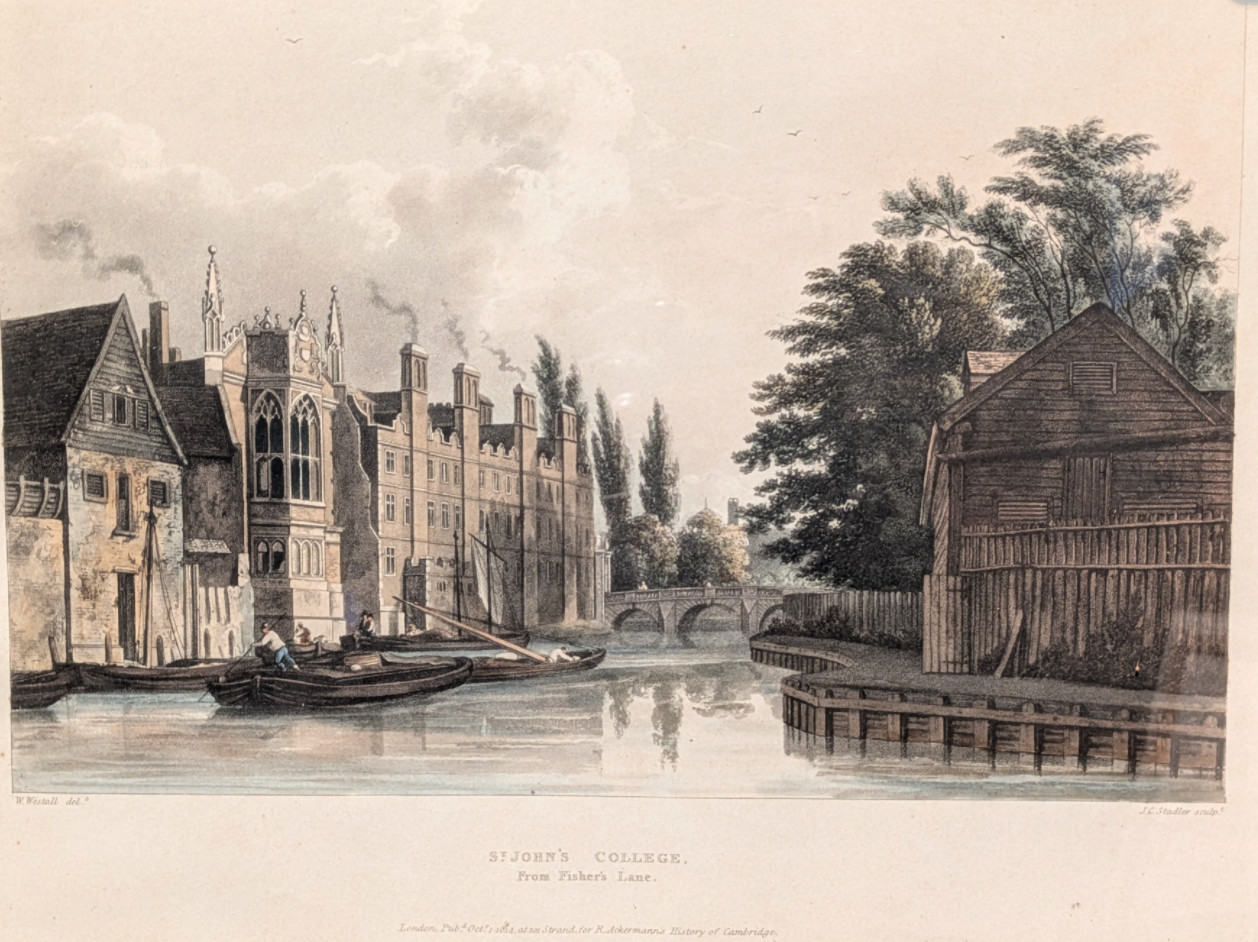
St John’s College form Fisher’s Lane by Stadler
1891
(7)
John Fry, 56, whitesmith
Annie, 57,
Elizabeth, 22, dressmaker
Frank, 18, broker’s porter, b Cambridge
Gertrude E, granddaughter, 9, b Cambridge
1901
(7)
John Fry, 68, whitesmith, b Cambridge
Elizabeth, daughter, 32, dressmaker
Frank, son, 29, packer of fish
Ellen, daughter in law, widow, 41, college …?
John E, grandson, 17, apprentice whitesmith
Harry, 15, apprentice whitesmith
Emily, 13,
Nellie, 8, b Cambridge
Florence, 4, b Cambridge
John Fry the elder died in 1906.
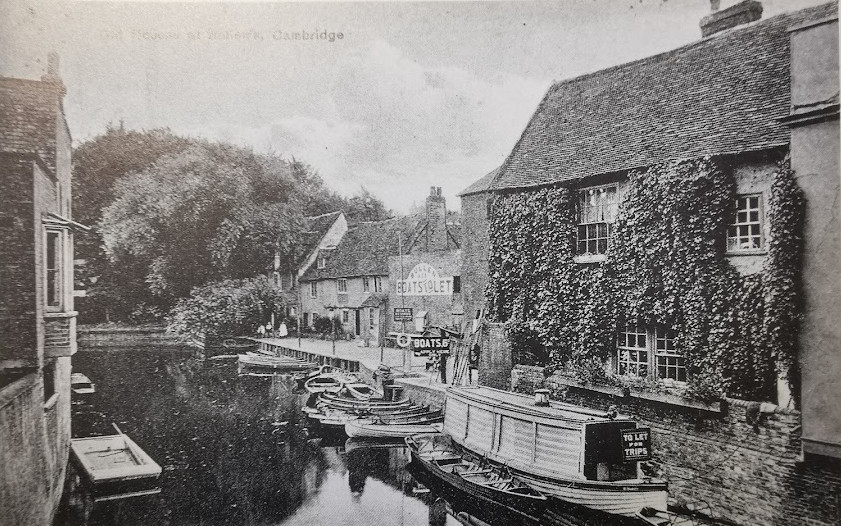
Fisher lane c.1905
Note in photo early garden punt. Pleasure punts first appeared around 1902-1904.
1910
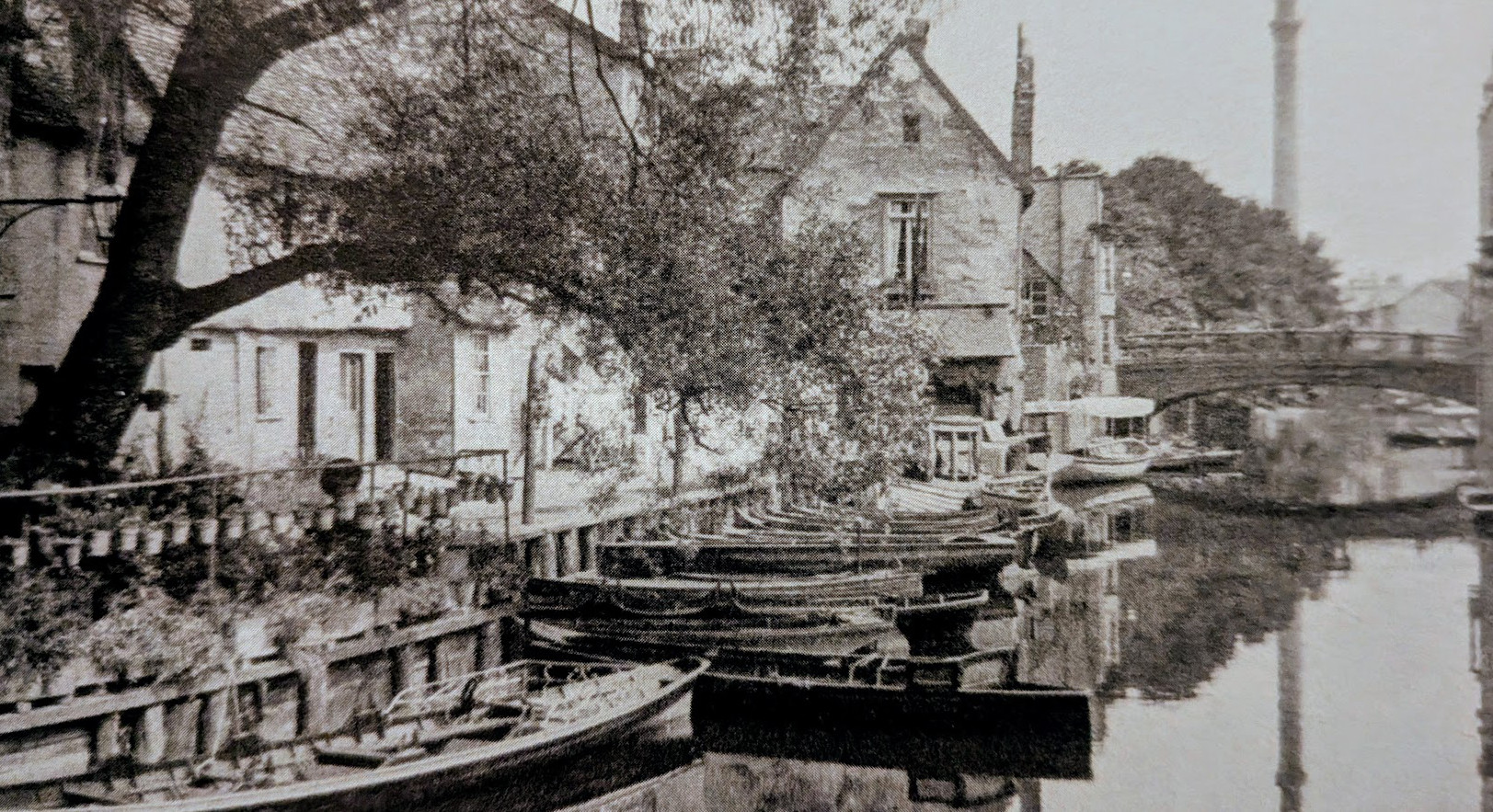
Fisher’s Lane, Cambridge c1910
1911
7.
William Child, 26, shoeing smith, b Norfolk
Kate, 24, b Cambridge
Kathleen Mary, 3, b Cambridge
Joan, 1 month, b Cambridge
In 1901 William Child was at Honey Hill
1913
(Life Buoy No. 6)
1. Frederick W Bullen, Bullen & Co’s Boatyard
7. William Child, shoeing smith
See Enid Porter: Boat Building
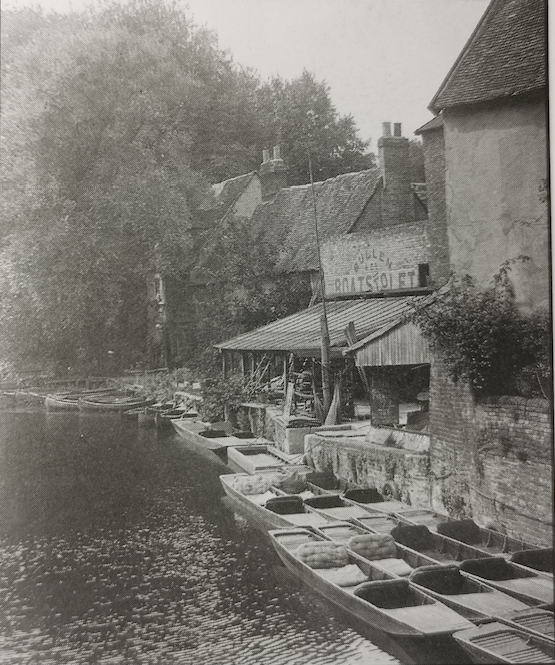
Fisher’s Lane, date unknown (photo F J Allen)
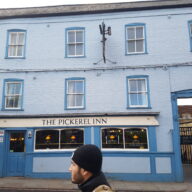
W F Turner, Old Cambridge – Cambridge Chronicle 19.11.1929: The wharf down Fisher’s Lane was at one time a very busy place when barges came filled with merchandise and in the cottages lived the bargees. At the Pickerel Inn there still existed a room called the Cock Pit where the men who plied the ferry which existed before the first bridge was built used ton spend their spare time in cock fighting. He was given to understand that at one time the Binn Brook was a waterway up which coal and merchandise was taken to Barton and Coton. One of the old inhabitants well remembered the state of affairs when there were very elementary sanitary arrangements, and the river was the source of water supply. When he was a boy, the old man said, there lived an old woman who used to get her water every evening in a bucket attached to a pole with a metal clip at the end. One evening when she was filling her bucket he noticed a dead dog in the water near the bucket and called to her, ‘Oh! look there’s a dead dog’ to which she calmly replied, ‘I always boils my water before I drinks it.’
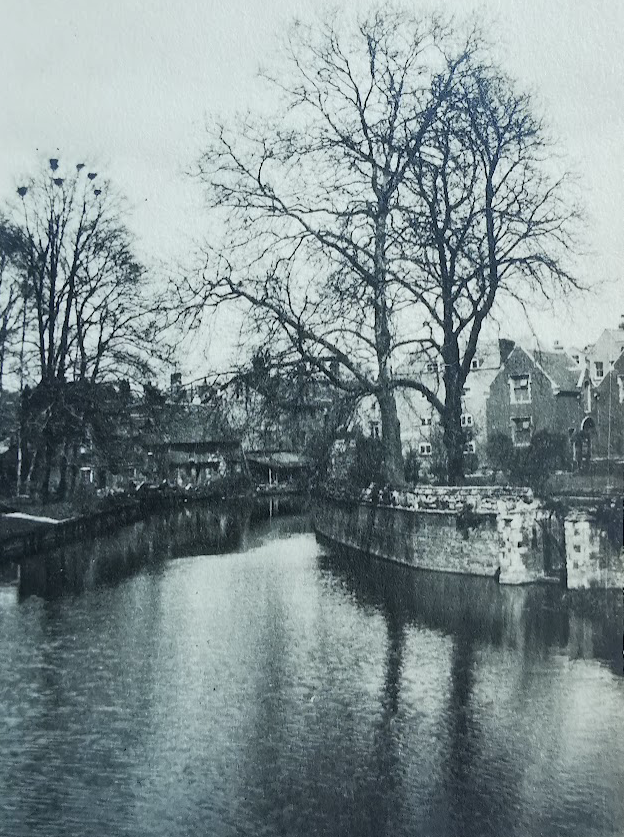
Fisher’s Lane from Bridge of Sighs (MoC 144/54)
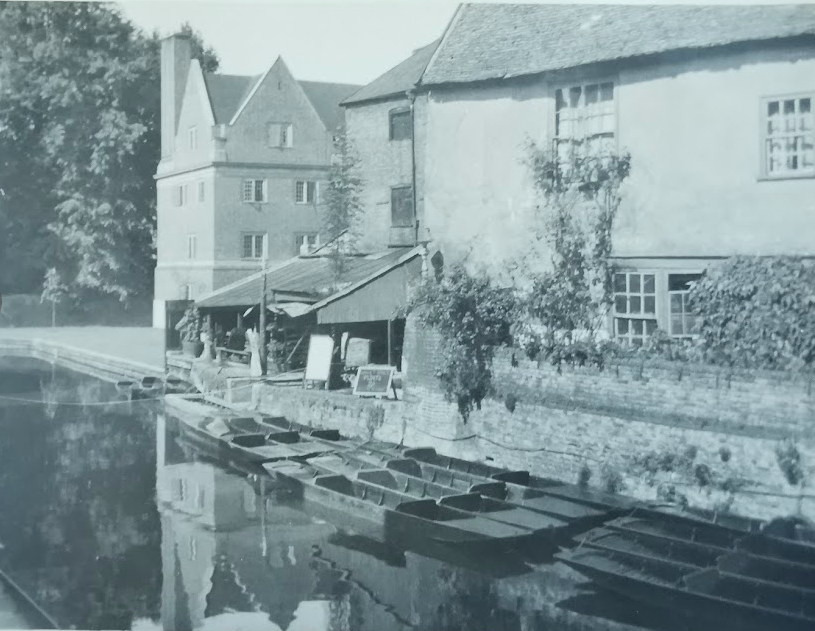
Bullen’s boatyard, 1954 (MoC 197/54)
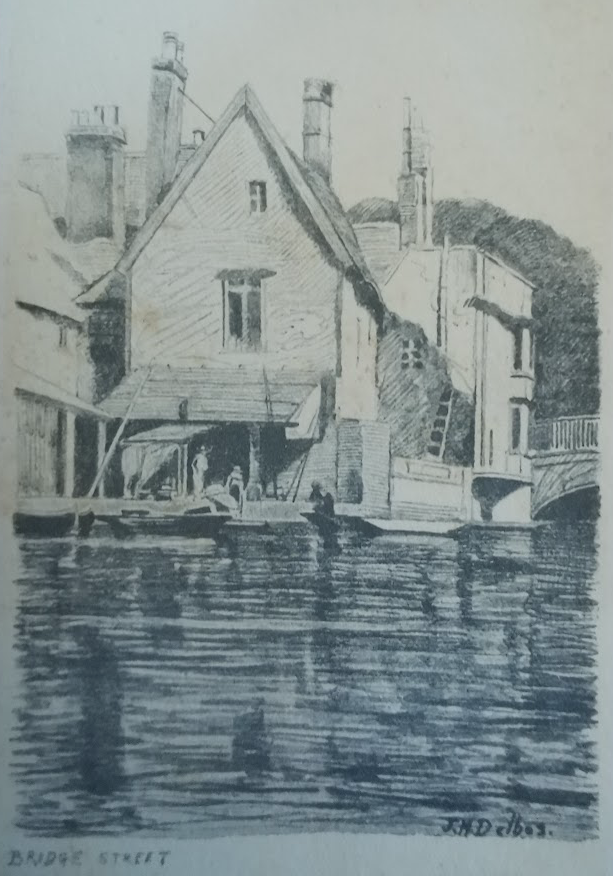
Bullen’s Boatyard (MoC 75/55) drawing by J H Delbos
Projects
Contribute
Do you have any information about the people or places in this article? If so, then please let us know using the Contact page or by emailing capturingcambridge@
Licence
This work is licensed under CC BY-NC-SA 4.0