Search by topic
- archaeology
- Building of Local Interest
- chapel
- charity
- church
- crime
- dressmaker
- fire
- Great Eastern Railway
- Listed building
- Mapping Relief
- medieval
- oral history
- poverty
- Public House
- Religious House
- Roman
- scholar
- school
- Then and Now
- tudor
- women
- work
- world war one
- world war two
Search by text
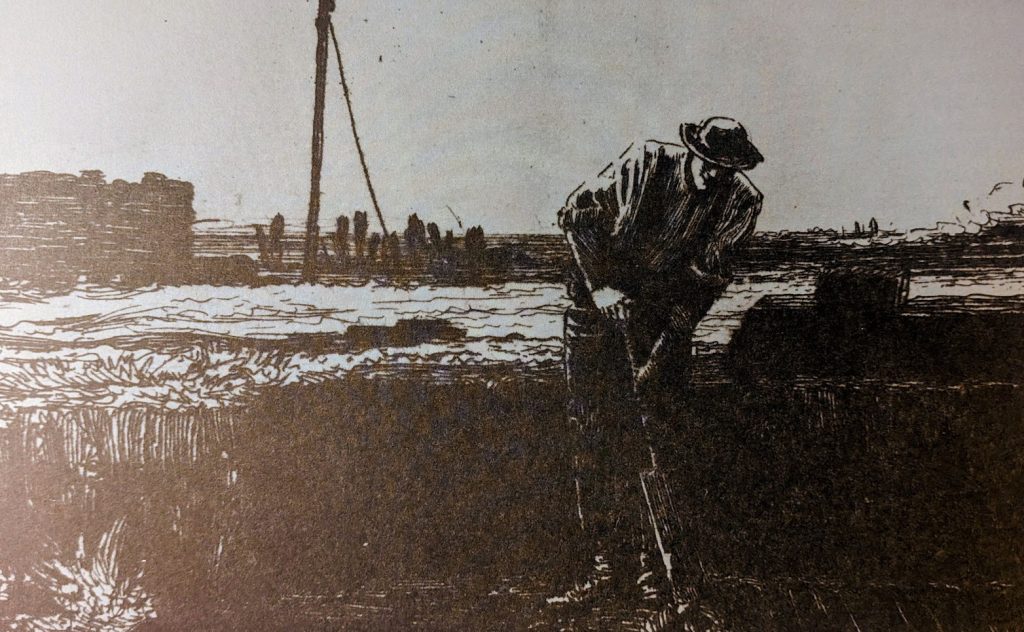 Peat digger by Robert Farren, 1882
Wicken Poor’s Fen
History of Wicken turbaries
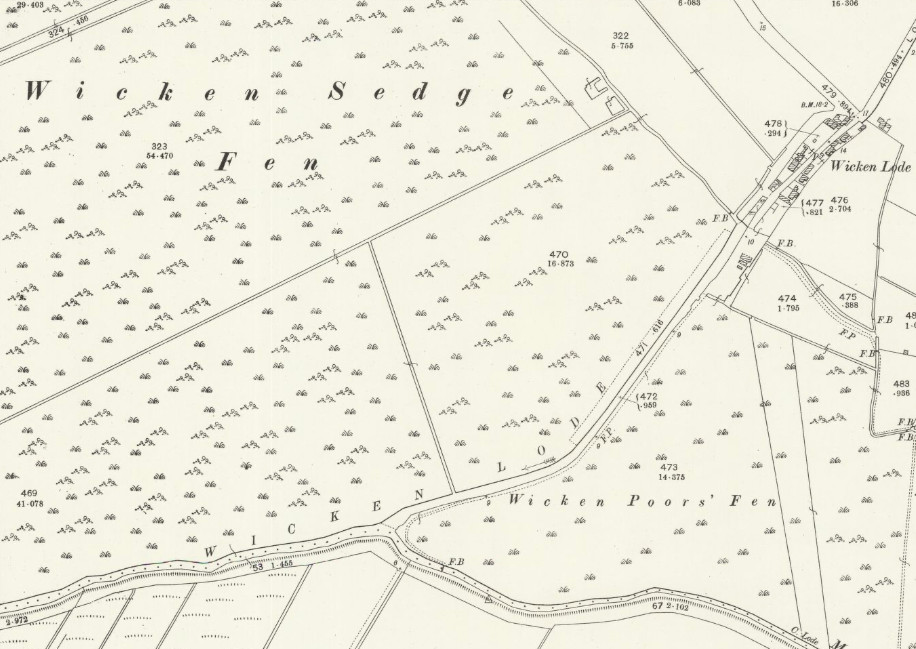
Wicken OS 1901
According to Turf Village – The Peat Diggers of Wicken, Anthony Day (1985) the main common turbaries (turf bogs) were Wicken Poor’s Fen and Wicken Poor’s Piece, in the vicinity of Wicken Sedg Fen. The digging ere was rough and random in contrast to the commercial exploitation of other local fens.
In common turbaries in Wicken, digging was allowed from the end of July; villagers were not allowed to employ assistants. If they needed more turves they had to buy them.
They were used as fuel in brick ovens, but also for brick kilns and by blacksmiths. In the 19th century turves were also still being used as bricks to build fen dwellings. Other cottages made of timber and wattle and daub, would use turves for insulation.
Until the decline of the industry after WWI, some three hundred men and boys were employed in the commercial diggings around Wicken, Burwell and Reach.
The earliest illustrations of the industry are those of Robert Farren, the Cambridge artist.
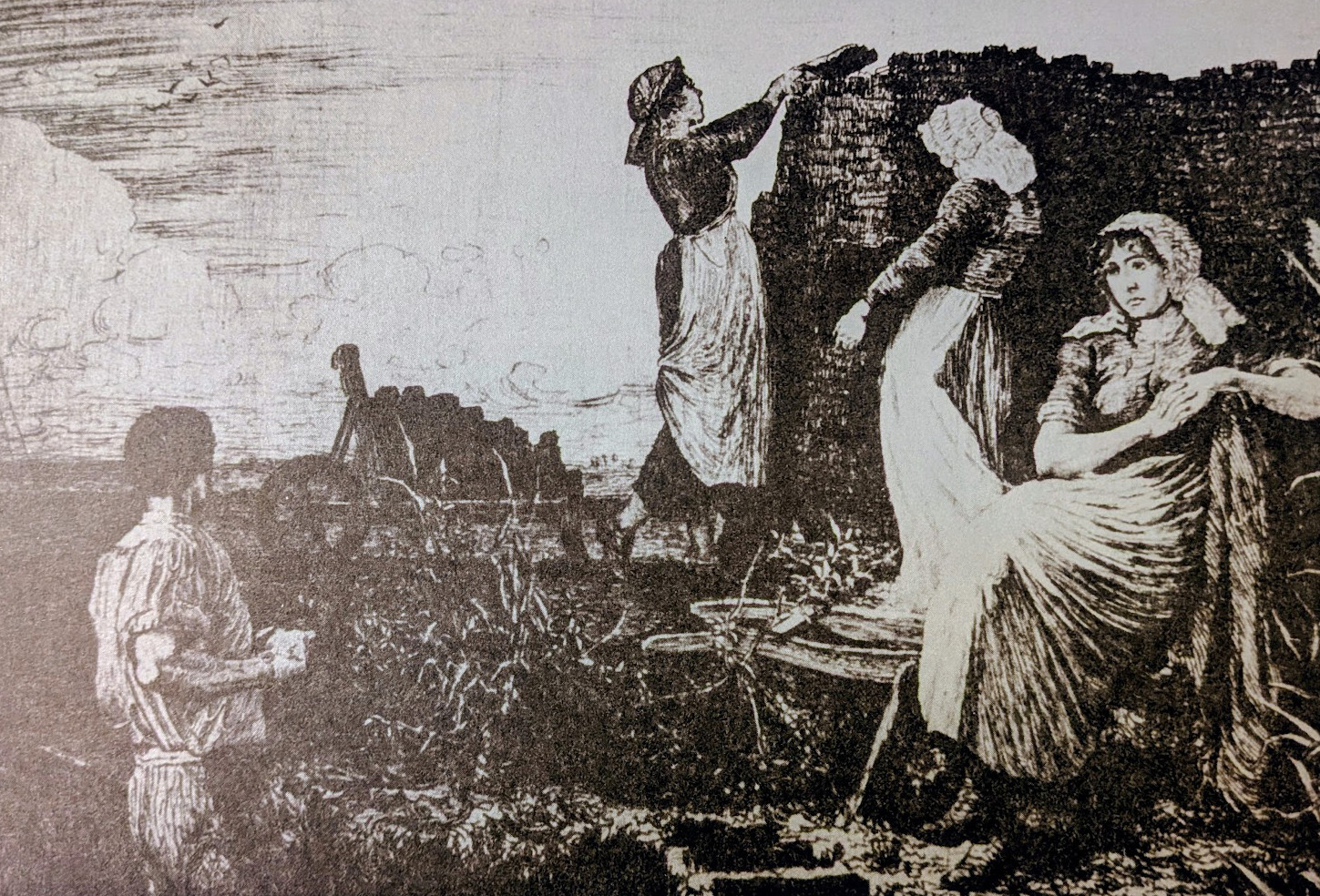
Peat stacking by Robert Farren, 1882
Projects
Contribute
Do you have any information about the people or places in this article? If so, then please let us know using the Contact page or by emailing capturingcambridge@
Licence
This work is licensed under CC BY-NC-SA 4.0