Search by topic
- archaeology
- Building of Local Interest
- chapel
- charity
- church
- crime
- dressmaker
- fire
- Great Eastern Railway
- Listed building
- Mapping Relief
- medieval
- oral history
- poverty
- Public House
- Religious House
- Roman
- scholar
- school
- Then and Now
- tudor
- women
- work
- world war one
- world war two
Search by text
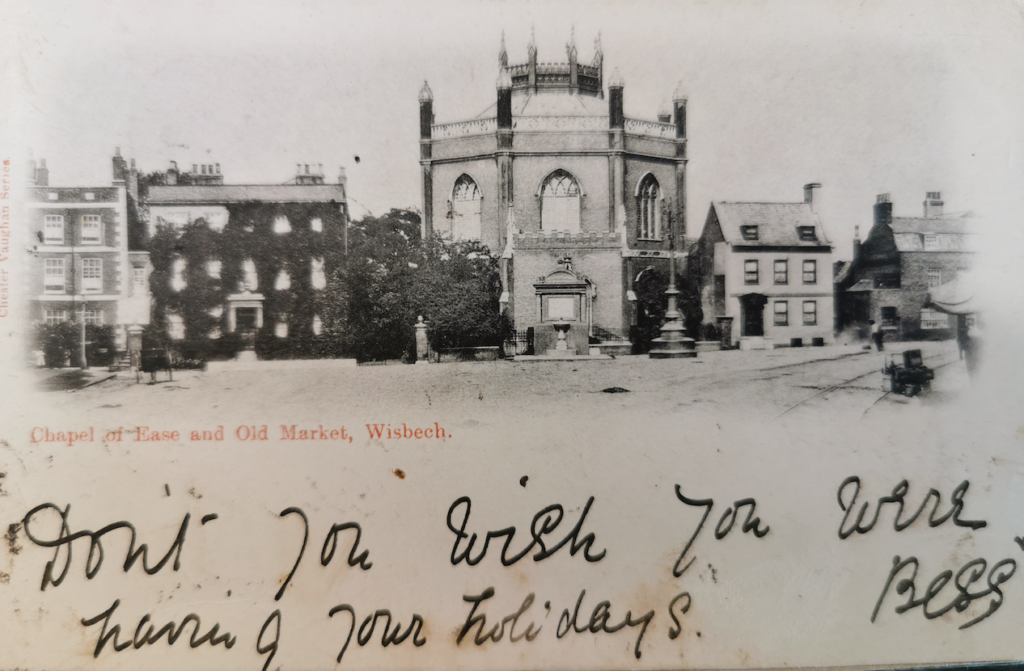 Chapel of Ease, Octagon Church, Wisbech
The Chapel of Ease, Octagon Church, Wisbech
History of the Chapel of Ease
This church opened as a chapel of ease to the parish church in 1831. It closed in 1946 and was demolished in 1952. Sir Nicholas Pevsner wrote in 1954: “To the disgrace of Wisbech this was under demolition at the time of writing.”
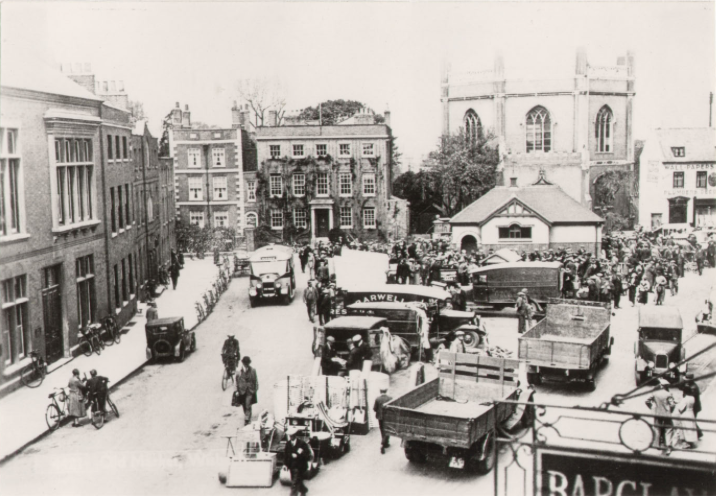
Octagon Church Wisbech c.1925
From British History Online:
The OCTAGON CHURCH is a brick building, faced with stone and embattled. It was erected under an Act of Parliament of 1827 as a chapel of ease to the parish church, and consists of chancel, octagonal nave, porch at the south side and a turret containing one bell. The building was designed by William Swansborough in imitation of the Octagon of Ely Cathedral, but the lantern became unsafe owing to defective foundations, and was replaced in 1846 by a battlement with pinnacles.
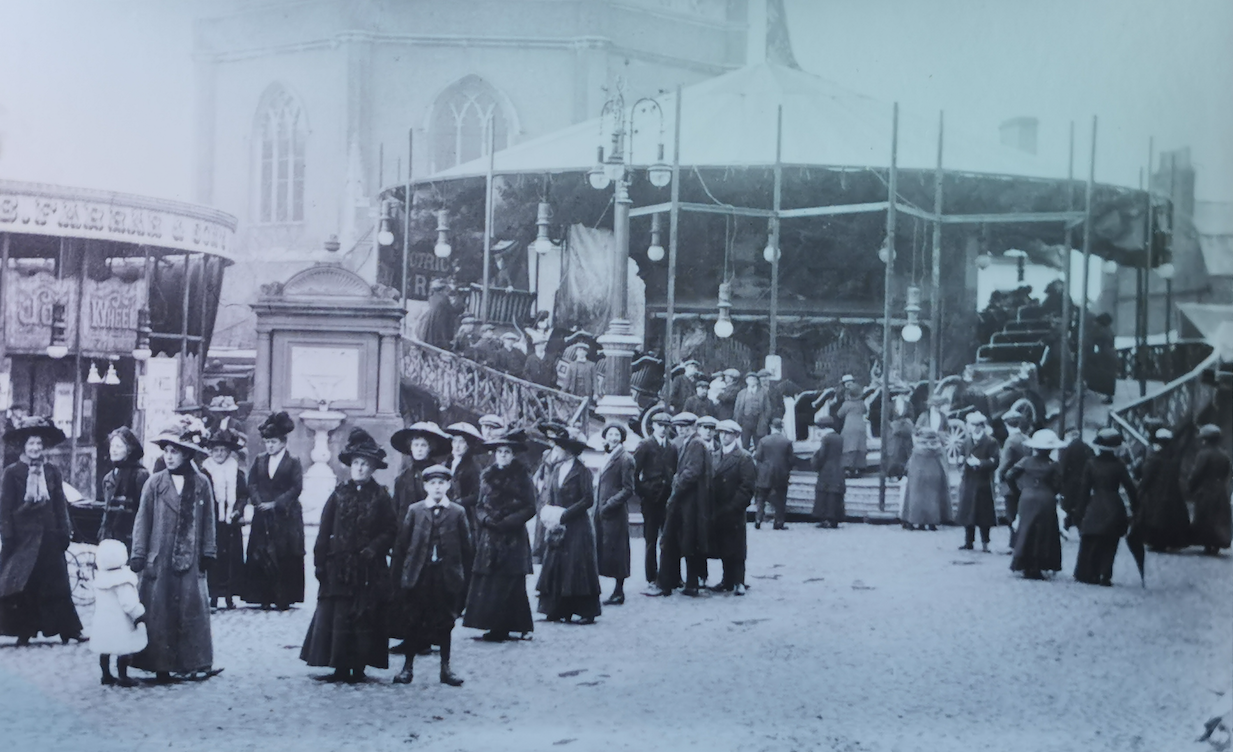
Octagon Chapel, Wisbech with fair in front date circa 1900
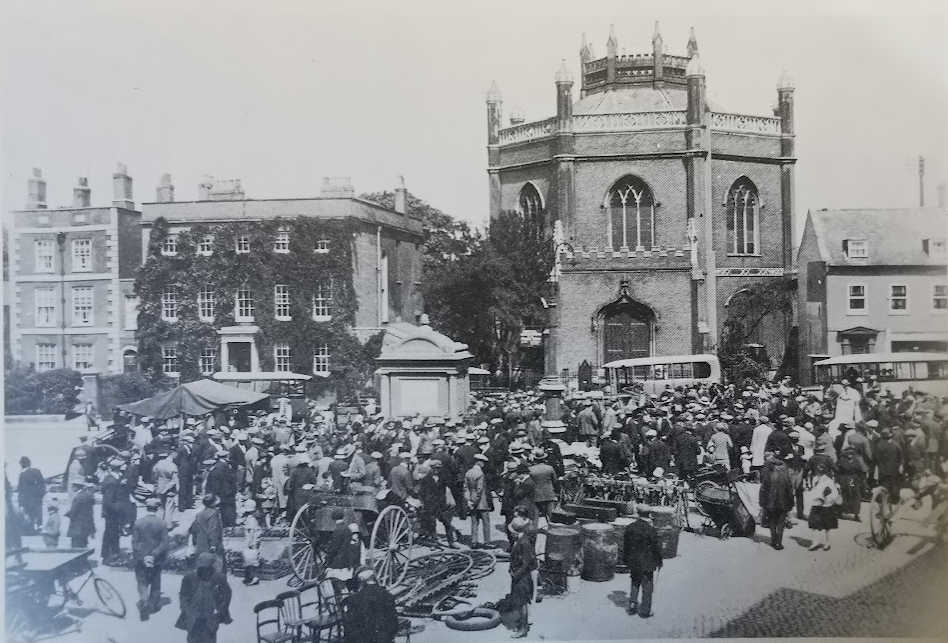
Octagon Church and Old Market, c.1910 (Frith)
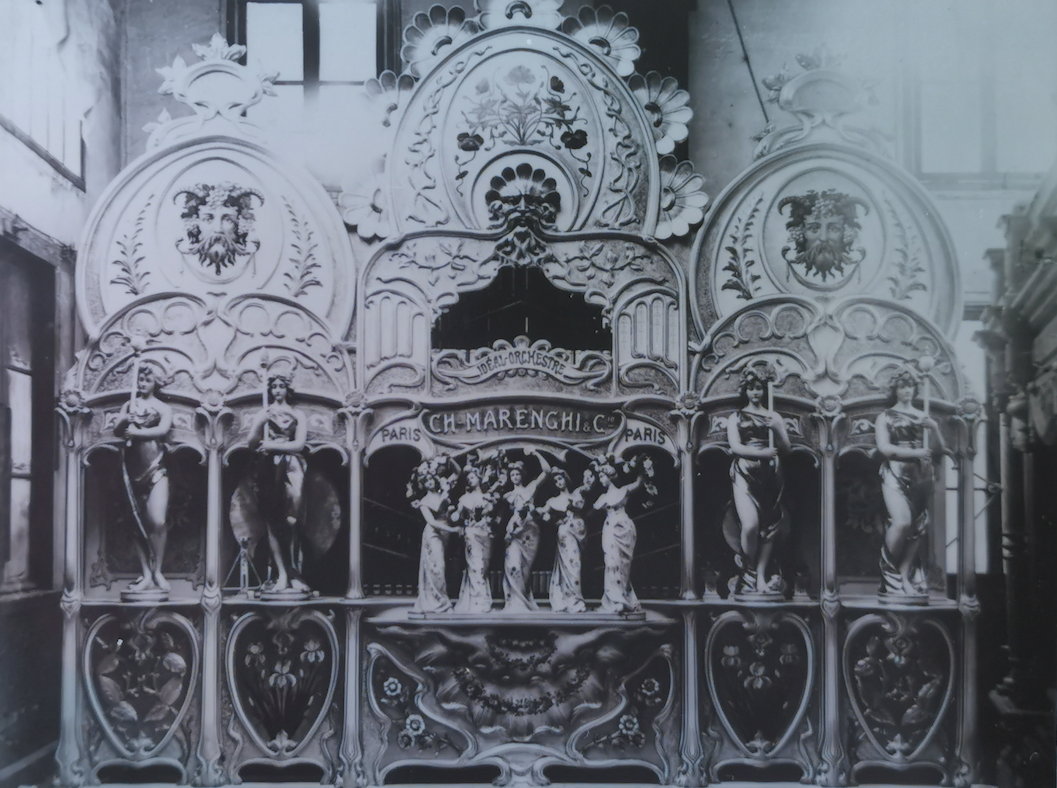
Marenghi fairground organ, Wisbech, circa 1900
Photos kindly sent by Tina Worby. For information about Marenghi fairground organs.
British History Online notes about Wisbech: Since at least 1851 travelling showmen and hawkers, on their way between Lynn to Stamford Fairs, have gathered in the town. This concourse is called the Mart. ‘This saturnalia’ it was said in 1851, ‘sometimes continues five weeks, and during that period all the noise that can be tortured out of drums, dulcimers, lungs, trumpets, organs, and cymbals serves to enliven, if not to gratify. The utility of marts and fairs is now almost wholly superseded; and those of Lynn and Wisbech have degenerated into a mere gathering of freaks of nature, “harlotry players”, dirty exhibitions, conjurers, wild beast [sic], and ragamuffin life in all its gipsyism.’
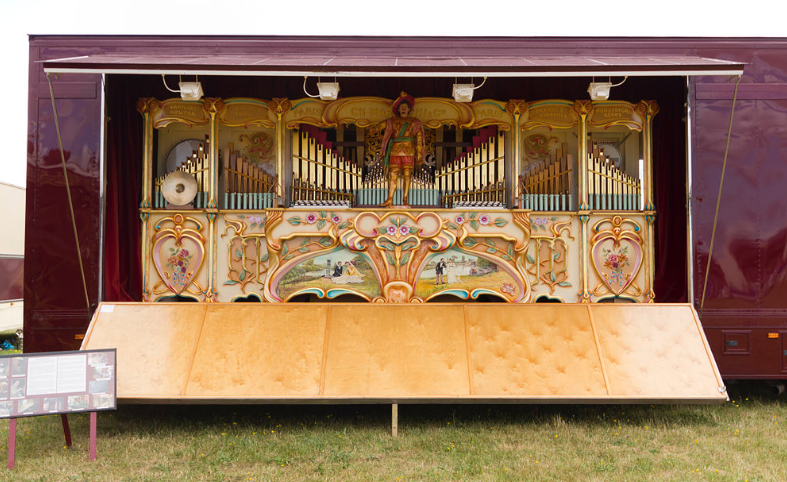
Replica Ch Marenghi organ (photo from Wikipedia)
Projects
Contribute
Do you have any information about the people or places in this article? If so, then please let us know using the Contact page or by emailing capturingcambridge@
Licence
This work is licensed under CC BY-NC-SA 4.0