Search by topic
- archaeology
- Building of Local Interest
- chapel
- charity
- church
- crime
- dressmaker
- Great Eastern Railway
- Listed building
- Mapping Relief
- medieval
- oral history
- poverty
- Public House
- railway worker
- Religious House
- Roman
- scholar
- school
- Then and Now
- tudor
- women
- work
- world war one
- world war two
Search by text


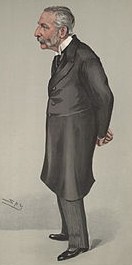 Richard C Jebb
Springfield, Sidgwick Avenue
History of Springfield
1883 In Period Piece Gwen Raverat describes how her mother, Maud du Puy, came in the spring of 1883 visit her aunt, Caroline Jebb in Cambridge. The Jebbs lived at Springfield though ‘ Uncle Dick’ was at the time Professor of Greek at Glasgow. The family lived in Cambridge in the summer. The Jebb household at Springfield is described in Period Piece p.90ff.
1884-5 the house was rented by George Darwin and his new wife Maud. (Period Piece p.31) while they looked for a house to buy.
1891 Queens Road
Richard Claverhouse Jebb, 49, professor of Greek, b Dundee [see cartoon]
Caroline L Jebb, 43, b USA [Period Piece p87f has a detailed description of ‘Aunt Cara’]
Margaret Horne, 33, servant, b Scotland
Francis Claxton, 26, servant, b Norfolk
Bessie Ingles, 17, servant, b Lancs
Lady Jebb’s Life in Cambridge – A Summary from *With Dearest Love to All*
Lady Caroline Jebb, a prominent figure in *With Dearest Love to All*, played a central role in the intellectual and social life of Cambridge during the late 19th and early 20th centuries. As the wife of Sir Richard Claverhouse Jebb, the Regius Professor of Greek at Cambridge, she occupied a place of considerable influence and visibility within the university’s elite circles. The memoir by Mary Reed Hobart offers a deeply personal and vivid portrait of Lady Jebb—not just as a society hostess or academic spouse, but as a powerful and charismatic woman whose drawing room served as a hub of conversation, culture, and mentorship. Mary, an American unfamiliar with the traditions of English academia, was both fascinated and intimidated by Lady Jebb’s poise, energy, and commanding intellect. Lady Jebb was known for her eloquence, wit, and uncompromising standards. Her hospitality was generous but never casual—she expected excellence and seriousness from those around her. Yet she could also be warm, maternal, and unexpectedly humorous. Mary observed that Lady Jebb took her under her wing in ways that helped her navigate both Cambridge society and its academic world, making her experience far richer and more comprehensible. She was also deeply engaged in charitable work and intellectual discourse, often extending her influence beyond the university through connections with London society and American expatriates. Her Cambridge home was a crossroads for thinkers, writers, and reformers. Her interest in politics, philosophy, and education made her an important informal force in shaping cultural life—particularly for the women around her. In contrast to many women of her era, Lady Jebb operated with a sense of authority usually reserved for men. She managed her household and her husband’s public role with skill, acting almost as an ambassador for the university in its social dimension. This authority came not just from her marriage, but from her own formidable personality and intellect. Mary’s reflections also hint at the constraints Lady Jebb faced. Her power operated within a male-dominated structure; her influence was often exercised subtly, through conversation and connection rather than overt leadership. Yet within these bounds, she made a lasting impression on younger women, especially those like Mary who were seeking to define their own paths in a complex cultural environment. Ultimately, *With Dearest Love to All* presents Lady Jebb as a symbol of Cambridge at its most elegant, exclusive, and intellectually alive. Through the lens of personal memory, we see a woman whose strength and style left a lasting mark—not just on the university’s history, but on the individuals who passed through her orbit. (AI 2025)
1901
1913
Lady Jebb
1939
Alfred S H Walford, b 1899, Ear Nose Throat surgeon (Major RAMC TA)
Phyllis I, b 1901 (Red Cross training in auxiliary nursing)
Marjorie Loates, b 1917, cook
Violet Moule, b 1917, parlourmaid
A paper on laryngology by Walford is available.
1962
(Flat 1) Rev Canon H W Montefiore
(Flat 2) Rowland J Custerson
(Flat 3) K G Davey PhD
Projects
Contribute
Do you have any information about the people or places in this article? If so, then please let us know using the
Contact page or by emailing
capturingcambridge@
Licence
This work is licensed under
CC BY-NC-SA 4.0


 not including content on external links as indicated
by
not including content on external links as indicated
by .
.