Search by topic
- archaeology
- Building of Local Interest
- chapel
- charity
- church
- crime
- dressmaker
- fire
- Great Eastern Railway
- Listed building
- Mapping Relief
- medieval
- oral history
- poverty
- Public House
- Religious House
- Roman
- scholar
- school
- Then and Now
- tudor
- women
- work
- world war one
- world war two
Search by text
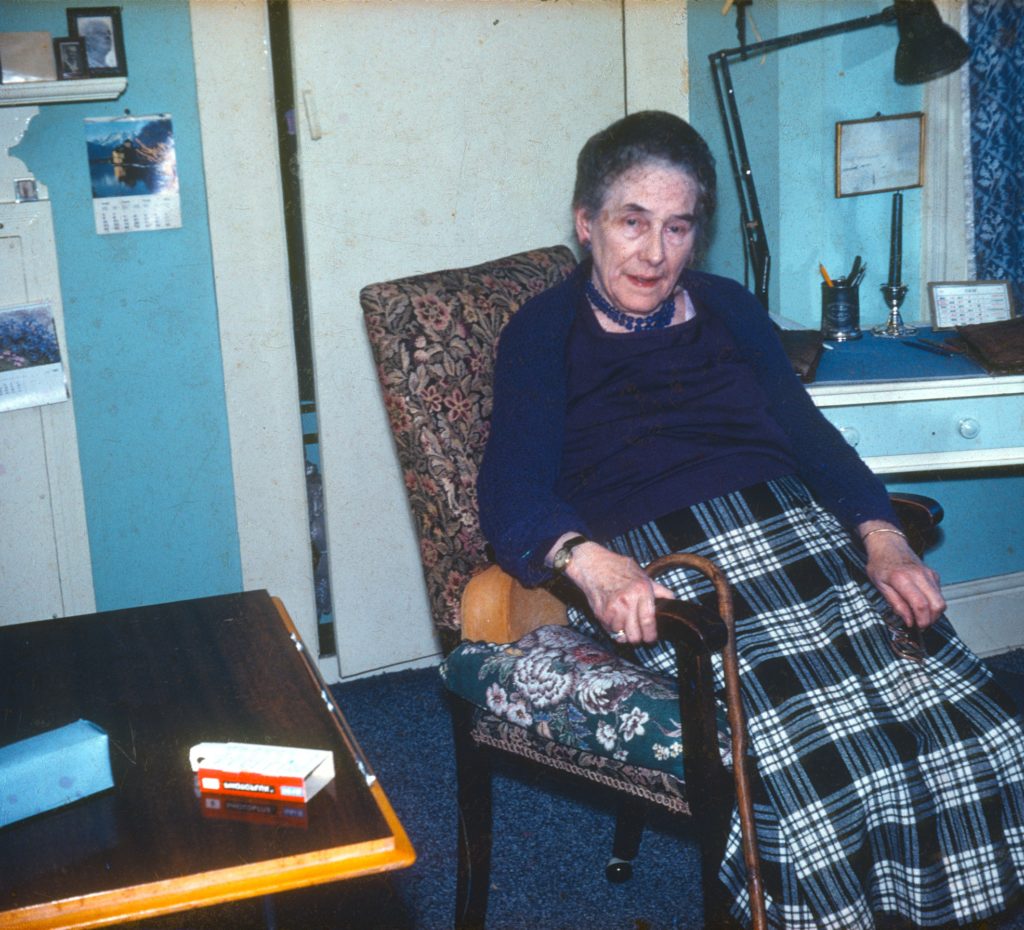 Georgette Alice Frampton (née Bellenot), born in Neuchatel, Switzerland, in 1886. Courtesy Robin Mansfield.
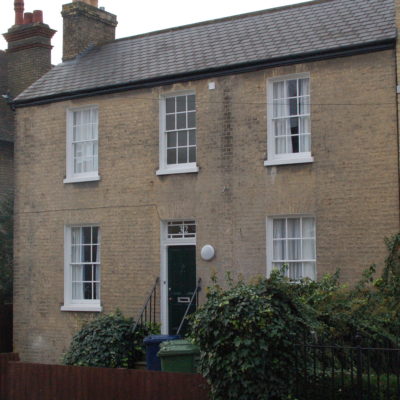
25 Collier Road
Grand Old Lady of Collier Road
1911
Charles Miller, 33, Prudential Assurance Agent, b London
1939
No record of address
According to Kelly’s Directories, Georgette Alice Frampton, known as Alice, lived at 25 Collier Road from around 1955 up until her death in 1969. She was the widow of a teacher of English, divorcée Henry Hugh C. Frampton, and they are recorded as living at 4 Willis Road in 1939 following their marriage in 1935. Before this, Henry’s work took them to European cities including Florence and St Petersburg. During his time in Russia, Henry was employed as the English tutor to Tsar Nicholas II’s children, and judging by the number of framed photographs in Alice’s sitting room showing the Framptons with the royal family, it seems that they were very well accepted by the court. The Framptons knew Rasputin and also became good friends with the Grand Duke Nicholas, the Tsar’s cousin. In her later years, Alice herself was rather a grand old lady and had frequent visitors to her upstairs rooms in Collier Road. One of the visitors was Lee Kuan Yew, the Prime Minister of Singapore from 1959 to 1990, who presumably Alice got to know while he was studying law at Cambridge University. Often, visitors would be rebuffed when Alice was under the weather or when she was receiving communion from a priest, clad in cassock and surplice. These rebuffs would frequently be signalled by a printed notice placed strategically at the top of the stairs with the words ‘No Visitors Today’.
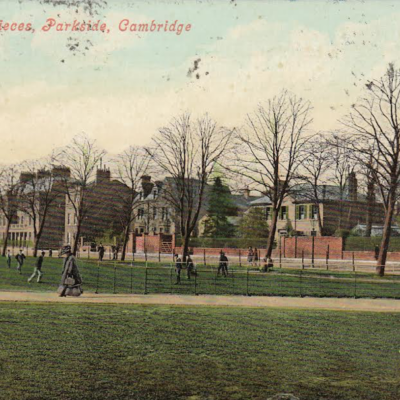
Collier Road in the sixties was a rare mix of bed-sit houses and family homes, whose occupants ranged from office workers, nurses, painters and decorators, students and for a very short time a prostitute. It is also worth noting that the main entrance and car park of the Cambridgeshire College of Arts and Technology (now Anglia Ruskin University) was between numbers 17 and 23 Collier Road, which has now been infilled with houses.
At number 29 lived Nellie Searle the widowed mother of former CCAT alumni Ronald Searle, who became famous for his books and illustrations. These included the cartoons for the comic strip series St Trinian’s, which were allegedly modelled on the pupils from the local girls’ grammar school. Ronald would frequently notice the girls engaged in playing games on Parker’s Piece. Ronald visited his mother on a regular basis from his home in France but it is unknown whether he or his mother knew Alice Frampton very well.
Alice Frampton was typical of the rather genteel people who often were attracted to the area. She was from another era, and demonstrated this, for example, by the time when she ordered three bananas to be delivered from Richard Naylor the Mill Road greengrocer. Alice could be very generous to the people that helped her and she often gave them small mementos gathered from her travels around Europe. One of these was the birds head shaped handled walking stick once owned by the Grand Duke Nicholas, part of which is shown in the photograph illustrated along with Alice herself.
Robin Mansfield
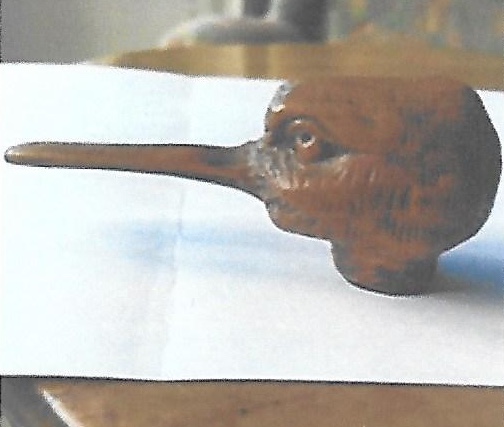
Grand Duke Nicholas’s walking cane handle
Projects
Contribute
Do you have any information about the people or places in this article? If so, then please let us know using the Contact page or by emailing capturingcambridge@
Licence
This work is licensed under CC BY-NC-SA 4.0