Search by topic
- archaeology
- Building of Local Interest
- chapel
- charity
- church
- crime
- dressmaker
- fire
- Great Eastern Railway
- Listed building
- Mapping Relief
- medieval
- oral history
- poverty
- Public House
- Religious House
- Roman
- scholar
- school
- Then and Now
- tudor
- women
- work
- world war one
- world war two
Search by text

10 Green Street, Cambridge
History of 10 Green Street
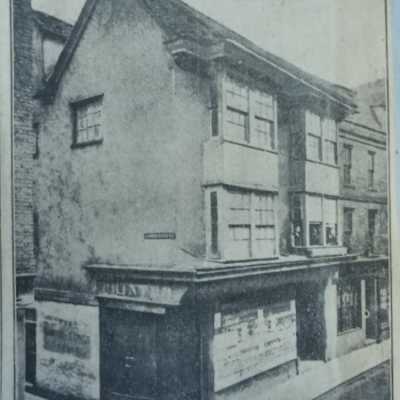
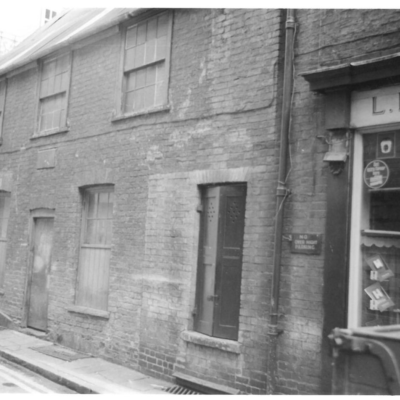
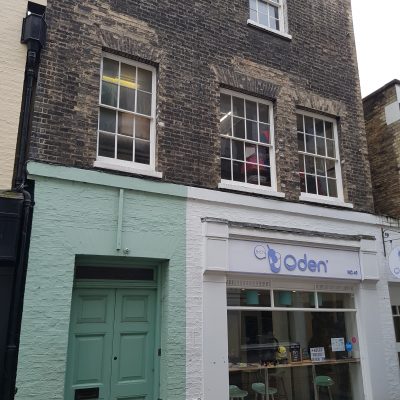
According to 1959 Royal Commission on Historical Monuments Survey of Cambridge, No.10 is a house with three and four storeys as well as attics. It was built circa 1700 and refracted later in the 18th cent. The shop-front is late 19th cent.
Inside there is original panelling, a late 18th cent. fireplace surround. As well as the staircase there are many other original features on the other floors.
1861
John Phillips Gray, 37, bookbinder employing 4 apprentices 1 boy and 5 females, b Cambridge
1911
Arthur Beales Gray, 43, bookbinder, born Cambridge
Annie Rebecca, 41, born Cape Colony [South Africa]
Arthur John, 19, bookbinder, born Cambridge
Kate Annie, 16, born Cambridge
Elizabeth Ann Moxon, 21, general servant, born Ely
Arthur John Gray was a captain in the 1/1st Battalion, Cambridgeshire regiment. He was killed in action 31st July 1917 and is buried in the Buffs Road Cemetery, Ieper. He was the fiancee of Eleanor Fison of Fison’s Farm, Fen Ditton.
1962
John P Gray, bookbinders
Mrs C Searle
1981
Sara Payne (CWN 23.4.1981) describes in detail the inside of 10 Green Street.
c2000
Brian Jordan, specialist music seller
2018
Cambridge Gin Laboratory
Projects
Contribute
Do you have any information about the people or places in this article? If so, then please let us know using the Contact page or by emailing capturingcambridge@
Licence
This work is licensed under CC BY-NC-SA 4.0