Search by topic
- archaeology
- Building of Local Interest
- chapel
- charity
- church
- crime
- dressmaker
- Great Eastern Railway
- Listed building
- Mapping Relief
- medieval
- oral history
- poverty
- Public House
- railway worker
- Religious House
- Roman
- scholar
- school
- Then and Now
- tudor
- women
- work
- world war one
- world war two
Search by text


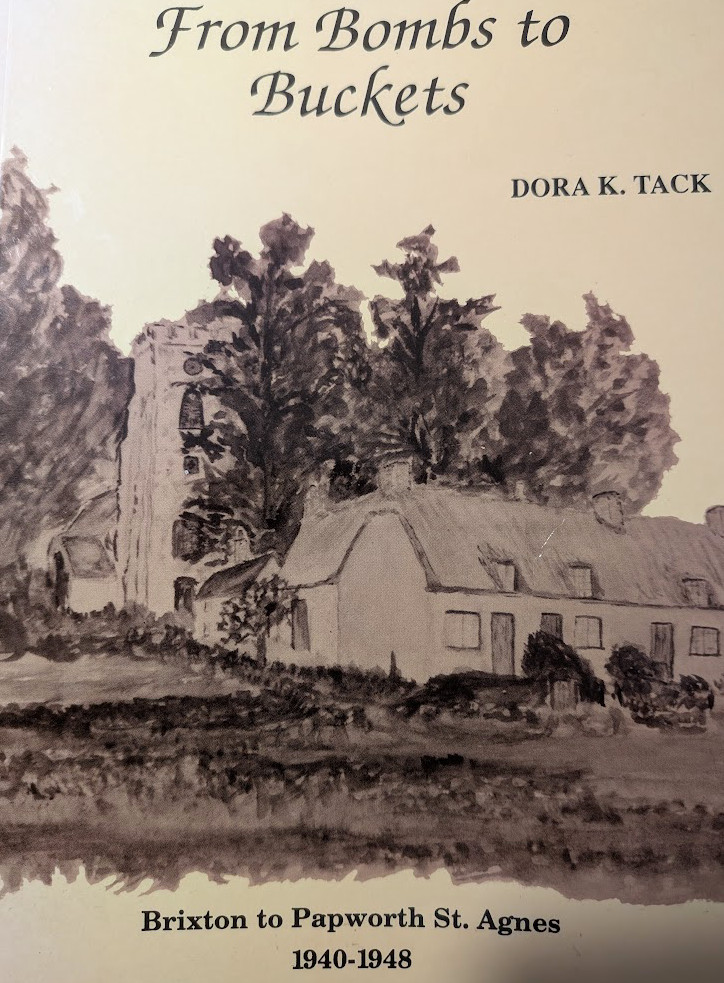 From Bombs to Buckets, Dora Tack (1989)
Coach House, Lattenbury Hill, Papworth St Agnes
History of the Coach House
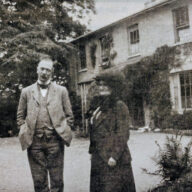
Dora Tack moved here at the end of 1940 with her mother. Dora had previously lived at Little Stukeley.
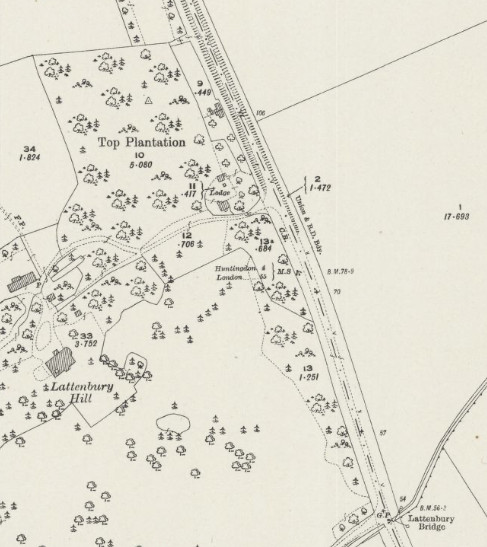
Lattenbury Hill OS 1924
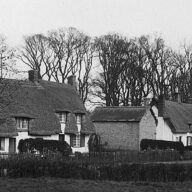
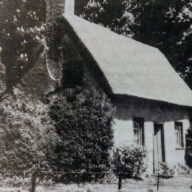
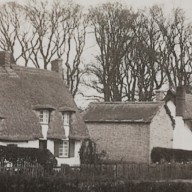
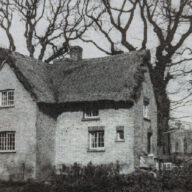
She writes in “From Bombs to Buckets”: Towards the end of 1940 Auntie Florrie received a letter from my mother saying that at last some unfurnished accommodation had ben found upstairs in a coach house at Lattenbury Hill, the other side of huntingdon. The following Saturday Auntie Florrie and I set forth on our cycles to find lattenbury Hill and have a look at the surroundings. We pedalled along the Royston Road, up hill and down, for what seemed to be miles, with fields on either side and not a soul in sight. After passing two brick-built farm cottages on our left we dismounted to walk up a steep hill – we had arrived at last at Lattenbury Hill. We rode down the other side and entered a white gate with a little thatched cottage beside it, and as we cycled along the drive the tall trees closed their branches above our heads. It was very dark. The drive divided into two. The left-hand road swept around in a circle in front of Lattenbury Hall, the smaller right-hand road lead us to a coach house, now converted into two garages. There were two uncurtained windows, one above a garage and one above the living room of the adjoining cottage. This was going to be our home until the war ended. It was a very lonely place to live, but Aunt Florrie said I must just make the most of it and be thankful, and with a last look we remounted and returned to Little Stukeley.
Dora left her work at the cafe in Huntingdon and got a job as a telephone operator at Papworth Hall.
She married Frank Tack in January 1942. She had her first baby in April 1943 at the maternity hospital in Mill Road, Cambridge.
In August 1943 the family moved to Bank Cottage in Papworth St Agnes.
Dora also wrote about the Coach House in Whispering Elms.
In 1942 the occupants were a Seventh-Day Adventist family from London.
James Ginbey, worked in London
Grace née Battershill, wife
Hazel, daughter
James, son
It was the Ginbey family who let two front bedrooms to Dora Tack and her mother.
Dora K. Tack: Recording the Life of Rural Cambridgeshire
Few individuals have done more to preserve the everyday history of rural Cambridgeshire than Dora K. Tack. Through her writings, recollections and local research, she recorded a world that was rapidly disappearing during the twentieth century, ensuring that the experiences of ordinary people were not forgotten.
Dora lived for many years in Papworth St Agnes, where she became deeply interested in the history of the village and its people. Her work focused not on famous individuals or major events but on the everyday lives of farm workers, villagers, tradespeople and families whose stories rarely appeared in traditional histories. By collecting memories, documents and photographs, she helped preserve a rich record of local life and social change.
Her best-known work is From Bombs to Buckets (1989), a memoir that combines personal recollection with local history. The title reflects the contrast between wartime experiences and the routines of village life that followed. Through vivid descriptions and carefully observed details, Dora documented a period of profound change in rural Cambridgeshire, from wartime disruption to the transformation of agriculture, transport and community life in the post-war years.
Particularly valuable are her observations of women’s experiences. Her writings reveal the many roles women played within village communities as wives, mothers, workers, volunteers and organisers. She also recorded the importance of neighbourly support, local traditions and community networks that helped sustain rural life.
Dora’s work is an important reminder that local history is often preserved through the efforts of dedicated individuals. By recording memories before they were lost, she created a lasting resource for future generations and provided insights into aspects of everyday life that might otherwise have disappeared from the historical record.
Today her writings continue to offer an invaluable window into twentieth-century village life and remain an important source for anyone seeking to understand the social history of Cambridgeshire.
Sources
- Book
- Diary
- Published Source
Projects
Contribute
Do you have any information about the people or places in this article? If so, then please let us know using the
Contact page or by emailing
capturingcambridge@
Licence
This work is licensed under
CC BY-NC-SA 4.0


 not including content on external links as indicated
by
not including content on external links as indicated
by .
.