Search by topic
- archaeology
- Building of Local Interest
- chapel
- charity
- church
- crime
- dressmaker
- Great Eastern Railway
- Listed building
- Mapping Relief
- medieval
- oral history
- poverty
- Public House
- railway worker
- Religious House
- Roman
- scholar
- school
- Then and Now
- tudor
- women
- work
- world war one
- world war two
Search by text


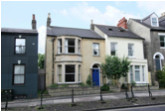 Eden Lodge Maid's Causeway Cambridge
My Childhood in Cambridge by Rosemary Freeman
An account of childhood in Cambridge just after World War II
A vivid memoir of post-war Cambridge, My Childhood in Cambridge by Rosemary Freeman recounts growing up in the late 1940s and early 1950s in the east of the city. Centered on Eden Chapel in Fitzroy Street and life on Maids’ Causeway, the account captures a changing urban landscape shaped by poverty, religion, and community life. Through childhood memories—ranging from Midsummer Fair, Fen skating, and Grantchester walks to encounters with eccentric local characters and royal visits—the narrative offers a rich social history of everyday life in Cambridge after the Second World War. It highlights the intersections of town and gown, post-war migration, faith, and popular culture, providing valuable insight into mid-20th-century Cambridge life.
My Childhood in Cambridge by Rosemary Freeman
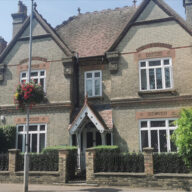
The Second World War over, it was now 1946, when the winter was one that froze the waterways of the fens which then flooded with the thaw. However, for my parents, after the wearying days of pastoring their east London flock throughout the War, it was a new beginning. A new beginning but not an auspicious start! As the removal lorry reached the ‘gleaming spires’ of Cambridge, the engine spluttered to a halt in New Square, a quadrangle of Edwardian houses. Ahead of the lorry my parents were surveying their new home with some trepidation. ‘Eden Lodge’ in Maids’ Causeway was a large and gloomy Victorian Manse with a small garden surrounded by a high wall. Unfortunately, the removal lorry could not be restarted and so we spent our first night in Cambridge at the home of one of the church deacons.
Eden Lodge Maid’s Causeway Cambridge
‘Eden Lodge’ went with the job as my father was the new minister at Eden Strict Baptist Chapel in Fitzroy Street. The chapel stood on what had once been known as ‘The Garden of Eden’, owned by a Gentleman and a man of property, James Burleigh. However, as with the first Garden of Eden, it was no longer a paradise. The east end of Cambridge had expanded rapidly at the end of the 19th century to provide housing for the labourers building the new Eastern Counties Railway and extensions to the colleges. It had not taken long for the yellow Cambridge brick to become coated with black smuts from the railway and for the small terraced houses around Eden Chapel to become the dwellings of the poor. As a child I sometimes accompanied my dad when he visited folk in these gas-lit streets going by such names as Paradise Street and Prospect Row.
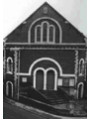
I was two when we moved to Cambridge and my brother, Gordon, was nine. ‘Eden Lodge’ had been used as a hostel during the war and was in a dilapidated state. My father gave Gordon pocket money for removing rubbish left in the house and piling it up in the garden. Many of the houses in Maids’ Causeway are owned by Jesus College and used as student lodging houses and so the students, landladies and their families became our neighbours and my parents settled into their new life. Quite soon, however, my parents discovered that our neighbours also included prostitutes who lived in several nearby houses; we had moved into one of Cambridge’s red-light areas! I can remember seeing these ladies gather at The Four Lamps Roundabout at the end of Maids’ Causeway on a Saturday evening. They were waiting for the American G.I.s who were coached in from Lakenheath Air Base to enjoy a night out in Cambridge.
My father’s ministry was a very busy one. Besides taking Sunday services, weekday meetings, weddings and funerals, he quickly became involved in pastoral visiting, evangelical outreach in the city and was appointed the Free Church Chaplain at Mill Road Maternity hospital where my younger sister, Heather, was born in 1948. Later, my father became the Free Church Chaplain at Addenbrooke’s Hospital. He also cycled out into the fens to take services in the village chapels. A highlight for Strict Baptists were the pastors’ anniversary services. People travelled far and wide to attend these occasions. The afternoon service was followed by tea. Trestle tables were put out in the Sunday School Hall and the chapel ladies took charge of a table each, pouring tea from a large tea urn. When the sandwiches and cakes had been eaten there followed speeches congratulating the pastor on another year’s faithful ministry.
The congregation at Eden Chapel was made up of local residents, a farming family and their many relatives, university dons, undergraduates and other folk who had gravitated to Cambridge after the war. One visitor to the chapel was Erwin, a German Prisoner of War to whom my parents showed friendship and hospitality. He lived in a Prisoner of War camp in Trumpington just outside Cambridge and worked as a farm labourer. Erwin had been a toy maker in Germany and one Christmas made me a wicker doll’s pram which I loved.
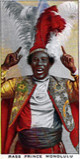
We had many visitors to our home which meant that my mother had to be ready with the teapot and a sponge cake. As well as the activity in our home there was a lot going on outside of it. I remember as a young child swinging on our front gate watching the traffic going by. It was a busy road even then, being the main road into Cambridge from Newmarket. There were frequent traffic jams, especially when the Newmarket Races were taking place. I can remember watching the racing tipster who called himself Prince Monolulu, giving racing tips to the drivers who were stuck in the traffic. He said he was chief of the Falasha tribe of Abyssinia but actually came from the Danish West Indies where his family were horse breeders. He wore colourful robes and a plumed headdress and travelled around the racecourses.
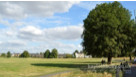
Maids’ Causeway is adjacent to Midsummer Common where the annual Midsummer Fair is still held. Each summer I went to see the Mayor open the fair as he stood on ‘the dodgems’, throwing newly minted coins to the children in the crowd. One year I caught three new halfpennies. As well as the fair amusements there were stalls with all sorts of merchandise. The fun one to watch was the china stall where the stall holder put on a great performance in salesmanship and ended it by smashing a whole tea service in pieces to draw another crowd. Each year, on the Sunday evening of the fair, my father took part in an open-air service which took place on ‘the dodgems’ with a p.a. system so that the fair folk could hear the service from their caravans. Another annual event on Midsummer Common was the visiting circus. On the Sunday afternoon before the circus opened, the elephants and their keepers processed through the town from the station, along Maids’ Causeway and onto the common. I was never able to see this myself as I was expected to be in Sunday School.
I was brought up by loving but strict parents. I used to envy my school friends who were allowed to go to the Saturday morning ABC Minors’ Club at the Victoria Cinema. Instead my father, who was an ardent Protestant, took us children around the colleges and city centre churches to be shown historical artefacts such as Latimer’s pulpit in St. Edward’s Church. This was to encourage an appreciation of our Protestant heritage! St. Edward’s Church played an important role in the English Reformation and it was where many of the great reformers preached, including Hugh Latimer. We were also shown the staircase in Queens’ College where, in the 16th century, the Dutch Christian humanist Desiderius Erasmus had a room during his time as Professor of Divinity. Co-incidentally, when I was in my twenties I worked at Queens’ College as The Senior Tutor’s secretary and occasionally ate my lunch in Erasmus’s old room.
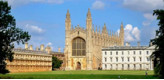
Sometimes we were taken to King’s College Evensong on a Saturday afternoon and I remember being fascinated by the beautiful college chapel. I was particularly fascinated by the Dean at the time, the Revd. Alec Vidler. We usually sat in the choir stalls and I would watch him process slowly with the choir from the nave into the chancel. He was tall with very bushy eyebrows and walked in a rather robotic way. When I look back, he reminds me of Darth Vader but in clerical robes. Many years later, I spotted the Revd. Vidler walking through his home town of Rye. I recognised him straight away by his still very bushy eyebrows but they were now white.
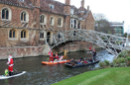
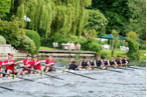
In the summer months, our Saturday afternoons were often spent walking through the countryside. A favourite walk was through the meadows to the village of Grantchester where we had tea in the garden of the Orchard Tearooms next to the River Cam. Another favourite place to go was Byron’s Pool between Trumpington and Grantchester where we picnicked. Twice a year, in the university Lent and Easter terms, we walked along the tow path by the Cam to the village of Fen Ditton to watch the college boat races known as ‘the Bumps’. Being on a narrow river, the boats are lined up end to end with clear water between them to chase each other up the river and hopefully bump the boat in front. It is the tradition for the college crew that finishes Head of the River to burn a boat in celebration.
In the winter we usually had snow at some point and my dad would take his ‘Fen Runner’ skates and go ice skating on a flooded field in Chesterton called The Willows. He also made a sledge and would pull us across the snow on the common.
When I was nine, I met my friend Susan Wharton. We both went to Brunswick Junior School, just off the Newmarket Road. Susan’s parents were Church Army Officers and ran the Church Army Hostel in Willow Walk. I remember some of the characters who lived in the hostel. There was ‘indoor Bill’ and ‘outdoor Bill’ and Trevor Hughes, a heavy drinker who had to be evicted from the hostel. Trevor then spent his days sitting by the fountain in the market place with a cigarette in one hand and a bottle of vodka in the other. He could be abusive but also entertainingly humorous to passers’ by and was popular with the students. Trevor became so well-known that when he died, he was given a funeral in Great St. Mary’s Church, attended by college dignitaries.
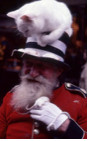
Cambridge attracted some odd characters when I was a child and amongst them was a man who wore a long army coat and marched goose step style, a Scotsman who played imaginary football in the middle of Trinity Street, and an ex academic who had sadly lost the plot and climbed over parked cars rather than walk round them. There was also a lady called Ada who sadly suffered from St. Vitus’ Dance and quite regularly had a ‘turn’. It sometimes happened when I was passing her in the narrow passageway that led from Maids’ Causeway to Fitzroy Street, which was a bit alarming. There was also ‘the bucket lady’ who wore a red bucket over her head; it was said that she had a disfigured face. However, the most unusual character was ‘Snowy’, an eccentric gentleman who regularly cycled into Cambridge from his home in Oakington. He had a white beard and wore a red jacket and a black and white top hat. Snowy collected thousands of pounds for charity as he stood on Market Hill with a cat sitting on the top of his hat and mice running around the brim.
Living and attending a school near the Newmarket Road, I was able to see some famous faces being driven by. I remember lining up with the other children from Brunswick Infants’ School in 1951 to wave our union jack flags as King George VI, Queen Elizabeth (later the Queen Mother) and Princess Margaret were driven into Cambridge. They were attending a Service of Thanksgiving for the preservation of King’s College Chapel during the war. The King, when Prince Albert, was an undergraduate at Trinity College and when I was a secretary there in the 1960s, I was shown his signature in the matriculation book which is kept in the archives. During my time working at Trinity, Prince Charles also became an undergraduate there.
King George VI died in 1952 and on the 2nd June 1953, Princess Elizabeth was crowned Queen Elizabeth II. The first time I saw a T.V. set was when Heather and I were taken by our parents to see the Coronation at the home of two sisters who attended Eden Chapel. TV sets were much smaller than they are now and the picture was in black and white but it was exciting to watch the royal event as it happened.
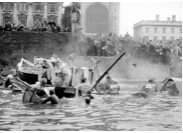
The British Legion Poppy Rag Day in Cambridge always brought great fun and excitement when the students thought up the most ingenious ways to collect money. College floats were driven through the town centre and students collected money along the way. I remember walking down Christ’s Passage where a student was throwing buckets of water out of an upper window and charging people to use an umbrella as they walked underneath. There was also the Battle of the Boats on the Cam at the back of King’s College. The two boats were made out of cardboard attached to punts and large enough to take three or four students who pelted the other boat with wet sponges until the wettest cardboard structure sank. Later in the day we would go to Magdalene Bridge to watch a student standing on the bridge fire-eating. He was then drenched in methylated spirit and set fire to before jumping into the Cam. This was eventually deemed too dangerous and was stopped.
Looking back on my childhood, life was simpler. My friends and I spent most of our free time playing safely in the surrounding streets, returning home when we were hungry. I enjoyed Sunday School outings to Hunstanton, Sunday School Prize Givings and Christmas parties. But most of all, my childhood in Cambridge gave me a wider view of the world through the variety of people I met and observed and the history all around me.
Rosemary Freeman
June 2020
Sources
- Oral / Unpublished Sources
Projects
Contribute
Do you have any information about the people or places in this article? If so, then please let us know using the
Contact page or by emailing
capturingcambridge@
Licence
This work is licensed under
CC BY-NC-SA 4.0


 not including content on external links as indicated
by
not including content on external links as indicated
by .
.