Search by topic
- archaeology
- Building of Local Interest
- chapel
- charity
- church
- crime
- dressmaker
- Great Eastern Railway
- Listed building
- Mapping Relief
- medieval
- oral history
- poverty
- Public House
- railway worker
- Religious House
- Roman
- scholar
- school
- Then and Now
- tudor
- women
- work
- world war one
- world war two
Search by text
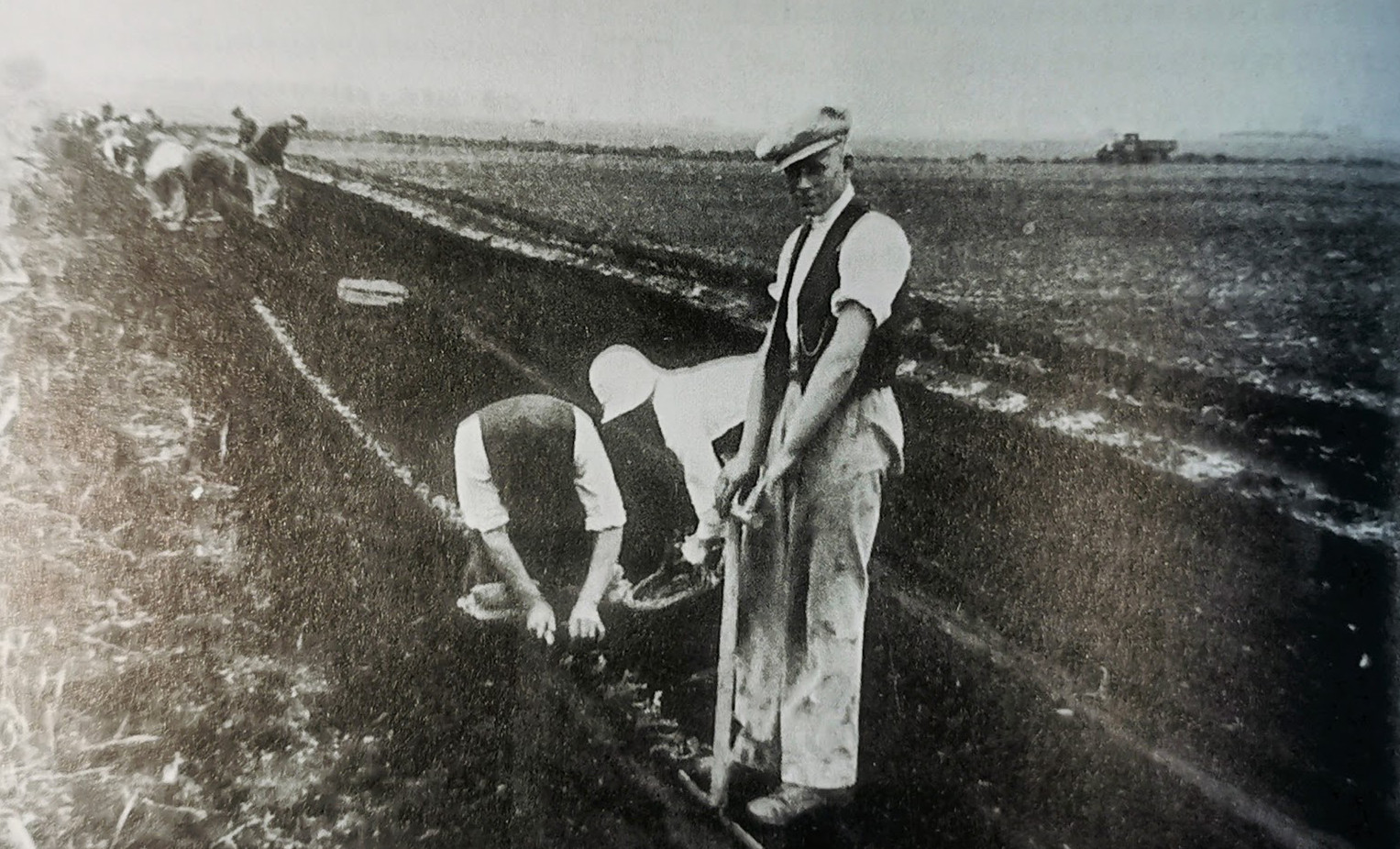 Celery planting, Burnt Fen, 1940s
Rural Life and the Fens
Explore the history of the Cambridgeshire Fens and rural communities through photographs, oral histories, maps, and local memories of farming, waterways, village life, and changing landscapes.
The landscapes of the Cambridgeshire Fens and surrounding villages have been shaped by farming, water, transport, and the daily lives of rural communities over many centuries. Capturing Cambridge brings together photographs, oral histories, maps, census records, and local memories to explore how people lived and worked across this distinctive region.
The Fens are both a natural and engineered landscape. Drains, dykes, embankments, windmills, pumping stations, and waterways transformed marshland into productive farmland, while villages and market towns developed around agriculture, trade, and transport links. Capturing Cambridge records not only the changing landscape itself, but also the experiences of the people who lived within it — agricultural labourers, farmers, boatmen, railway workers, shopkeepers, schoolchildren, and families whose lives were shaped by seasonal work and rural traditions.
The theme also explores how rural communities adapted to industrialisation, mechanised farming, wartime food production, and changing patterns of employment and migration. Oral histories and local recollections are especially important in preserving aspects of fen life often absent from official records.
Farming and Agricultural Labour
Stories of farm workers, horsemen, market gardeners, harvest work, and changing agricultural technology across fenland communities.
Rivers, Drainage, and Waterways
The engineering of the Fens through drains, rivers, pumping stations, bridges, and waterways, together with the communities that depended upon them.
Village Life and Rural Communities
Schools, pubs, chapels, cottages, local shops, and the social life of villages across Cambridgeshire and the fen edge.
Rural Work and Transport
Railways, carts, river transport, markets, and the movement of goods and people between villages, market towns, and Cambridge.
Women’s Work and Family Life
The role of women in farming, domestic labour, village economies, wartime agriculture, and family life within rural communities.
Oral Histories and Memories of the Fens
Personal recollections, photographs, and recorded memories preserving everyday experiences of rural and fenland life during the nineteenth and twentieth centuries.
Projects
Contribute
Do you have any information about the people or places in this article? If so, then please let us know using the Contact page or by emailing capturingcambridge@
Licence
This work is licensed under CC BY-NC-SA 4.0