Search by topic
- archaeology
- Building of Local Interest
- chapel
- charity
- church
- crime
- dressmaker
- Great Eastern Railway
- Listed building
- Mapping Relief
- medieval
- oral history
- poverty
- Public House
- railway worker
- Religious House
- Roman
- scholar
- school
- Then and Now
- tudor
- women
- work
- world war one
- world war two
Search by text


 Windermere School, Hartington Grove 1938
Windermere House School (Claremont School), Cambridge
History of Windermere House School
Edwin Robert Gamlen was born in Bristol in August 1842 where his father William was a pawnbroker. In 1871 we find Edwin and his brother Henry working as outfitters in Portsmouth; both describe themselves as the head of the household. By 1881 he has moved to Cambridge, married Georgiana and is living in Bateman Street. The Gamlen family had five daughters and one son and they ran a tailoring business in Petty Cury. By 1891 they had moved to Windermere House, Cherry Hinton Road, where Edwin died in 1914. Windermere House was one of the very first large houses built in this part of Cherry Hinton Road, at the same time as Vale House next door.
Windermere House School was situated between the Free Church and 77 Hartington Grove ‘Loisvale.’ It was a preparatory school started by Miss Gamlen in 1914. It was later called Claremont School. In the mid 1920s there around 37 children at the school.
Accounts of how the school started are a little confused. We know that the Gamlens lived in Windermere House on Cherry Hinton Road from at least 1891 and the family still had possession of the house in 1914. The 1927 OS map shows the school on the same plot as the house in Cherry Hinton Road so it seems apparent that it was within the extensive grounds of Windermere House that Grace built the school after her father died.
The school building was taken over by the Conservative Association in 1972 and then later by the Quakers. In the Friends Meeting House the wooden ceiling of the classrooms is still visible.
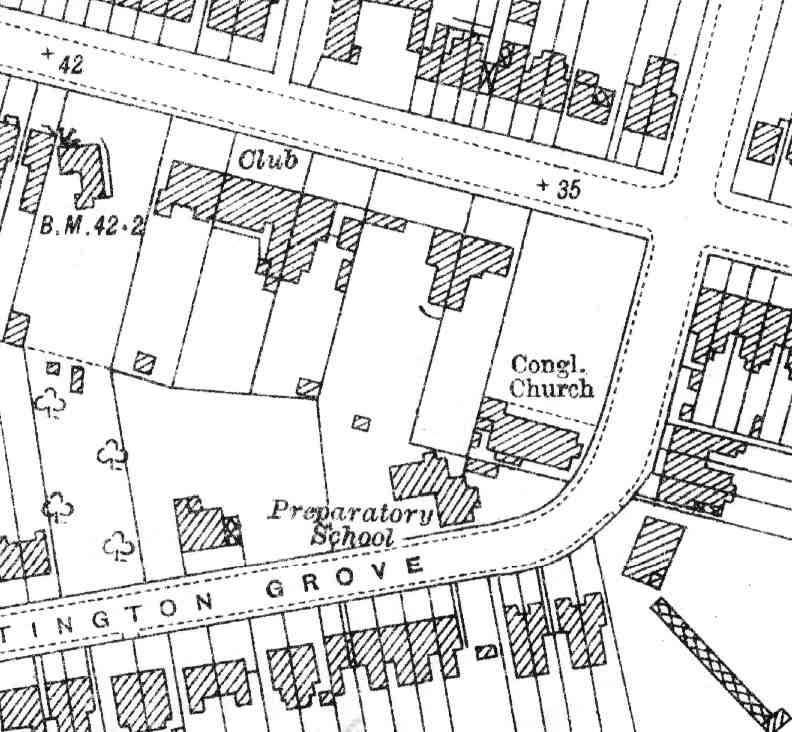
East end of Hartington Grove 1927
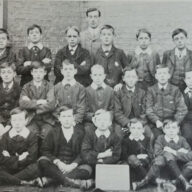
Windermere School, Hartington Grove 1938
This photo shows Miss Grace E Gamlen in the middle. On her fight is Miss Larter and on her left is Miss Fuller.
In 2019 Desmond Fitzgerald recalled attending the school in the 1930s. There was a Miss Masland as teacher and the children ate upstairs.
Sources: Cambridge News (Cambridgeshire Collection), UK census, interview
Projects
Contribute
Do you have any information about the people or places in this article? If so, then please let us know using the Contact page or by emailing capturingcambridge@
Licence
This work is licensed under CC BY-NC-SA 4.0