Search by topic
- archaeology
- Building of Local Interest
- chapel
- charity
- church
- crime
- dressmaker
- Great Eastern Railway
- Listed building
- Mapping Relief
- medieval
- oral history
- poverty
- Public House
- railway worker
- Religious House
- Roman
- scholar
- school
- Then and Now
- tudor
- women
- work
- world war one
- world war two
Search by text


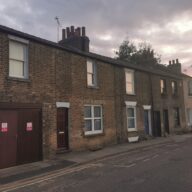
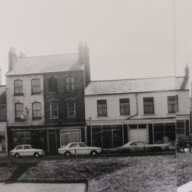
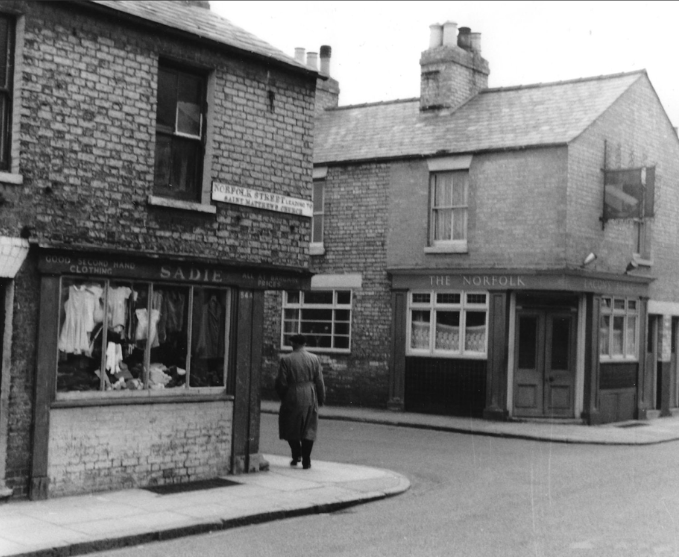 The Norfolk Street in the 1950s
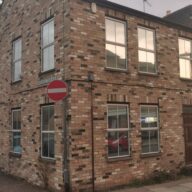
56 Norfolk Street, Norfolk Arms, The Norfolk, The Man on the Moon, The Office, The Blue Moon
History of 56 Norfolk Street
The Illustrated Police news report 1/7/1871 that the Norfolk Inn, Norfolk Street was the site of the inquest into the suspected poisoning of Henry Day:
The adjourned inquest on the body of Henry Day, whose wife lies in the the Cambridge Borough Gaol on suspicion of poisoning him, was held at the Norfolk Inn, Norfolk-street, Cambridge, on Monday. Professor Liveing, the professor of chemistry to the. University, deposed that he had subjected the vomit of the deceased and the portions of food left by him a to chemical analysis, and had failed to detect any mineral poison or oxalic acid. Dr. Knowles thought it was unnecessary to pursue the chemical analysis any further. Vegetable poisons would have produced other symptoms than those which existed in this case. The jury returned a verdict that the deceased died from excessive inflammation of the bowels, but how produced there was no evidence to show.
1871
Mary Ann French, widow, 30, publican, b Cambridge
Sarah Turner, lodger, 33, laundress, b Waterbeach
1881 The Norfolk
Alfred French, widower, 42, publican, b Cambridge
Alfred S, 8, b Cambridge
Elizabeth Gathercole, housekeeper, widow, 51, b Cambridge
1891 (56)
Matthew Palmer, 59, publican, b Cambridge
1901 The Norfolk Tavern
Albert F Norman, 56, publican, b Somerset
Arthur F Butler, 25, painter’s labourer, b Cambridge
Florence M, 24, b Lancs
William H Norman, 3, b Lancs
1913 The Norfolk
George Humphrey
1937 Norfolk P H
Sidney Humphrey
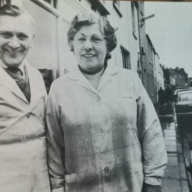
1939
Sidney V Humphrey, b 1903, licensed victualler
Dorothy, b 1904, bar attendant
In the 1960s the old ‘Man in the Moon’ in Staffordshire Street was demolished and a new pub built at this location renamed in 1964 as The Man On The Moon
1998 renamed The Office
2000 renamed The Blue Moon
2013 renamed The Blue Moon
Projects
Contribute
Do you have any information about the people or places in this article? If so, then please let us know using the Contact page or by emailing capturingcambridge@
Licence
This work is licensed under CC BY-NC-SA 4.0