Search by topic
- archaeology
- Building of Local Interest
- chapel
- charity
- church
- crime
- dressmaker
- Great Eastern Railway
- Listed building
- Mapping Relief
- medieval
- oral history
- poverty
- Public House
- railway worker
- Religious House
- Roman
- scholar
- school
- Then and Now
- tudor
- women
- work
- world war one
- world war two
Search by text


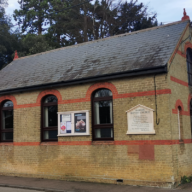
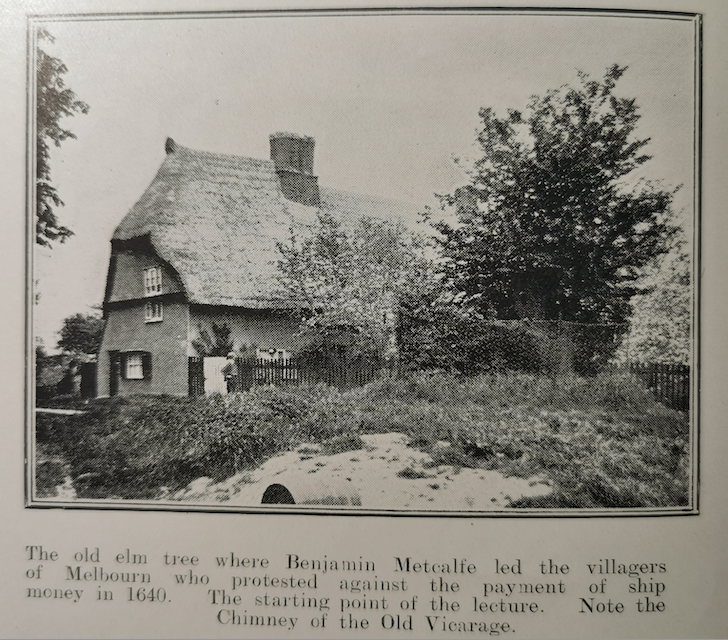 The old vicarage and elm tree, Melbourn (Cambridge Chronicle 1923)(Photo W M Palmer)
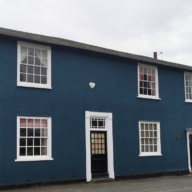
Old Vicarage, Melbourn
History of the Old Vicarage
The old Vicarage was once the centre of a considerable group of buildings. There was a gatehouse with a chamber over the gate.
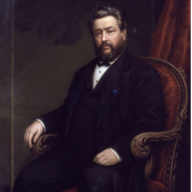
The old elm tree, also known as the old bank tree, was where Benjamin Metcalfe led the villagers who protested against the payment of ship money in 1640. This man started the Baptist ministry here. he was churchwarden when Dowsing smashed the stained glass windows in the church, and he lies buried in the Churchyard on the south side of the chancel, where his tombstone still stands. (from a lecture by W M Palmer 1923)
In 1638 several parishioners refused to stand at the doxology or to kneel, or went out during services. In 1640 there was a ship-money riot in Melbourn; one of the ringleaders, Benjamin Metcalfe, or his son and namesake, was amongst the founders of a Baptist meeting established there by 1654. The Metcalfe family remained prominent dissenters: in 1665 widow Metcalfe was convicted for not receiving the sacraments, and in 1671 she owed £60 in fines for not attending church. In 1676 there were 26 nonconformists in Melbourn, probably including c. 20 Anabaptists taught by Benjamin Metcalfe in 1672 when he was licensed to preach in his own house. By 1685 he had been excommunicated as an Anabaptist. After his death in 1698 the Baptist church was supplied in an unofficial circuit with Wilbraham, Fulbourn, and Saffron Walden (Essex). In 1728 there was a meeting house at Melbourn and by then almost half the population were Baptists or Presbyterians.
See: https://www.british-history.ac.uk/vch/cambs/vol8/pp67-82
Projects
Contribute
Do you have any information about the people or places in this article? If so, then please let us know using the Contact page or by emailing capturingcambridge@
Licence
This work is licensed under CC BY-NC-SA 4.0