Search by topic
- archaeology
- Building of Local Interest
- chapel
- charity
- church
- crime
- dressmaker
- Great Eastern Railway
- Listed building
- Mapping Relief
- medieval
- oral history
- poverty
- Public House
- railway worker
- Religious House
- Roman
- scholar
- school
- Then and Now
- tudor
- women
- work
- world war one
- world war two
Search by text


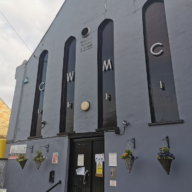
Wesleyan Chapel, Hobson Street (Wall’s Lane)
History of Wesleyan Chapel
1807
Agreement between John Haggerston of Cambridge and Thomas Thurnall of Whittlesford whereby Thurnall agreed to buy ‘all that freehold Malting Office with the Cistern Coach, Working Floors, Kiln and other Appurtenance thereto…situated in Wall’s Lane in the Town of Cambridge.’
Thomas Thurnall’s son William inherited the property when his father died and on his own death it was put up for sale.
1846
Cambridge Methodist Circuit archives hold auctioneer’s poster announcing sale on 29th January 1846 of the ‘Malting Premises situated near Messrs Swan & Sons’ Wagon Establishment with a frontage next Hobson Street.’ the bidding did not meet the reserve price. A group of methodists led by Robert Sayle bid privately and were successful. The Maltings were demolished; the building of a new chapel commenced and on Good Friday 6th April 1849, it opened for worship. (See The History of Methodism in Cambridge by Frank Tice, 1966).
The Chapel was of white bricks with a portico. It cost £3,300 to build; the site had cost £900. Both congregations, those of Green Street and of Fitzroy Street, moved to the new chapel. It also attracted undergraduates and within 40 years the premises were no longer adequate.
1871
Wesleyan House
1891
Wesleyan Chapel
1901
Chapel
In 1901 it was decided to look for new premises. This lead to the purchase of the Poplar House Estate at the corner of Short Street with a frontage on Christ’s Pieces. The Hobson Street Chapel was sold to Cambridgeshire County Council for £3,500.
The congregation moved temporarily to the ‘Victoria Rooms‘ on Market Hill courtesy of the managing director of the ‘Cambridge Electric Theatre Ltd’.
The new Wesley Church was opened 30th October 1913.
Projects
Contribute
Do you have any information about the people or places in this article? If so, then please let us know using the Contact page or by emailing capturingcambridge@
Licence
This work is licensed under CC BY-NC-SA 4.0