Search by topic
- archaeology
- Building of Local Interest
- chapel
- charity
- church
- crime
- dressmaker
- fire
- Great Eastern Railway
- Listed building
- Mapping Relief
- medieval
- oral history
- poverty
- Public House
- Religious House
- Roman
- scholar
- school
- Then and Now
- tudor
- women
- work
- world war one
- world war two
Search by text
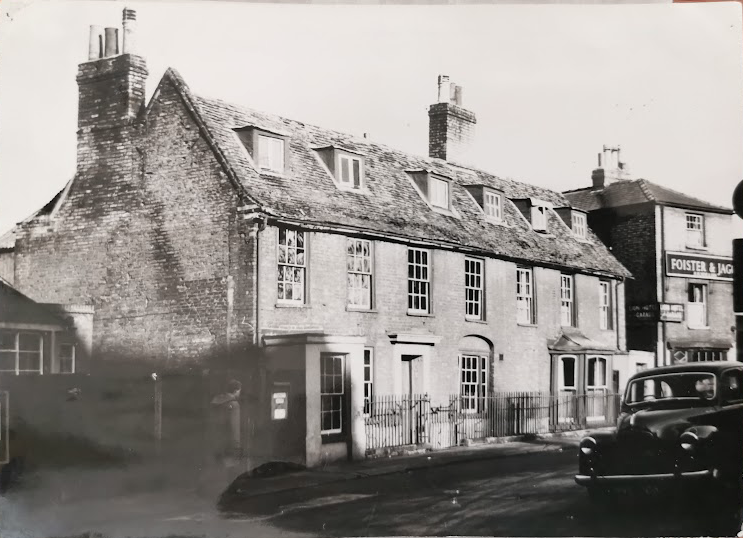 St Andrew's Hill (MoC)
9-10 St Andrew’s Hill
History of 9 & 10 St Andrew's Hill
1959 Royal Commission on Historical Monuments Survey of Cambridge:
Houses, nos. 9 and 10, on the corner of Tibb’s Row and extending towards Corn Exchange Street …. the plan suggests a 16th-century origin. the earliest of the additions to the W is of c. 1700. The wing, probably once a separate building, is of the 17th century. The whole was remodelled and the main range refronted early in the 19th century, probably by Charles Humfrey and in 1818 when the ownership of the land on which two porches were being built was in dispute. Humfrey evidently established his right, for the porches survive and the space between them is enclosed by railings.
1861 Census
(9) Arthur C Barrett, 44, private tutor, b Suffolk
(10) Harriett A D Thorn, 40, school mistress, b Southend Essex
1913 Census
(9) Papworth and French solicitors
Major Oliver Papworth, councillor of the Borough
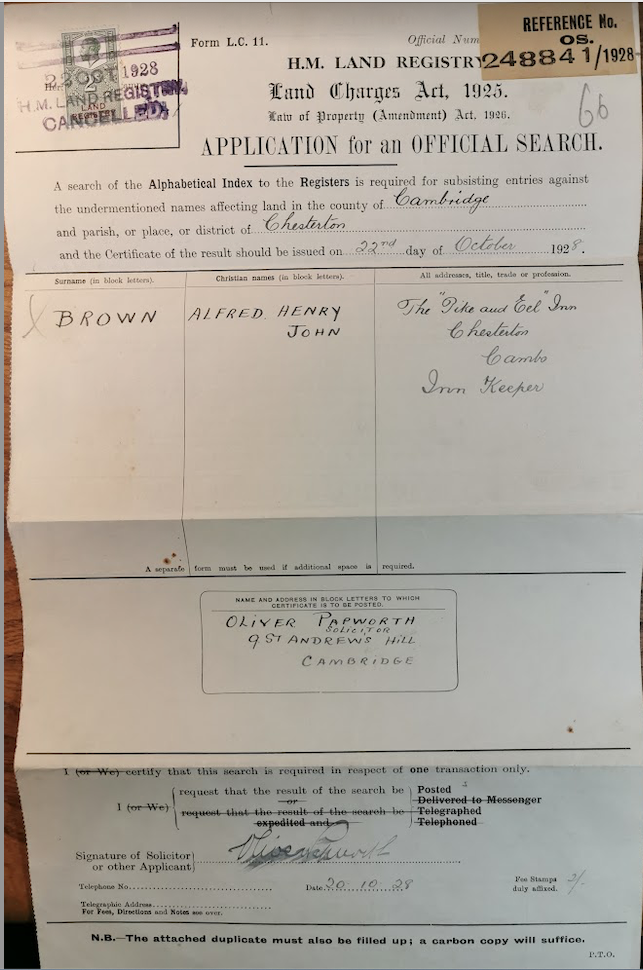
Pike and Eel 1928 papers
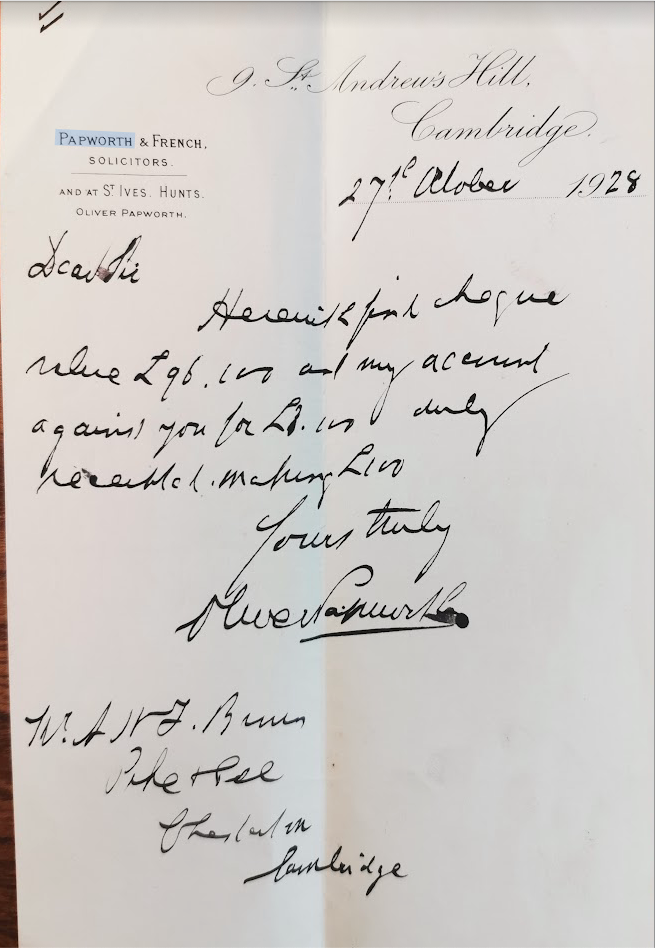
Pike and Eel 1928
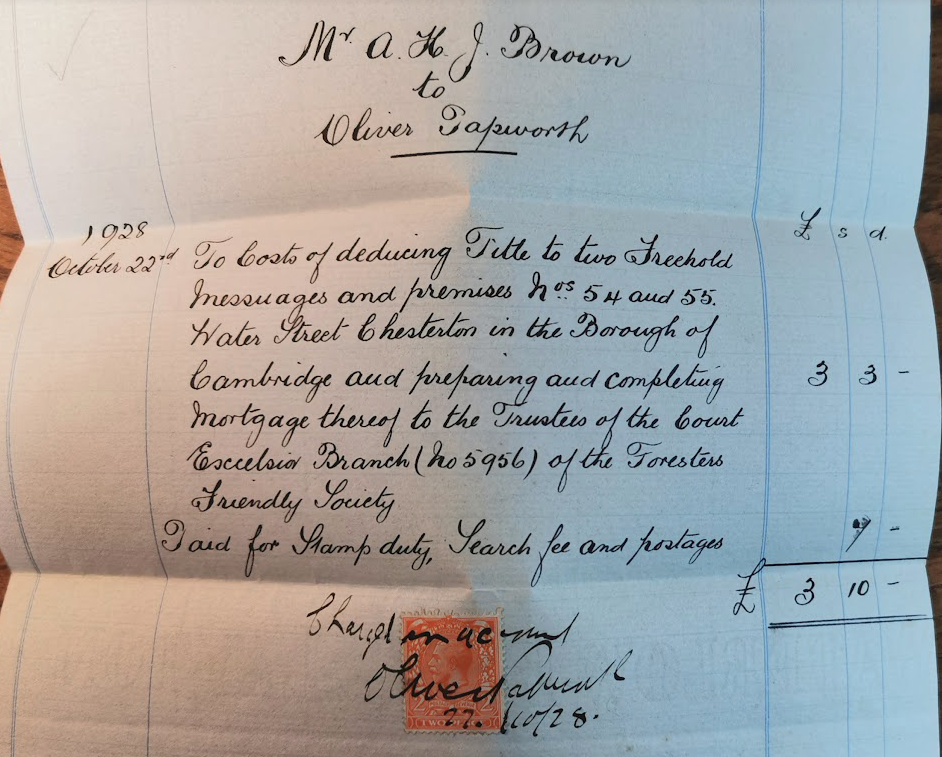
Pike and Eel 1928
(9) Frederic W French, secretary Victoria Friendly Societies’ Asylum
Percy Albert French
(10) Mrs Elizabeth Scott
1918
(10) Mrs Elizabeth Starr Scott was reported to have died November 1918 aged 88.
1937
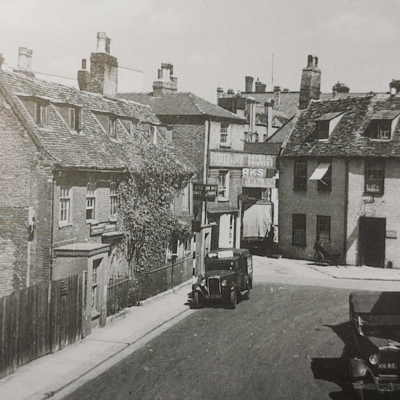
Truman and Knightly Ltd, scholastic agents
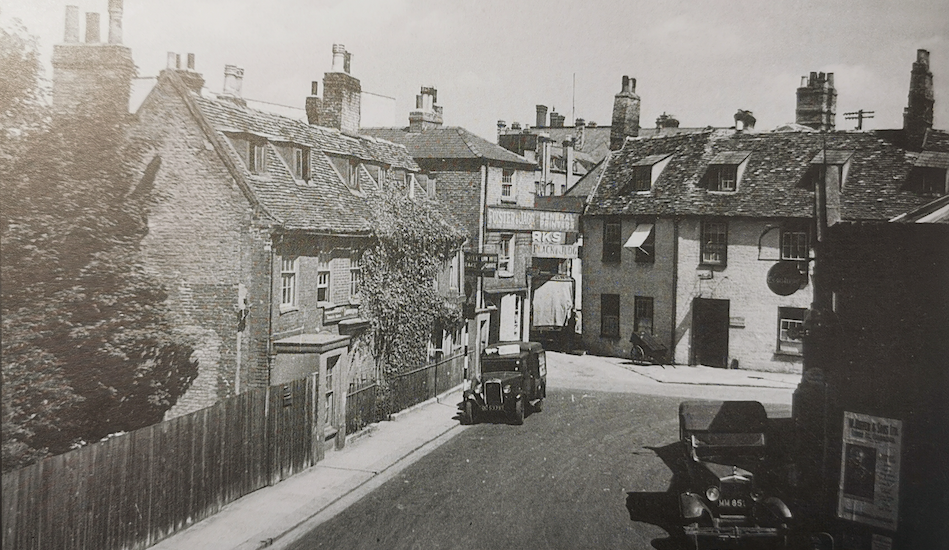
St Andrew’s Hill, 1937 (photo J Baldwin)
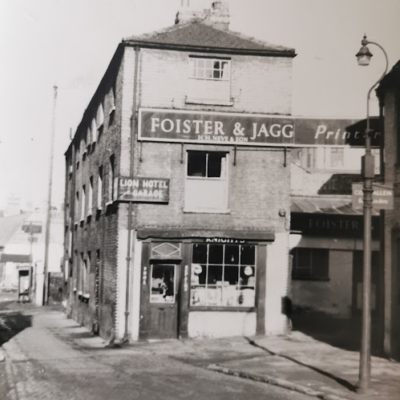
1960
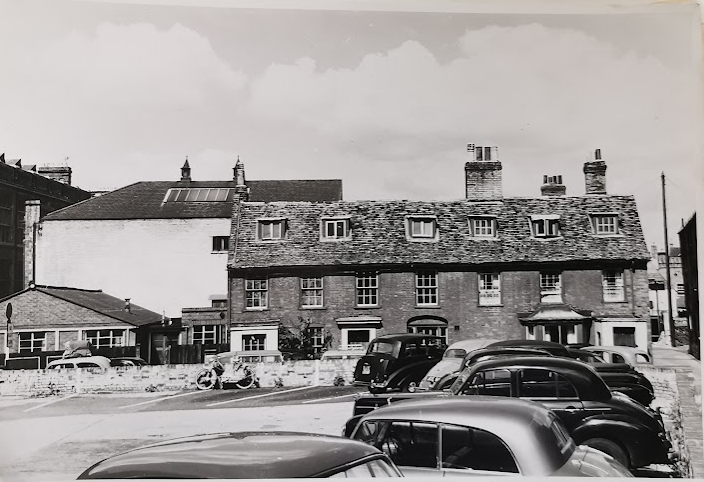
St Andrew’s Hill, 1960 (MoC33/60)
St Andrew’s Hill (MoC)
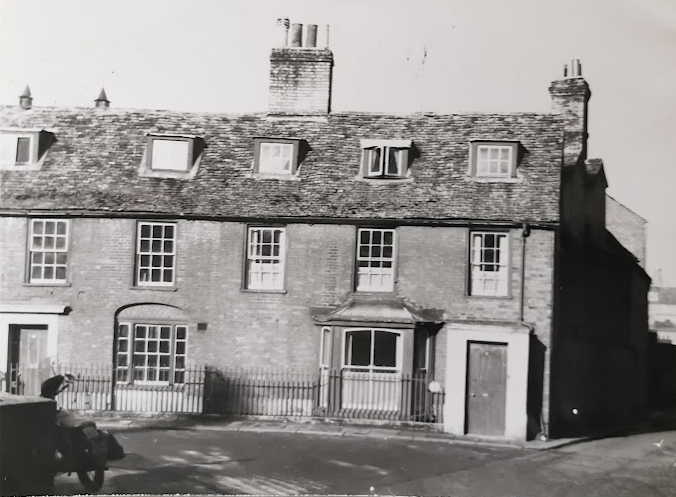
9 & 10 St Andrew’s Hill, 1960, demolished to create car park (MoC255/70)
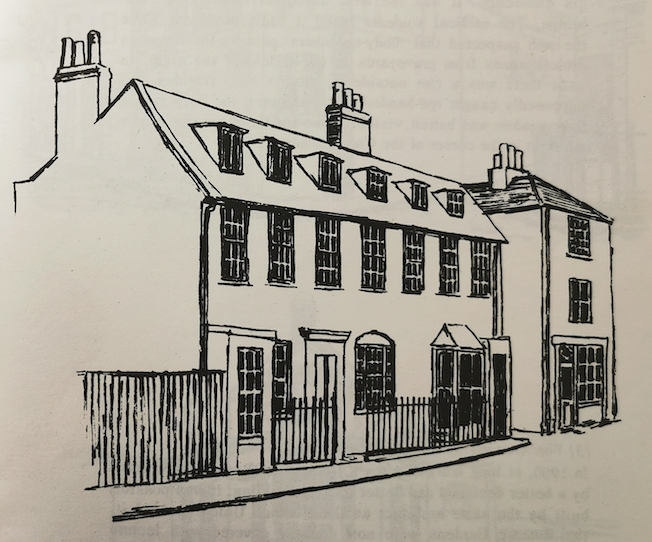
The North Side of St Andrew’s Hill: drawing by Slim Smith from The Lion Yard (1974)
The Lion Yard by Henry Bosanquet (1974) notes the following on the above illustration:
This 18th century terrace (two listed buildings) was one of the finest examples of its kind in Cambridge. It was the home of Humfrey, carpenter to King’s College in the 1760s. Cambridge’s greatest Regency architect, Charles Humfrey, was born here. He added the door to the left to ‘modernize’ his father’s house. After 1803 it looked down the fine avenue of lime trees, planted by Downing College as a grand entrance. This avenue was destroyed after 1900, when Downing College’s grounds were sold to the University for lecture rooms, after a senior don of the college had run off with college funds.
Projects
Contribute
Do you have any information about the people or places in this article? If so, then please let us know using the Contact page or by emailing capturingcambridge@
Licence
This work is licensed under CC BY-NC-SA 4.0