Search by topic
- archaeology
- Building of Local Interest
- chapel
- charity
- church
- crime
- dressmaker
- fire
- Great Eastern Railway
- Listed building
- Mapping Relief
- medieval
- oral history
- poverty
- Public House
- Religious House
- Roman
- scholar
- school
- Then and Now
- tudor
- women
- work
- world war one
- world war two
Search by text
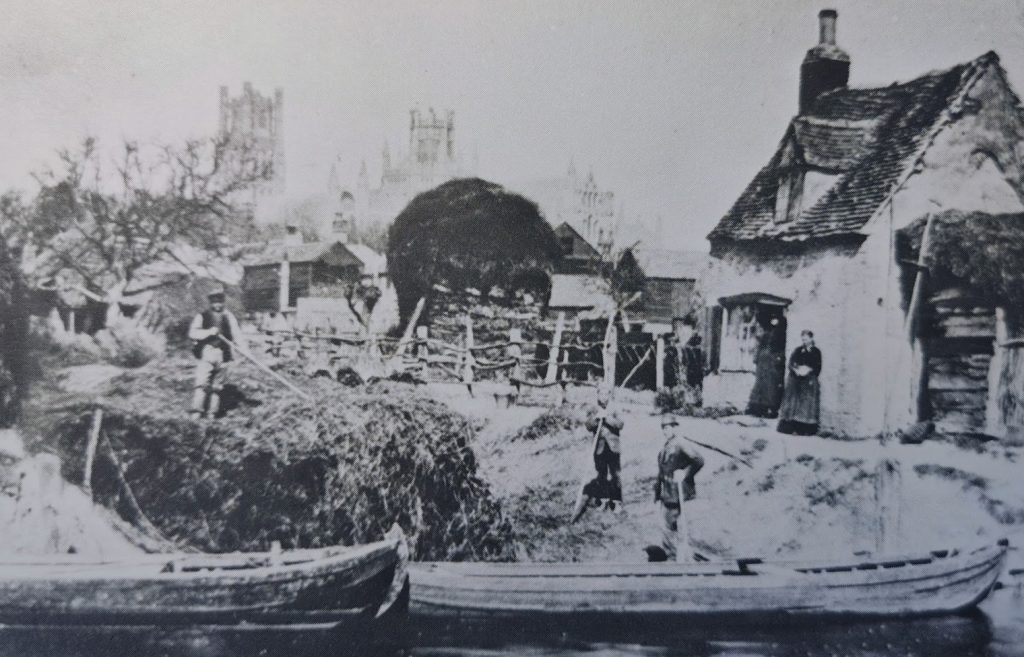 Barges at the bottom of the Three Blackbirds yard.
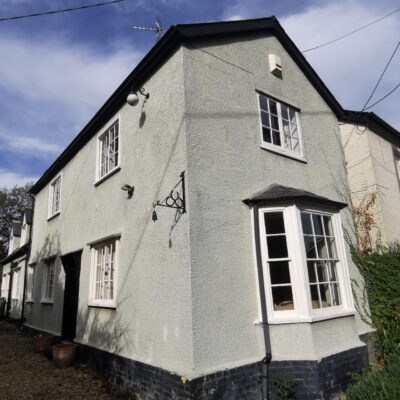
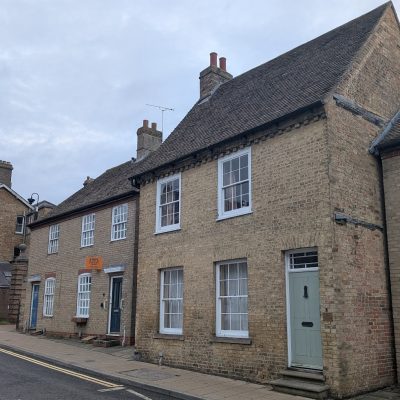
The Three Blackbirds Public House, 23 Broad Street, Ely
History of the Three Blackbirds
A house of the C15 constructed of timber framing with later brickwork, mostly rendered and painted. … the surviving interior is of interest most notably for the timber-framing and panelled screen of the street-front room, as well as a significant proportion of a crown-post roof
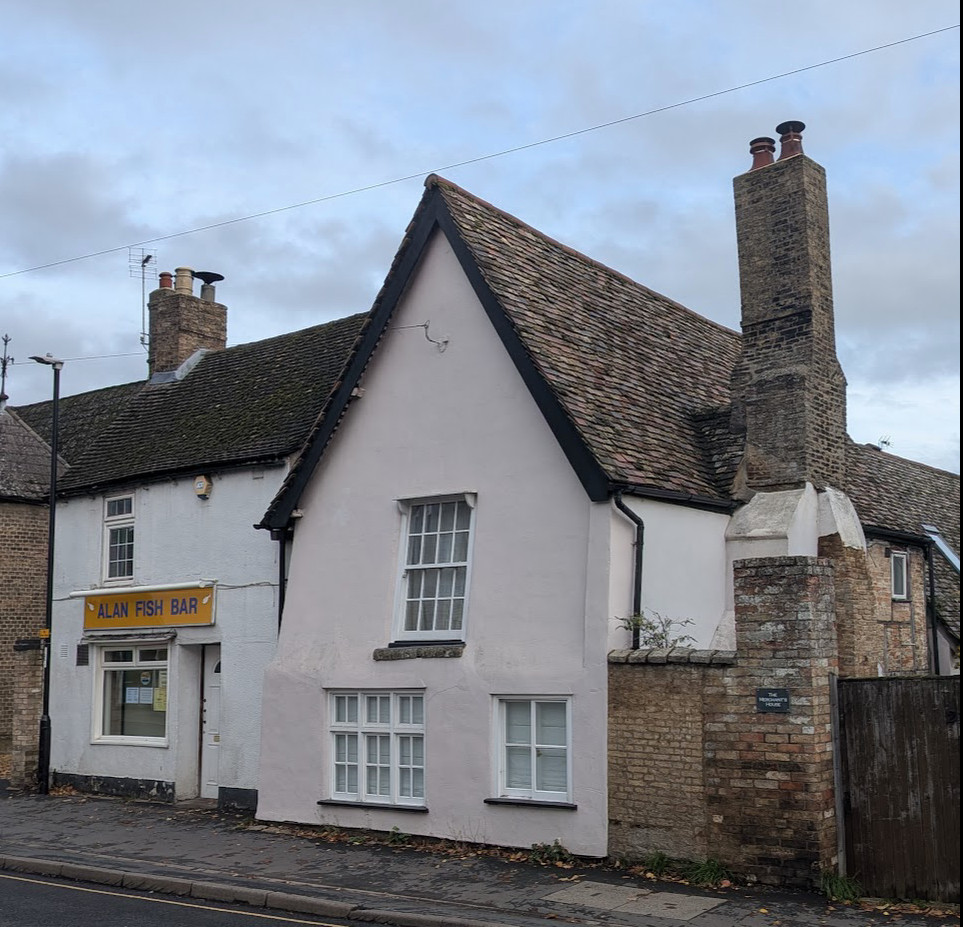
23 Broad Street Ely (RGL2025)
The photo shows barges being unloaded at Fear’s Rod Yard at the bottom of the Three Blackbirds’ yard. Bundles of osiers were brought by barges to make baskets.
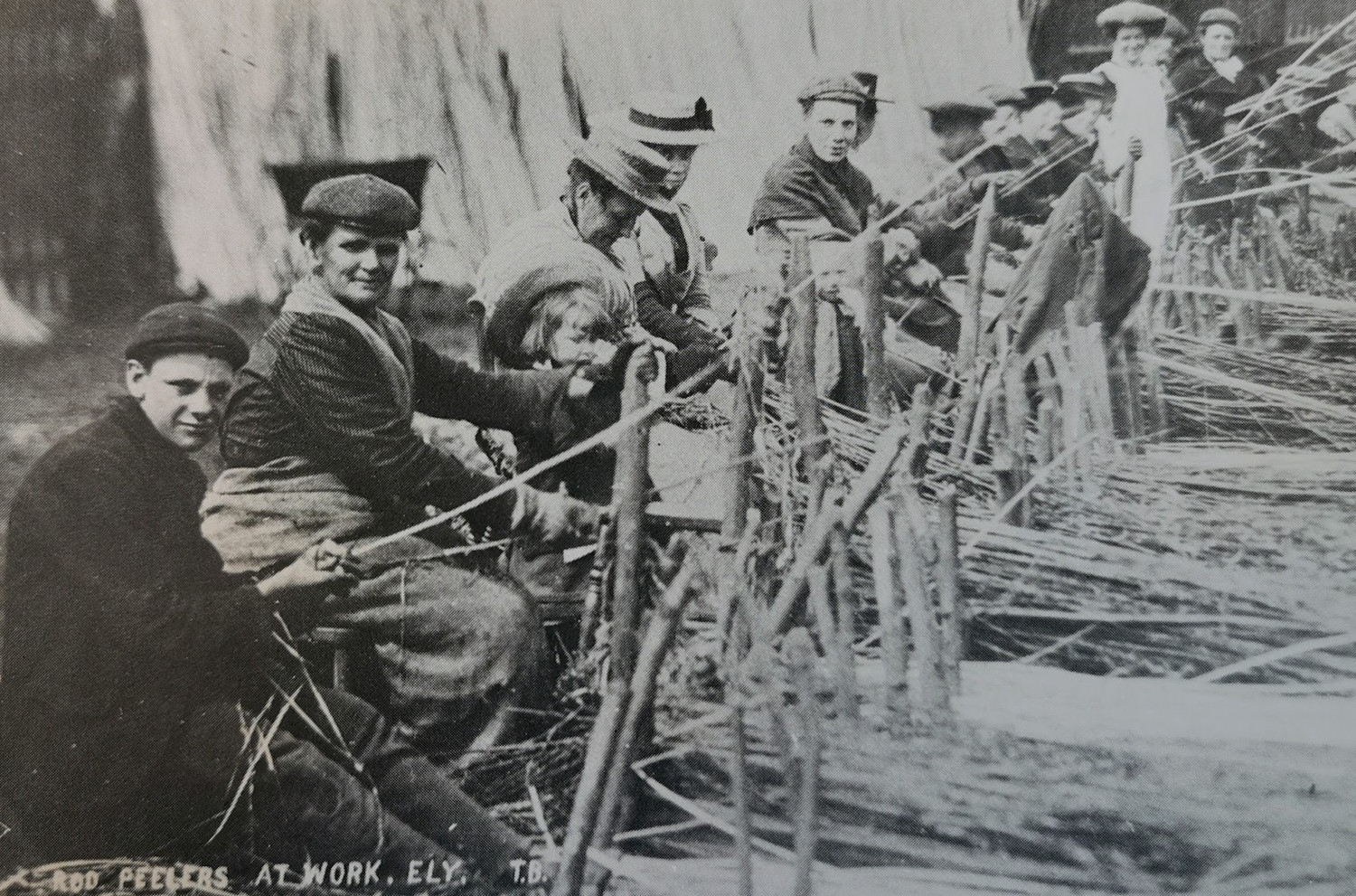
Rod peelers, Ely, making baskets
The Three Blackbirds (see Audrey Denton’s Broad Street Ely, 1991) ceased to be licensed in 1933 and the building was divided into three parts for private occupation. Mrs Nunn and her husband had the back part nearest the river. The whole area that later became Jubilee Terrace was the Nunns’ garden.
Mrs Nunn’s married daughter lived in the middle section of the Blackbirds, and then some years later their daughter lived in the front section, the old public house. The whole building later fell into disrepair and was acquired by the Ely Preservation Trust who restored it.

Broad Street, Ely OS 1925
Projects
Contribute
Do you have any information about the people or places in this article? If so, then please let us know using the Contact page or by emailing capturingcambridge@
Licence
This work is licensed under CC BY-NC-SA 4.0