Search by topic
- archaeology
- Building of Local Interest
- chapel
- charity
- church
- crime
- dressmaker
- fire
- Great Eastern Railway
- Listed building
- Mapping Relief
- medieval
- oral history
- poverty
- Public House
- Religious House
- Roman
- scholar
- school
- Then and Now
- tudor
- women
- work
- world war one
- world war two
Search by text
How it was – Memories of life in the Fen Country
A vivid collection of oral histories and recollections of everyday life in the Cambridgeshire Fens, covering village customs, farming, work, childhood, war, travel and changing rural life in the twent
How it was – Memories of life in the Fen Country collected by Lorna Delanoy MBE
Introduction
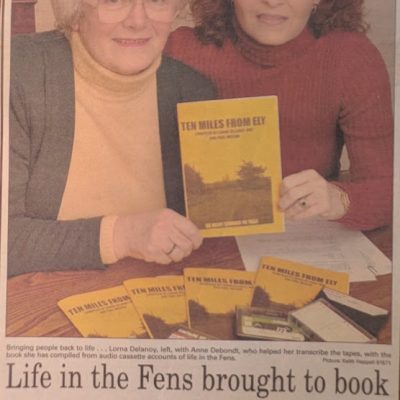
How it was brings together a wide range of oral history material recorded in the 1970s and 1980s for the Farmland Museum archives. It draws on earlier publications including Ten Miles from Ely, Bog Oak Country and Village Voices, combining them into a single volume to preserve memories of Fenland life.
The accounts describe everyday experiences across the Isle of Ely and surrounding villages, offering insight into work, family life, customs, farming, travel and social change. The strength of the booklet lies in its direct voices—people recalling their own lives in their own words.
Village customs and traditions
One of the strongest themes is the survival of older village customs into the late nineteenth and early twentieth centuries.
A recollection from a farmer’s daughter born in 1908 describes:
- “Gooding Day” before Christmas, when widows received food and support
- “Ploughboys’ Day” customs and seasonal rituals
- “May Day” traditions, with girls carrying decorated dolls from house to house
These traditions show how community support and seasonal celebration were embedded in Fenland life.
Entertainment and everyday life
Memories of leisure and recreation include:
- Cock-fighting at roadsides
- Card games and social gatherings
- Singing and storytelling
- Village competitions and amusements
These accounts challenge the idea of rural life as purely hard labour, showing a strong culture of entertainment and social interaction.
Travelling people and seasonal work
Several accounts describe encounters with travelling families and seasonal workers.
These include:
- Campfires and makeshift cooking
- Informal economies such as collecting scrap or food
- Exchange of goods rather than money
The recollections provide insight into relationships between settled villagers and travelling communities.
Work, farming and long days
Work in the Fens was physically demanding and often involved long hours.
One account describes a typical working day:
- Starting at 6 a.m.
- Working through the day in changing roles
- Finishing late in the evening
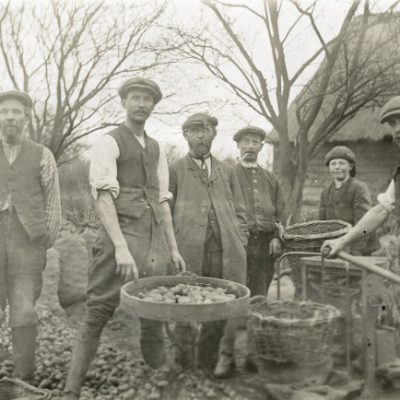
Agricultural labour included threshing, chaff cutting, harvesting and general farm work, often involving the whole family.
Steam power, machinery and industry
The booklet includes important references to:
- Traction engines and threshing machines
- Early agricultural mechanisation
- Local engineering businesses such as the Drake family
Photographs (for example, on page 13) show traction engines hauling produce across flooded Fenland landscapes, illustrating the importance of steam power in rural industry.
War and its impact
Several contributors recall the impact of war on Fenland communities.
Memories include:
- Bomb explosions in nearby towns such as Soham
- Damage to mills and buildings
- Air activity and searchlights
- The wider disruption of everyday life
One account vividly describes seeing explosions from a bedroom window and not immediately understanding what was happening—capturing the shock of wartime experience.
Floods and the Fen landscape
The Fen landscape itself is a constant presence in the accounts.
Photographs (page 14) and recollections describe:
- The 1947 floods
- Homes submerged in water
- The challenges of living in a drained but vulnerable landscape
Water, drainage and flooding were central to everyday experience in the Fens.
Childhood in the Fens
Childhood memories are among the most vivid parts of the booklet.
These include:
- Walking long distances to school
- Playing marbles and outdoor games
- Helping with household and farm tasks
- Experiences of poverty and resourcefulness
One recollection describes how even small amounts of money—such as sixpence—were carefully saved and valued.
Food, domestic life and hardship
Domestic life required constant effort:
- Baking, preserving and cooking from local produce
- Fetching water and managing fuel
- Feeding large families
Rationing during wartime is also described, including limits on sugar, butter and meat, alongside small allowances and improvisation.
Kindness, community and social values
Many stories highlight acts of kindness and mutual support.
One account describes a stranger helping repair a bicycle tyre and refusing payment, reflecting a culture of informal generosity and community responsibility.
These stories help explain how Fenland communities functioned socially as well as economically.
Women’s lives and work
Women’s work is strongly represented in the accounts:
- Managing households
- Working on farms
- Raising children
- Participating in organisations such as the Women’s Institute
The WI is shown to have played a role in improving village life, including campaigning for water supply and organising communal activities.
Transport and mobility
Transport was changing rapidly during this period:
- Horse-drawn vehicles
- Early motor cars and taxis
- Long-distance walking
- Train travel
One recollection describes early driving experiences and the difficulty of operating vehicles before modern gear systems.
Sources
- Book
- Oral / Unpublished Sources
- Photographs
Projects
Contribute
Do you have any information about the people or places in this article? If so, then please let us know using the Contact page or by emailing capturingcambridge@
Licence
This work is licensed under CC BY-NC-SA 4.0