Search by topic
- archaeology
- Building of Local Interest
- chapel
- charity
- church
- crime
- dressmaker
- fire
- Great Eastern Railway
- Listed building
- Mapping Relief
- medieval
- oral history
- poverty
- Public House
- Religious House
- Roman
- scholar
- school
- Then and Now
- tudor
- women
- work
- world war one
- world war two
Search by text
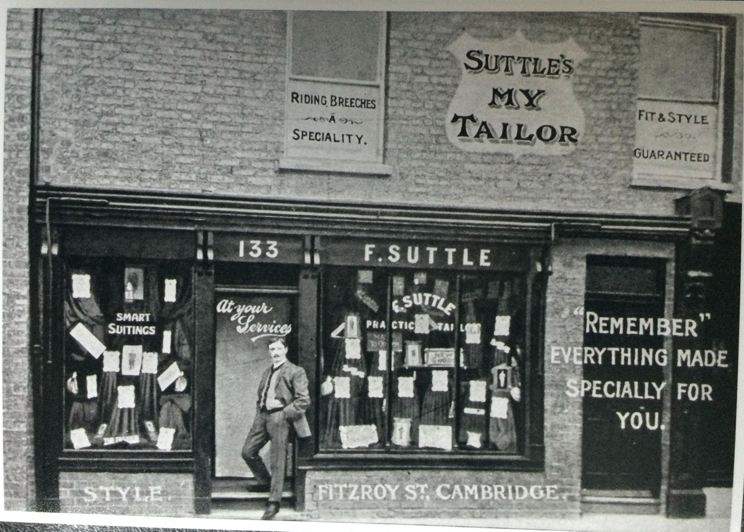 133 Fitzroy Street, Frank Suttle circa 1909
1 – 3, (133 – 134) Fitzroy Street
History of 133 - 134 Fitzroy Street
133 Fitzroy Street was the site of the first purpose built Methodist chapel in Cambridge when the the first society decided to move from a rented room at The Brazen George.
Early records are sparse but it is known that the builder was essentially one man, William Beacock, a plasterer, who had come to Cambridge to work on a college. He worked himself in his own time and erected the chapel. The Methodist Society members gave him free board and lodging and they all assisted him. After the chapel was finished Beacock became a missionary; eighteen months later in the West Indies he died.
The first Wesleyan minister in Cambridge worked at this chapel, Rev James Mole. ‘Cottage Meetings’ were held in various locations belonging to members and in time some of these became licensed as places of worship. One of these was Thomas Ewsden’s cottage in Girton in 1817. Then in 1818 the house of James Careless in Chesterton, and in 1821, also in Chesterton, the house of Thomas Brown.
In 1841 another location was licensed, William Bowmer’s house in Coronation Street, near the later chapel site in Hills Road.
Gipsy Smith discovered Methodism at this chapel. He recounted the story of how his father Cornelius and his two brothers Woodlock and Bartholomew, read the Pilgrim’s Progress and then attended Fitzroy Street Chapel.
1855
The Primitive Methodists purchased the chapel from the Wesleyans and it was re-opened for primitive Methodist work by Miss M C Buck, the most popular female preacher of that period.
The condition of the chapel declined however an the congregation moved the ‘Tabernacle’ in Newmarket Road in 1875.
The chapel was sold in 1877 and demolished.
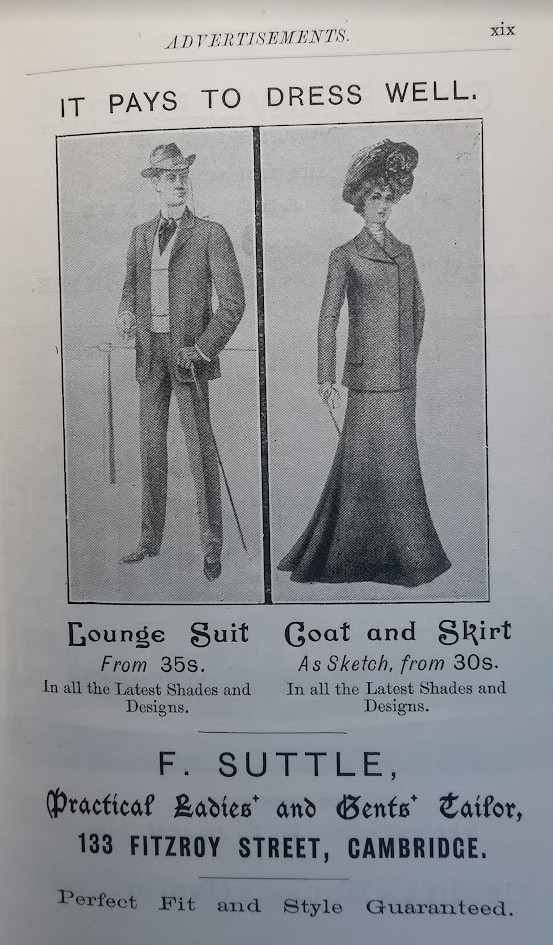
133 Fitzroy Street, 1901
1913 (133-134)
Frank Suttle, tailor and hosier
Frank Suttle had premises in Fitzroy Street and at 50 Regent Street. He was a master tailor and was awarded 1st prize in 1909 at the Tailors Exhibition in London for fit, cut and style.
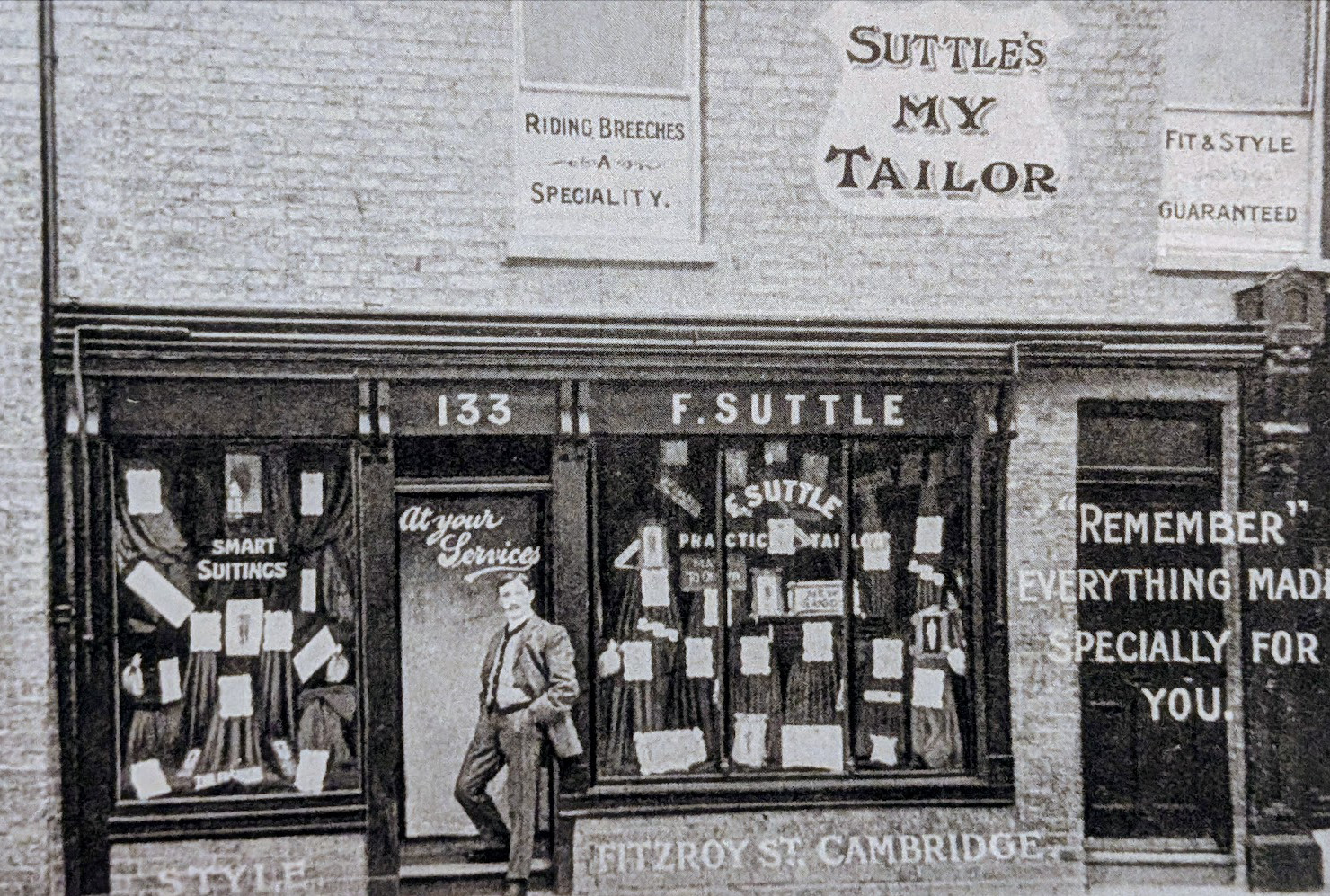
Frank Suttle tailor, 133 Fitzroy Street Cambridge
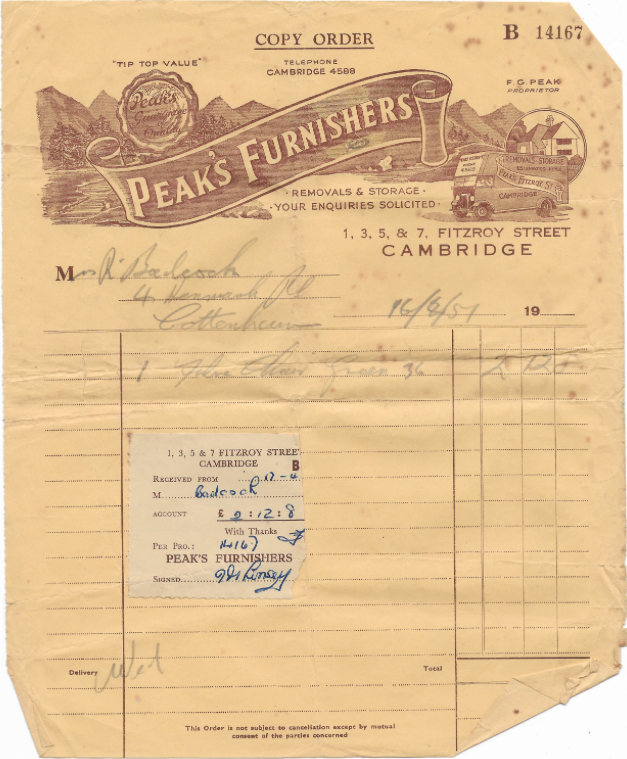
Peak’s, 1 Fitzroy Street 1951
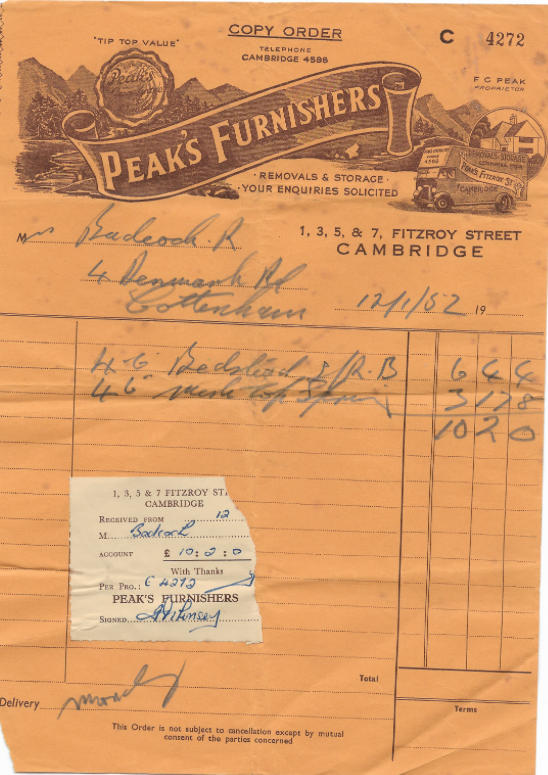
Peak’s, 1 Fitzroy Street 1952
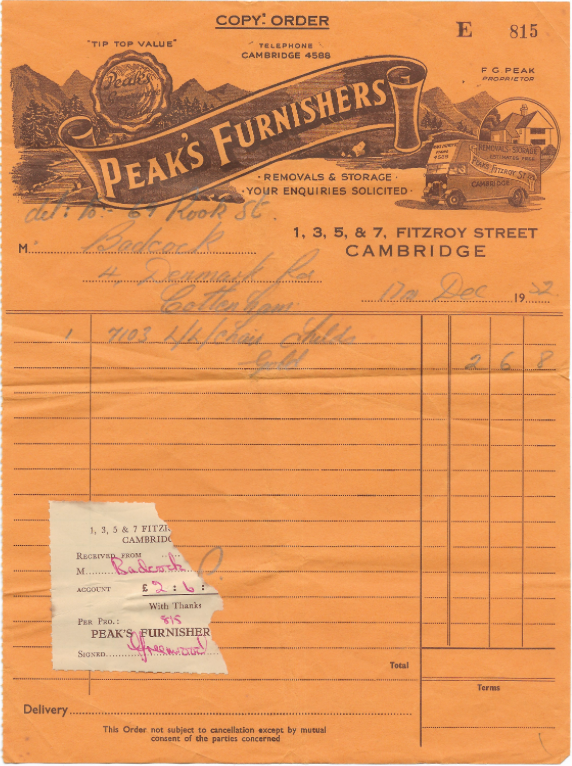
Peak’s, 1 Fitzroy Street 1952
1962 (1 – 7)
Peake’s Furnishers Ltd
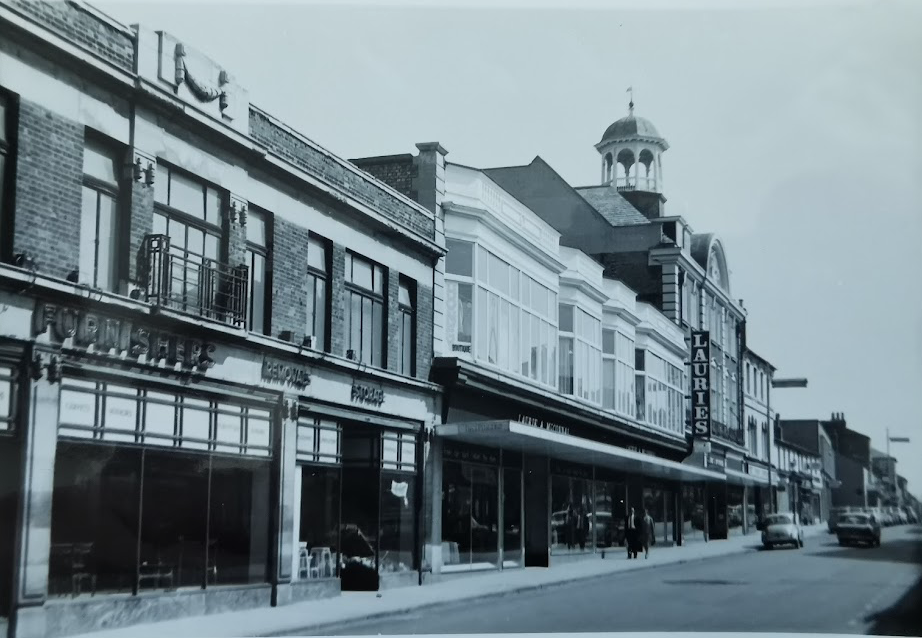
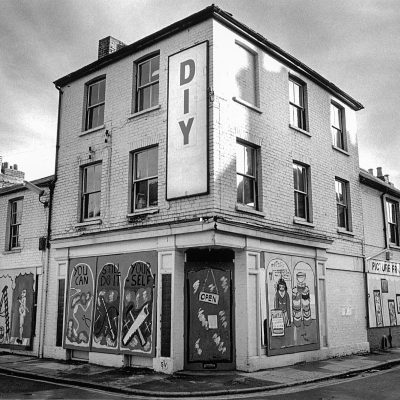
Fitzroy Street 1970 (MoC 9/92/70)
In 1982 a new Eden Chapel was built here, to replace the chapel that became part of The Grafton Centre. Read more at https://eden-cambridge.org/about-us/a-history-of-eden.
Projects
Contribute
Do you have any information about the people or places in this article? If so, then please let us know using the Contact page or by emailing capturingcambridge@
Licence
This work is licensed under CC BY-NC-SA 4.0