Search by topic
- archaeology
- Building of Local Interest
- chapel
- charity
- church
- crime
- dressmaker
- Great Eastern Railway
- Listed building
- Mapping Relief
- medieval
- oral history
- poverty
- Public House
- railway worker
- Religious House
- Roman
- scholar
- school
- Then and Now
- tudor
- women
- work
- world war one
- world war two
Search by text


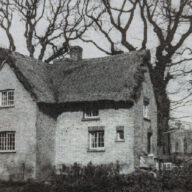
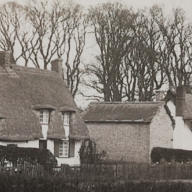
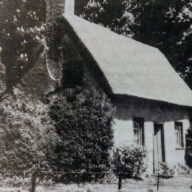
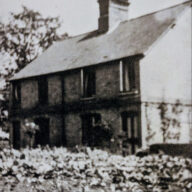
Pair of semi-detached houses across field at the end of the village
History of semi-detached houses
Dora Tack writes about these houses in Whispering Elms. They are numbered on her diagram ’19’ and ’20’.
Left-hand side:
Brick walls, slate roof, five rooms
1936 – 1940
Edward Cooper
Dora Tack includes Edward’s reminiscences of life in Papworth St Agnes. He recalls the bombing of 20th November 1940. The Germans dropped eight bombs, seven small ones and one was very big. It made a crater so large you could get two houses in the crater. The gault and shrapnel came through the roof but nobody was hurt.
1942
James Hamerton (Jim), retired
Mrs Hamerton (Nan)
Emily Blackaby, daughter
Barbara Blackaby, daughter of Emily
Miss Sylvia Jenkins, from Brixton, lodger, shop assistant. She met Frank Margot and they were married in 1946.
Right-hand side
Built of brick walls, slate roof; attractive windows, five rooms.
Occupants in 1942
Ernest Topham (Ern) – gamekeeper for Arthur Sperling
Ida née Sanderson, wife. She had worked as a domestic at The Rectory, Graveley where she net Ernest Topham
Ernest Hugh, craftsman REME armoured troops workshop. Died 1993.
Stanley (Stan or Deany), agricultural worker reserved occupation
Joseph Topham (Joe)
Miss Brenda Moreland, niece of Mrs Topham, post office clerk at Papworth Everard.
Projects
Contribute
Do you have any information about the people or places in this article? If so, then please let us know using the Contact page or by emailing capturingcambridge@
Licence
This work is licensed under CC BY-NC-SA 4.0