Search by topic
- archaeology
- Building of Local Interest
- chapel
- charity
- church
- crime
- dressmaker
- Great Eastern Railway
- Listed building
- Mapping Relief
- medieval
- oral history
- poverty
- Public House
- railway worker
- Religious House
- Roman
- scholar
- school
- Then and Now
- tudor
- women
- work
- world war one
- world war two
Search by text


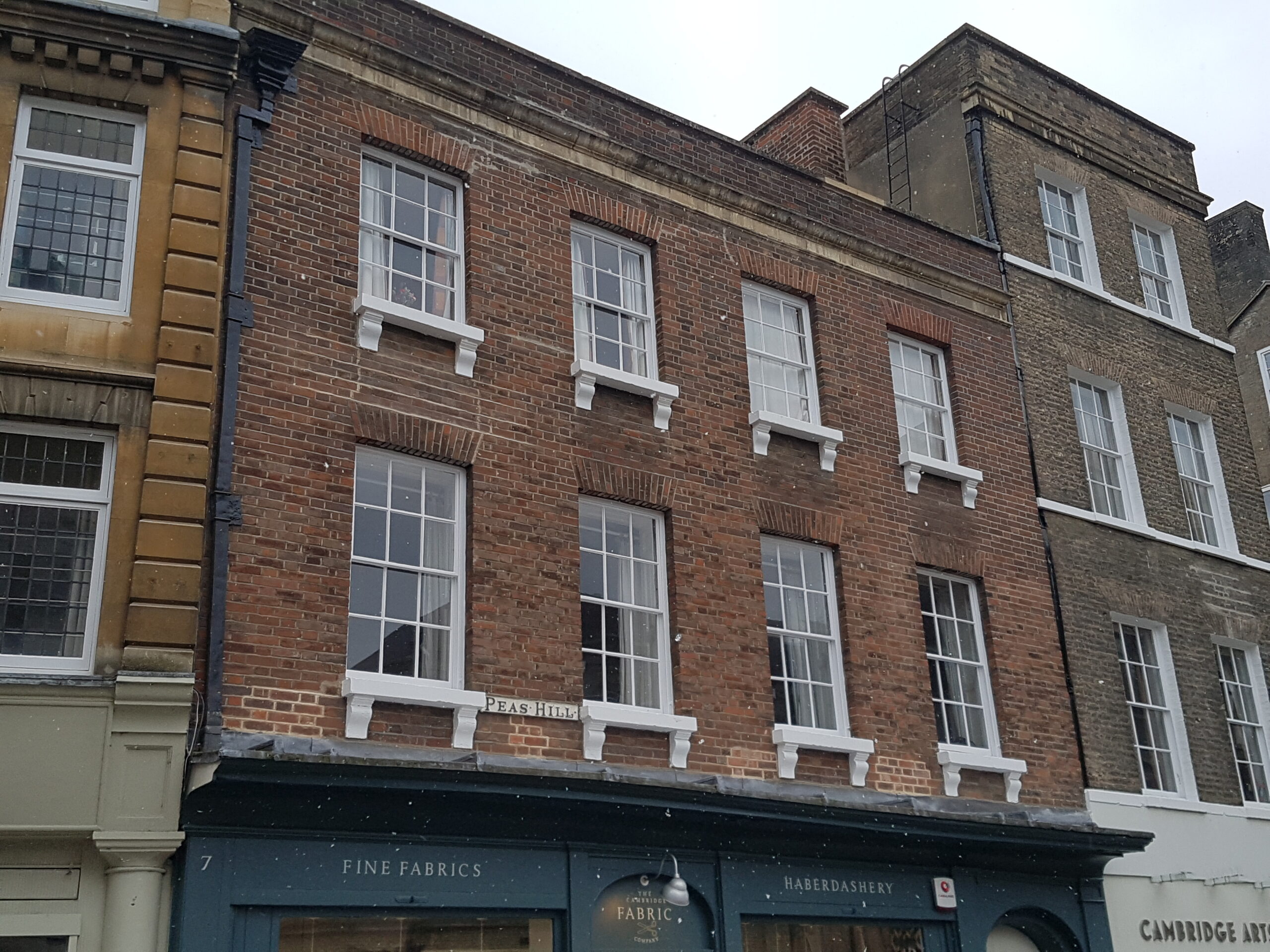
7 Peas Hill, Cambridge
History of 7 Peas Hill
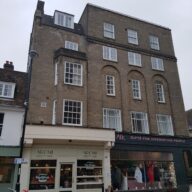
A three storey house with walls of plastered timber framing and red brick. It was built in the first half of the 18th century incorporating parts of the framed walling of an earlier building at the western end. The rooms inside have original panelling. (1959 Royal Commission on Historical Monuments Survey of Cambridge)
24/11/1911 John Stanley, poulterer of Peas Hill sued the G.E.R. Company for damages sustained in the carriage of 84 ducklings and three geese from Liverpool Street to Cambridge. They were to have been sent by passenger train the same day. But instead they were taken on to Doncaster. He made numerous inquiries but it was not until 9pm that the birds arrived at the station but the GER could not deliver them until Monday, by which time they would have been bad. But he had an old contract that said the goods were sent at his risk and he lost his case. (Cam.News)
1829
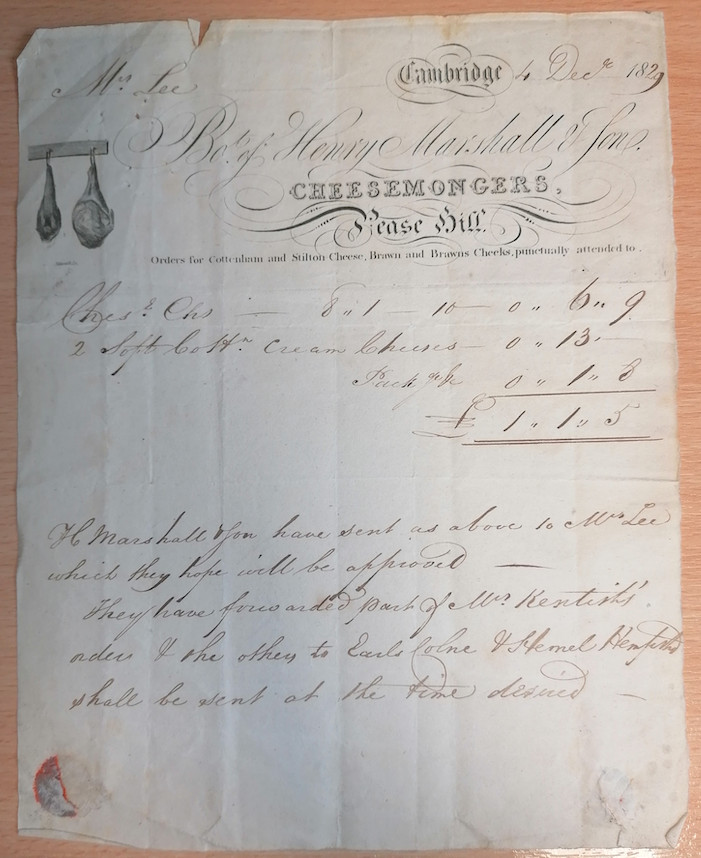
Bill for cheese purchased by Henry Marshall & Son of Peas Hill, December 1829 (courtesy of Cambridge University Library)
1851
(7 Peas Hill)
Henry Marshall, 52, cheesemonger employing 5 persons, b Cambridge
1861
Henry Marshall, 62, magistrate cheesefactor
1871
Jennings
1891
Jennings
1913
John Stanley, poulterer and game dealer
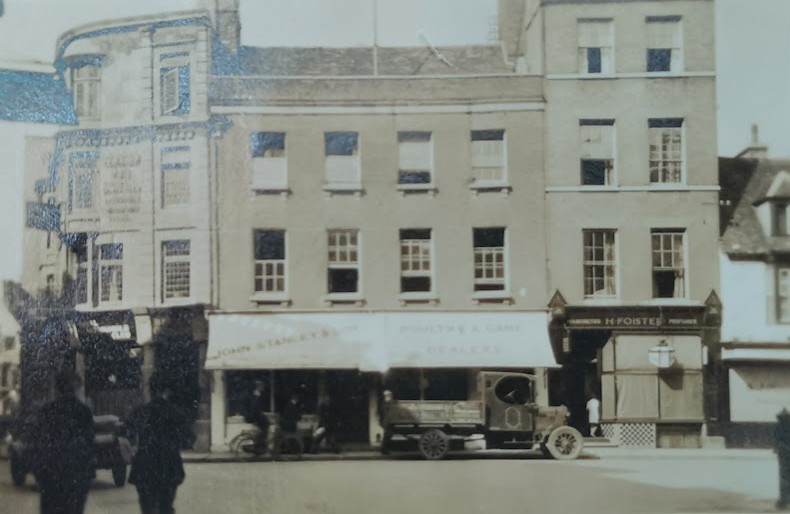
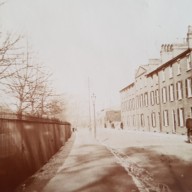
7 Peas Hill, 1925 (MoC724/55)
1962
Biggs & Sons, florists
Walter E Chamberlain
2018
The Cambridge Fabric Company
Projects
Contribute
Do you have any information about the people or places in this article? If so, then please let us know using the Contact page or by emailing capturingcambridge@
Licence
This work is licensed under CC BY-NC-SA 4.0