Search by topic
- archaeology
- Building of Local Interest
- chapel
- charity
- church
- crime
- dressmaker
- Great Eastern Railway
- Listed building
- Mapping Relief
- medieval
- oral history
- poverty
- Public House
- railway worker
- Religious House
- Roman
- scholar
- school
- Then and Now
- tudor
- women
- work
- world war one
- world war two
Search by text


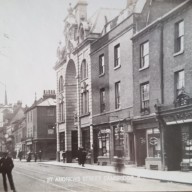
 70 Sr Andrew's Street, The Vine Estate
70 St Andrew’s Street
History of 70 St Andrew's Street
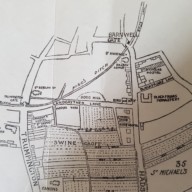
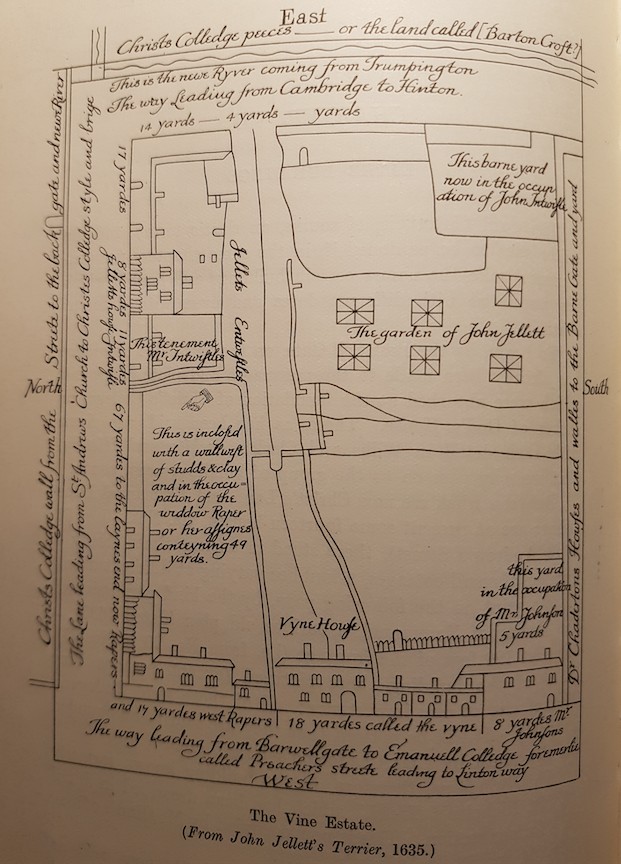
In medieval times, the stretch 70-65 St Andrew’s Street was the Vine Estate which belonged to the nunnery of St Radegund. (see St Andrew’s Street)
In 1635 this is described: ‘This is enclosed with a wall west of studds and clay and in the occupation of the widdow Roper or her assigns conteyning 49 yards‘.
Page 378f of the Grand Arcade excavation report (2019) contains the following commentary on this site:
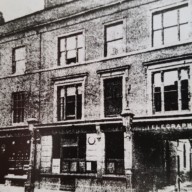
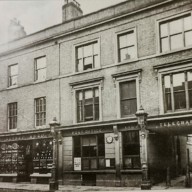
To the north of Field’s Court, 70 St Andrew’s Street comprised a relatively substantial frontage property with a yard to its rear that contained a high pan-tiled building, a dung hill, cow lodges and a cow yard. In 1851 this property was occupied by George Thompson, a grocer and farmer aged 44 from Yorkshire, along with his wife, two children and two servants. To the rear of 70 St Andrew’s Street were seven properties that fronted onto Christ’s Lane. These buildings, 1–7 Christ’s Lane, were leased to Christ’s College in 1822; the College leased them again in 1837 and finally purchased them in 1862. The contract for this purchase stipulated that the properties were not to be rebuilt; instead, the land was to be used only for the enlargement and improvement of Christ’s College. Yet this redevelopment never occurred and the properties therefore became increasingly dilapidated. In 1851, for example, only three out of the seven were occupied, a pattern which continued into later decades.
1861
George Thompson, 54, grocer and farmer employing 7 men 2 boys 200 acres, b Yorks
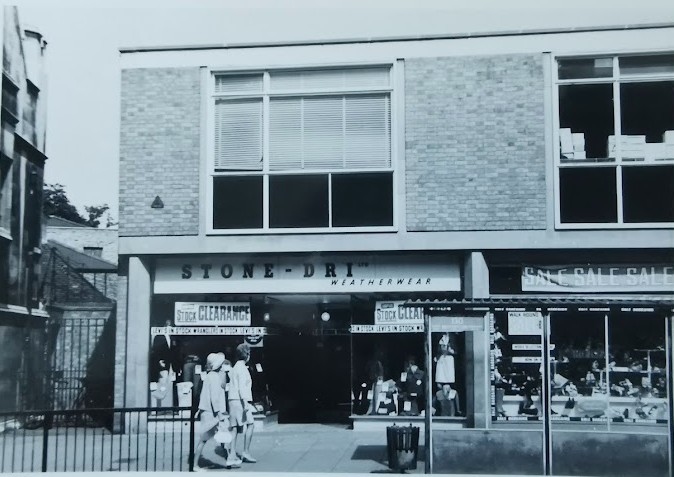
70 St Andrew’s Street (MoC26/160/69)
Projects
Contribute
Do you have any information about the people or places in this article? If so, then please let us know using the
Contact page or by emailing
capturingcambridge@
Licence
This work is licensed under
CC BY-NC-SA 4.0


 not including content on external links as indicated
by
not including content on external links as indicated
by .
.