Search by topic
- archaeology
- Building of Local Interest
- chapel
- charity
- church
- crime
- dressmaker
- Great Eastern Railway
- Listed building
- Mapping Relief
- medieval
- oral history
- poverty
- Public House
- railway worker
- Religious House
- Roman
- scholar
- school
- Then and Now
- tudor
- women
- work
- world war one
- world war two
Search by text


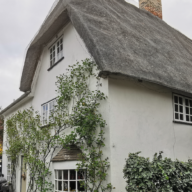
41 Mill Way, Yew Garth
History of Yew Garth
Listed building:
House of three building periods. Late C17, C18 and c.1830. Timber-framed and red brick, plaster rendered, to C17 house and yellow brick to C18 extension. Clay bat, rendered, to c.1830 front.
The story of the Widnall family is told in detail by Christine Jennings in, Widnall – A Capital Contriver, 2003.
1666 Map shows house on this site.
1779 Sarah Freeman, later Page, moved to Grantchester to be housekeeper to Rev Dr Samuel Peck, former Vicar of Trumpington, who had moved to Yew Garth. He was a Fellow of Trinity and Deputy Chancellor of Ely Diocese; he was wealthy and much of his land and property would be passed to Sarah on his death in 1791. Sarah continued to make purchases of land assisted by thr Grantchester farmer, Benjamin Howard.
1794 Sarah Freeman married Thomas Page and their landholdings were merged. At the time this was 81 acres; at Thomas’s death, his land holdings in Harlton alone were worth £100,000.
1825 At the time of Samuel Page Widnall’s birth, the house was lived in by his great aunt, Mrs Sarah Page, and his grandmother, Mrs Elizabeth Freeman. Sarah had married late to the wealthy farmer Thomas Page. Samuel Page Widnall would always be called ‘Page’, partly to avoid confusion with his father, but also out of respect for his wealthy relation, according to Jennings. It was probably because of these family connections that the Widnalls were able to set up their business in Grantchester.
1903 House was acquired by Cecil Warburton.
1958 Robert Browning
Projects
Contribute
Do you have any information about the people or places in this article? If so, then please let us know using the Contact page or by emailing capturingcambridge@
Licence
This work is licensed under CC BY-NC-SA 4.0