Search by topic
- archaeology
- Building of Local Interest
- chapel
- charity
- church
- crime
- dressmaker
- Great Eastern Railway
- Listed building
- Mapping Relief
- medieval
- oral history
- poverty
- Public House
- railway worker
- Religious House
- Roman
- scholar
- school
- Then and Now
- tudor
- women
- work
- world war one
- world war two
Search by text


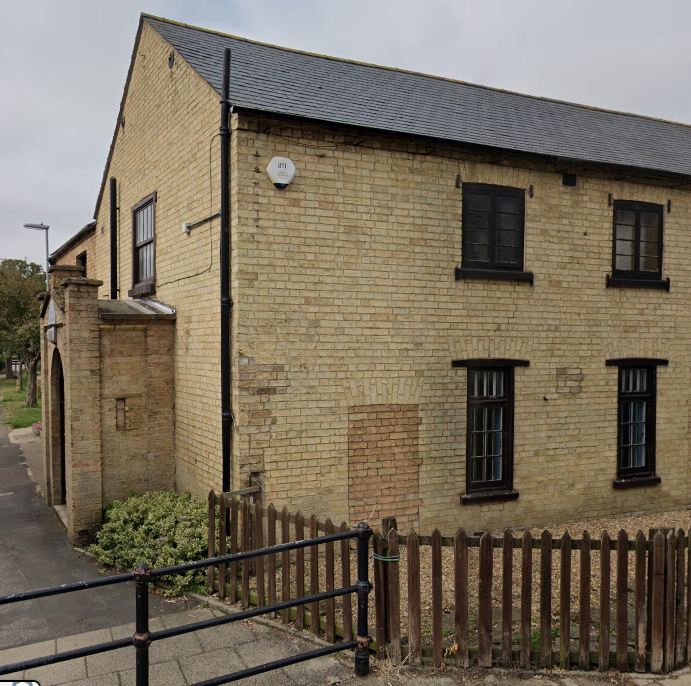 Masonic Hall, Silver Street, Ely
Ely Militia Barracks
History of Ely Militia Barracks
The local militia seem to have died out in Ely after the Napoleonic wars but was started up at the time of the Crimean War and was active in Ely from 1852 to 1908.
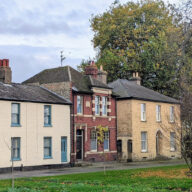
The barracks of the 68th Cambridgeshire Regiment of Militia were built around 1855. There was a drill shed, a guard house, an orderly room, a reading room and stores. The block containing the Adjutant’s house, armoury and orderly room is now the Masonic Hall.
See Tales of the Militia in Ely by Christine Pownall, 2014.
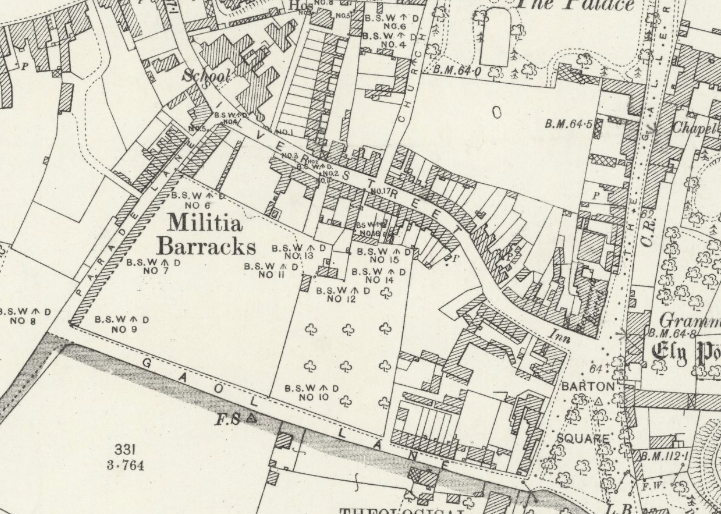
Ely Militia Barracks OS map 1901
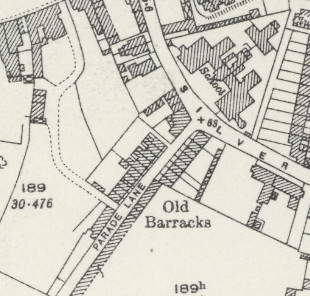
Old Barracks, Ely OS 1925
See Mike Osborne, Defending Cambridgeshire.
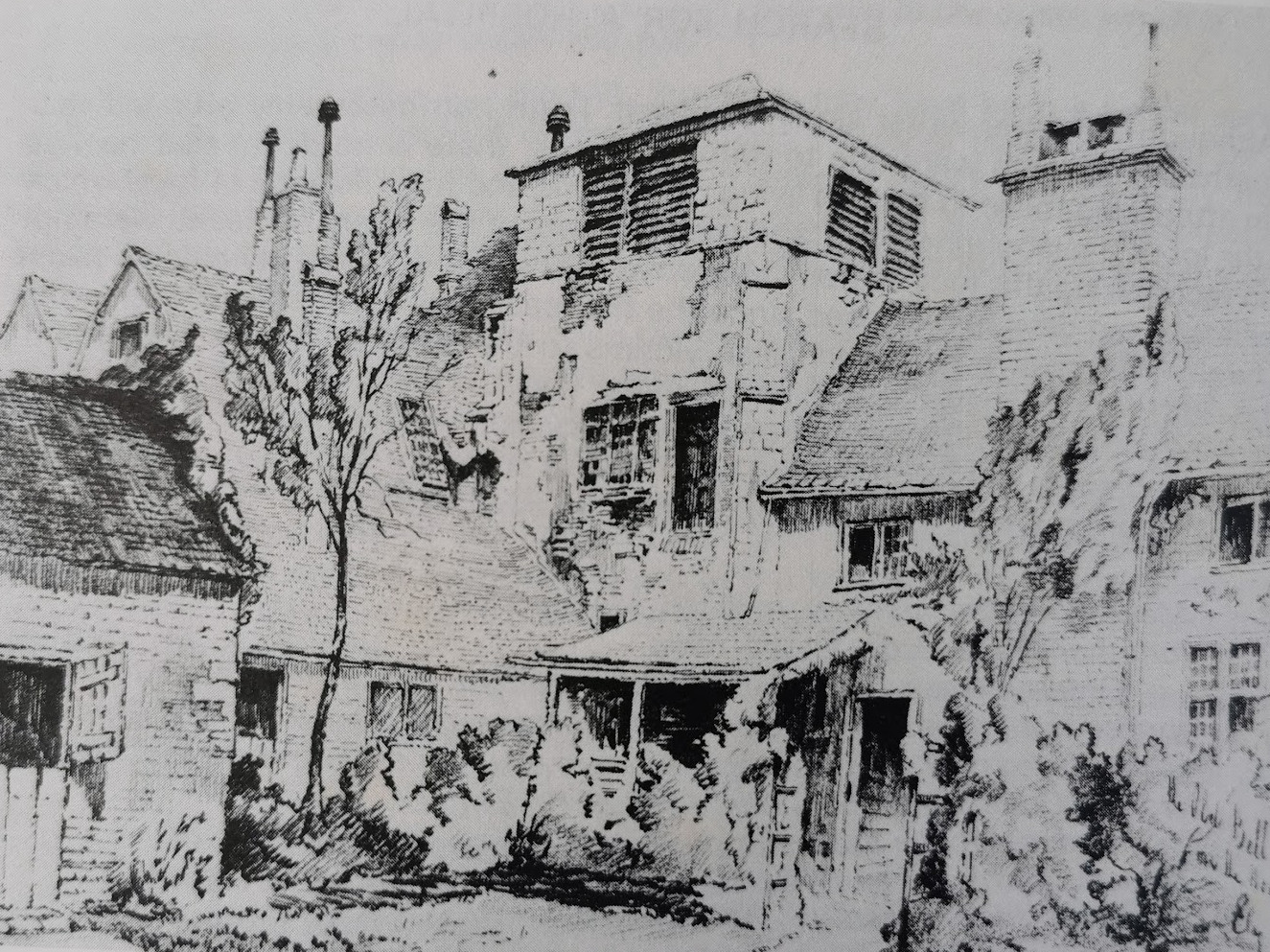
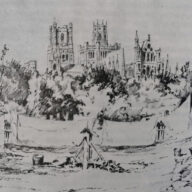
Militia Depot, 1838 (pencil, Henry Baines)
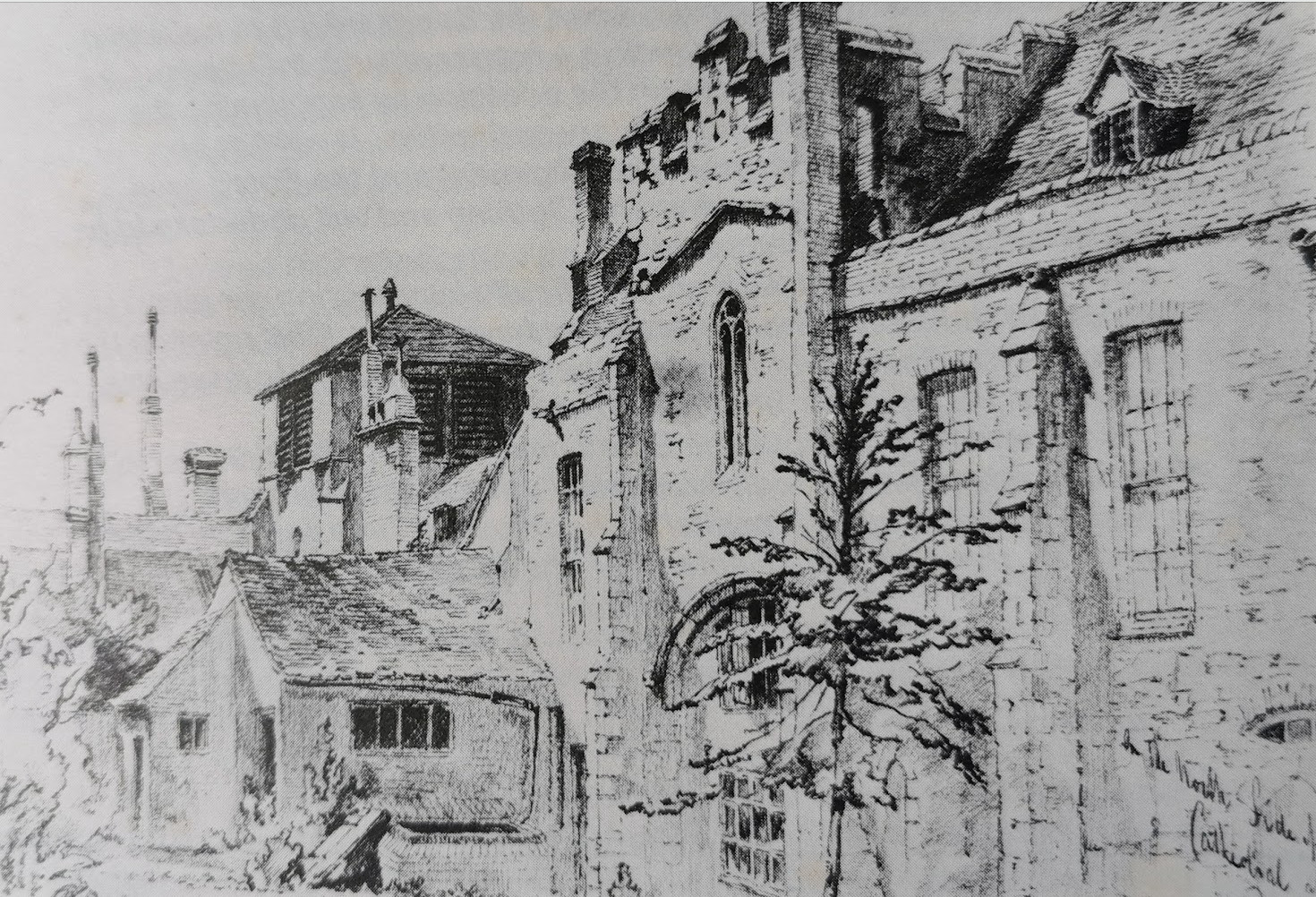
Militia Depot, 1838 (pencil, Henry Baines)
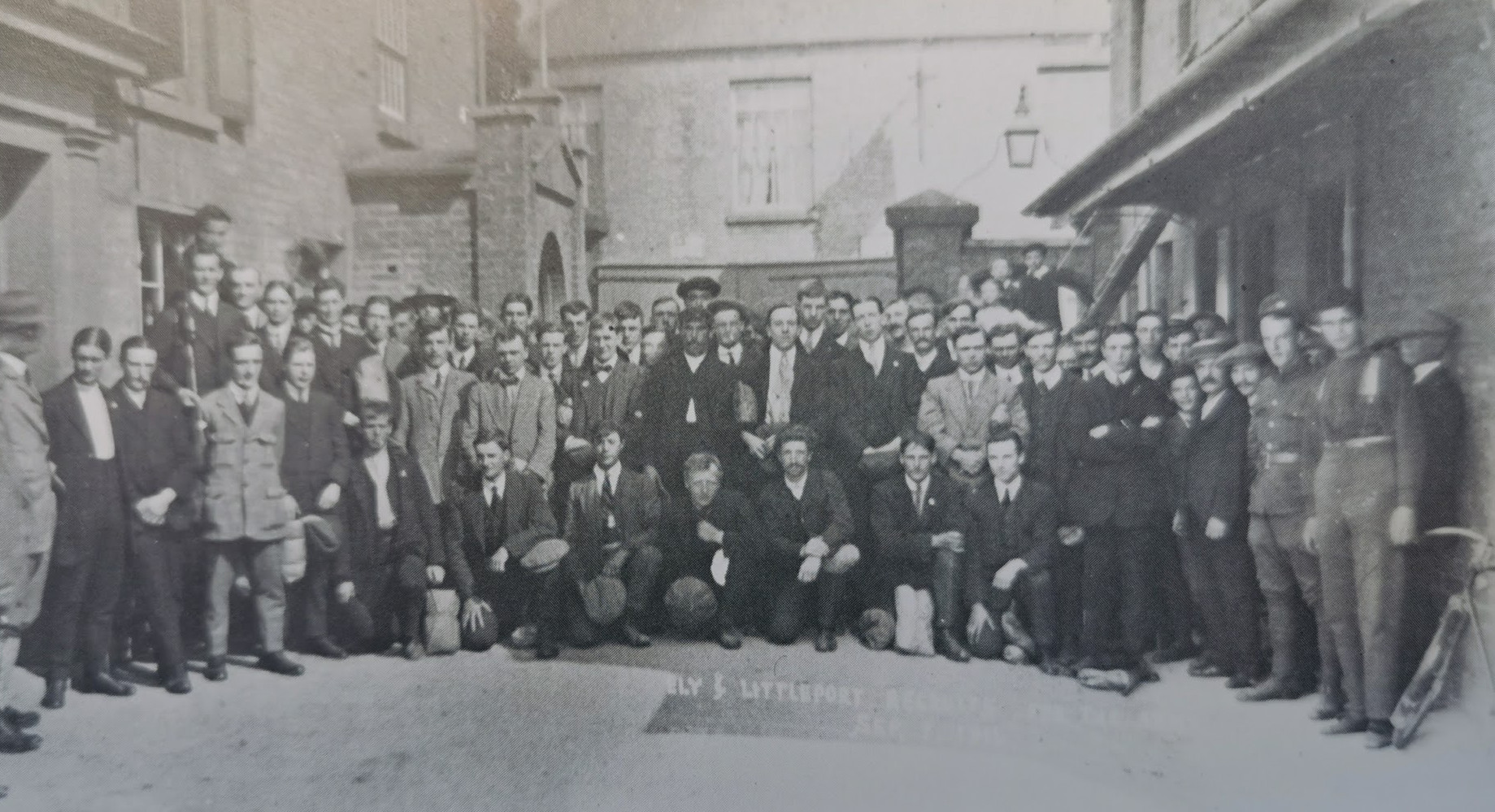
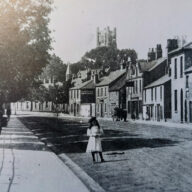
Old Barracks, Silver Street, Ely c.1914
1852
At the Cambridge Quarter Session for Michaelmas 1852, Ely Militia Storehouse was found to be in a bad state, not fit for the Reception of Arms and stores daily expected.
Officer from the Scots Fusilier Guards sent to organise revival of Ely militia. Found two officers’ mess boxes full of old crockery. The officer, Captain Dickment, went recruiting volunteers in all the local towns and villages. He managed to enrol about 500 ready for an Assembly of the Regiment in 1852.
The Cathedral issued Bibles to new recruits and a night school was organised for reading, writing and arithmetic.
1854
The regiment was ordered to serve in Dublin for a year.
1860
Mess book refers to band instruments worth £553 18s 3d. A list is given of 12 clarionettes, 4 cornapeans, 4 french horns, 3 trumpets, 2 bassoons, 3 piccolos, 2 flutes, 1 concert flute, 2 alto horns, 4 ophicleides (a sort of serpent), one bombardon, two bass trombones, two tenor trombones, one cymbals, one side drum, one bass drum and a triangle.
1868
Land off Silver Street purchased for the building of sergeants’ houses and a hospital.
In April 1896 seven recruits were billeted at the Three Blackbirds public house in Broad Street and two of them, Private John Bredman of Cambridge and Private Jesse Peel of Ely were playing with their bayonets, seeing who could fix them quickest, when Peel accidentally stabbed Bredman fatally. (CamChron. & CIP)
1875
Drunken militiaman was refused service at The White Lion in St Mary’s Street. He then broke 16 out of 18 windows with his bare fists. (Ely Standard 29.5.18750
1881
War Office took over funding of the barracks from the County. This was p[art of a national reorganisation of the Militia. The name change to 4th Battalion of the Suffolk Regiment was very unpopular. The War Office place stones marked W^D at various points to indicate the boundaries of their property. Some of these survive.
Fire at Mr Barley’s bakery in Newnham Street put out by fire brigade helped by Militia. (CIP 21.5.1881)
1884
“A few days ago, as the 4th Suffolk (Cambridgeshire Militia’s new name since 1881) were practicing at the butt, a Sergeant firing at long range hit a partridge which was on the ground several hundred yards distant. He was not aware that the bird was between him and the butt, and the bullet took off its head as clean as a whistle.” (CamChron 23.5.1884)
1890
Celebration of Queen’s birthday. “The officers wore yellow roses on their helmets, and the drums and colours had the same floral decoration. A ceremony of Trooping the Colour was performed … “(CIP 24.5.1890) The Suffolks wore yellow roses on special occasions to commemorate their battle against the French at Minden in 1759.
1892
James Snowling, landlord of The Peacock, collapsed and died while trying to eject drunken militiaman Henry Jessop. (CamChron, CIP & Ely Guardian 10.6.1892)
1900
Militia were embodied for garrison duty in Dover where they were to take over from regular soldiers required to fight in the Boer War. (Cambridgeshire Times 26.1.1900)
They returned on October 15th. “No time was lost at the barracks and every man was paid off and cleared away in a most orderly manner. Each man received a new suit of civilian clothes and in addition they were given £1 10s as a bounty” (Ely Gazette 19.10.1900)
1901
Captain Brett wrote: The waterproofs supplied for the use of recruiters are unsuitable – yellow oil skin smocks as worn by fishermen. These are anything but attractive in appearance, a point somewhat essential in the matter of recruiting.
1902
Harry Hones arrested drunk and disorderly on arrival for training with the militia. Taken away by police handcuffed on a stretcher. (Cambridge Times 13.6.1902)
1907 Advert
A pleasant, healthy, patriotic and profitable holiday. Young men of Cambridgeshire are invited to join their county Battalion. Recruits accepted from seventeen to thirty five years of age. Six weeks drill at Ely, a fortnight camp at Landguard (Felixstowe) four weeks in camp at Great Yarmouth. Board, lodging and clothing FREE, and about 5 shillings a week pocket money. Ex-army men are eligible up to forty five years of age.
1908
The Militia was finally disbanded in 1908 as part of a wider reorganisation of the army.
According to Audrey Denton, Recollections of Old Ely, the little street called The Range, off Silver Street, was originally built for the local Militia. There was a hospital at the end of the street with a Day Room. The coal fire range in the kitchen there was given to the Ely Museum.
The Red Cross used the hospital from WWI until 1922. In 1933 it became a meeting place for the Women’s Conservative Club.
When the hospital closed the building was available for hire for dances etc. In 1937 the British Legion took it over to use as their club.
Houses were built to house Militia staff. That nearest Silver Street housed the Regimental Sergeant Major, next door was the Sergeant Major, and nearest the hospital was the Quartermaster Sergeant. Little cottages in Parade Lane were used for privates.
The large building on the other side of Silver street was the Drill Hall, later used by the Masons.
Sources
- Book
- Newspaper
- Ordnance Survey
Projects
Contribute
Do you have any information about the people or places in this article? If so, then please let us know using the Contact page or by emailing capturingcambridge@
Licence
This work is licensed under CC BY-NC-SA 4.0