Search by topic
- archaeology
- Building of Local Interest
- chapel
- charity
- church
- crime
- dressmaker
- fire
- Great Eastern Railway
- Listed building
- Mapping Relief
- medieval
- oral history
- poverty
- Public House
- Religious House
- Roman
- scholar
- school
- Then and Now
- tudor
- women
- work
- world war one
- world war two
Search by text

3 Trinity Street
History of 3 Trinity Street

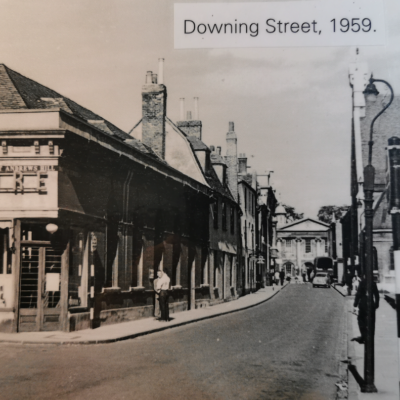
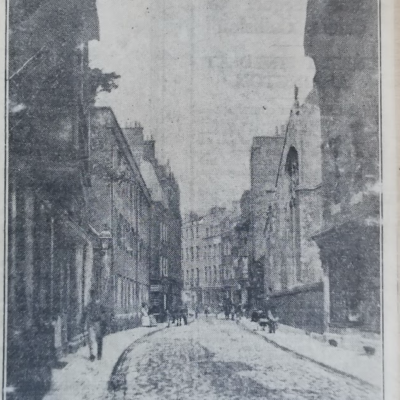
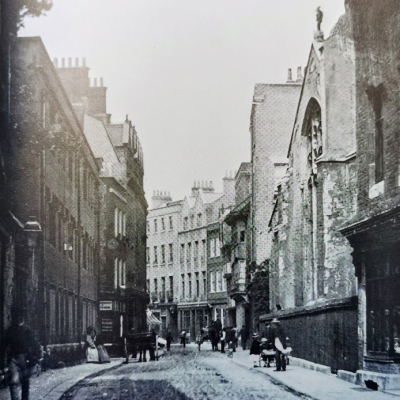
Trinity Street south end
An almost complete mid 18th century reconstruction of a possibly late 16th cent building. Inside there is an 18th cent staircase with turned balusters and mouldings. The cellar as a moulded ceiling beam. (1959 Royal Commission on Historical Monuments Survey of Cambridge)
1871
Francis R Hall, 43, surgeon, b Fulbourn
Frances M, 8, b Cambridge
Francis R, 6, b Cambridge
Jane Merry, 17, servant, b Orwell
William John Norman, servant, 16, errand boy, b Norwich
Elizabeth Monk, servant, 30, cook, b Beds
1881
1891
1901
1911
Robert Williams Michell, 49, medical practice, b Cornwall
Susan Langley Peachey, cook, 36, b Fen Ditton
Flora Gladys Clark, 26, b Ickleton
1913
R W Michell, MD, FRCS
26/7/1916 Heroic Officer. Cambridge has sustained some heavy losses during the present month, and prominent among them has been the death, through wounds, of Captain Robert W. Michell, R.A.M.C., better known to Cambridge people as Dr. Michell, he having been in practice here for some years, occupying premises in Trinity Street, nearly opposite Caius College, of which he was a member. An accomplished oarsman, he was in much request as a rowing coach. Every afternoon during Term he was to be met down the river advising either the crews of his own college or others, for Dr. Michell was always ready to give instruction to those who wished for it. He possessed a charming personality and was extremely popular with everyone who frequented the riverside. His death occurred in a private nursing home in London on Wednesday last from wounds received at the Front on July 3. Capt. Michell was wounded whilst performing an act of great gallantry, for which, we
understand, he had been recommended the Victoria Cross. (Cambridge Press)
1962
Edward Nourse, physician
Edward Vaughan Bevan, physician
G M Petrie, physician
Projects
Contribute
Do you have any information about the people or places in this article? If so, then please let us know using the Contact page or by emailing capturingcambridge@
Licence
This work is licensed under CC BY-NC-SA 4.0