Search by topic
- archaeology
- Building of Local Interest
- chapel
- charity
- church
- crime
- dressmaker
- fire
- Great Eastern Railway
- Listed building
- Mapping Relief
- medieval
- oral history
- poverty
- Public House
- Religious House
- Roman
- scholar
- school
- Then and Now
- tudor
- women
- work
- world war one
- world war two
Search by text
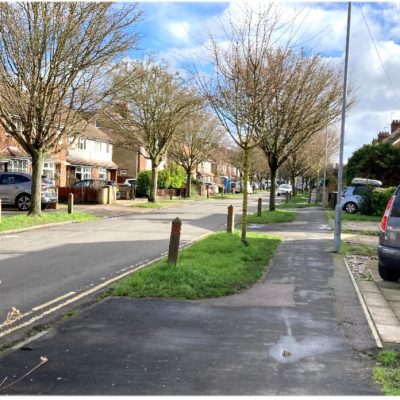
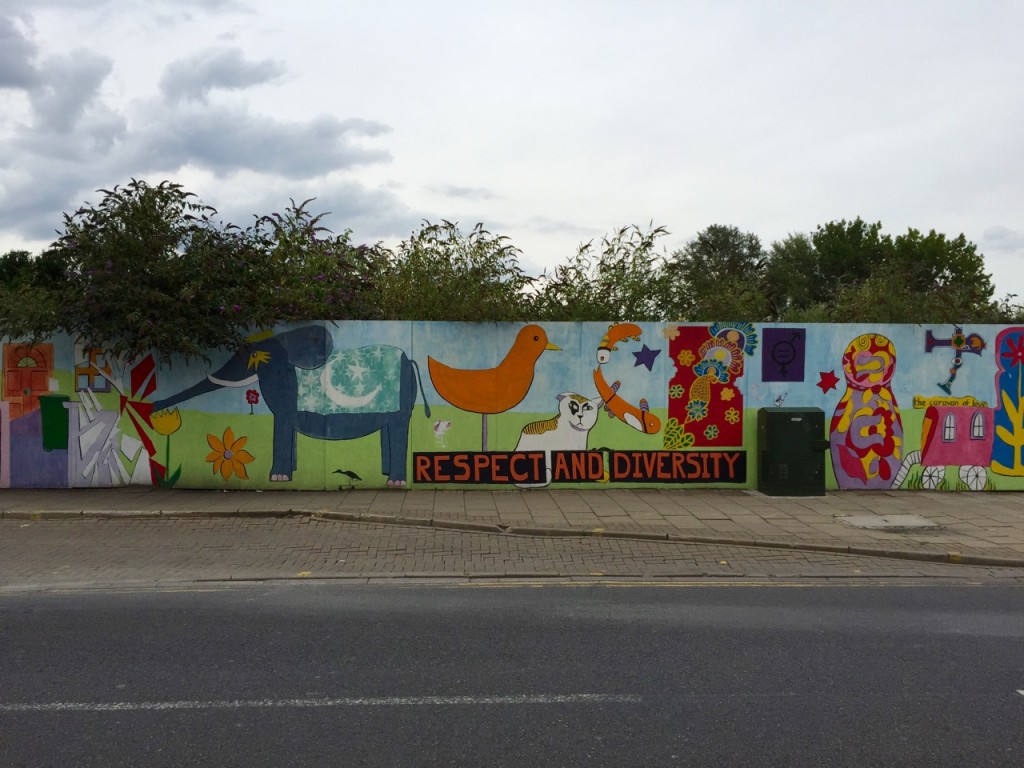 309-313 Mill Road, August 2015. Photo by Simon Middleton
Romsey Town Lime and Cement Works
The first cement works in Cambridge.
The Romsey Town Cement and Lime Company, founded in 1892, was the first cement works in Cambridge, and it had its works where Mill Road meets Brookfields. It may have started as a coprolite mine, but it eventually developed eleven kilns, with production being distributed by road, as it had no rail or tram connection. The works was not a great economic success, and it closed in 1915.
Following the cement works closure the site was split into two that were developed separately. The west side is 309–313 Mill Road, the east side is 315–349 Mill Road.
Timeline
1892 – Cement Works opens
1915 (East) – The Cam Foundry and Iron Works
1915 (West) – Saw Mills
1965 (West) – Magnet Bowl bowling alley
1967 (East) – Priory Motors garage
1971 (West) – Robert Sayle Magnet servicing centre
2007 (or earlier) – Site not in use
2008 – Warehouse demolished after a fire
2009 – Site cleared
2018 (East) – Cam Foundry student accommodation opens
2018 (West) – Mosque in development
Site History
The cement works were bounded by the Isolation Hospital on the east (part of Brookfields Hospital in 2015), a line continuing from St Philips Road to the north, and Vinery Road to the west, except for a block of houses in the Vinery Road/Mill Road corner.
No. 305 Mill Road was described as ‘Offices of Romsey Town Cement and Lime Co.’ in the Spalding’s Directory of 1920.
The 1925 OS map shows that the north–west corner of the site, following the line of the marl pit, has become part of the hospital. By 1967 the marl pit had been filled and trees planted.
The east side of the site became The Cam Foundry and Iron Works, generally called Mackintosh’s. By 1967 it had become a Priory Motors garage – Priory Motor Group was the car dealership arm of the Co-operative Group until 2005.
The west side is shown as ‘Saw Mills’ on the 1927 OS map, although nothing is shown on the 1938 map. In 1965 the Magnet Bowl bowling alley was opened and converted in 1971 to a warehouse for use by Robert Sayle’s department store.
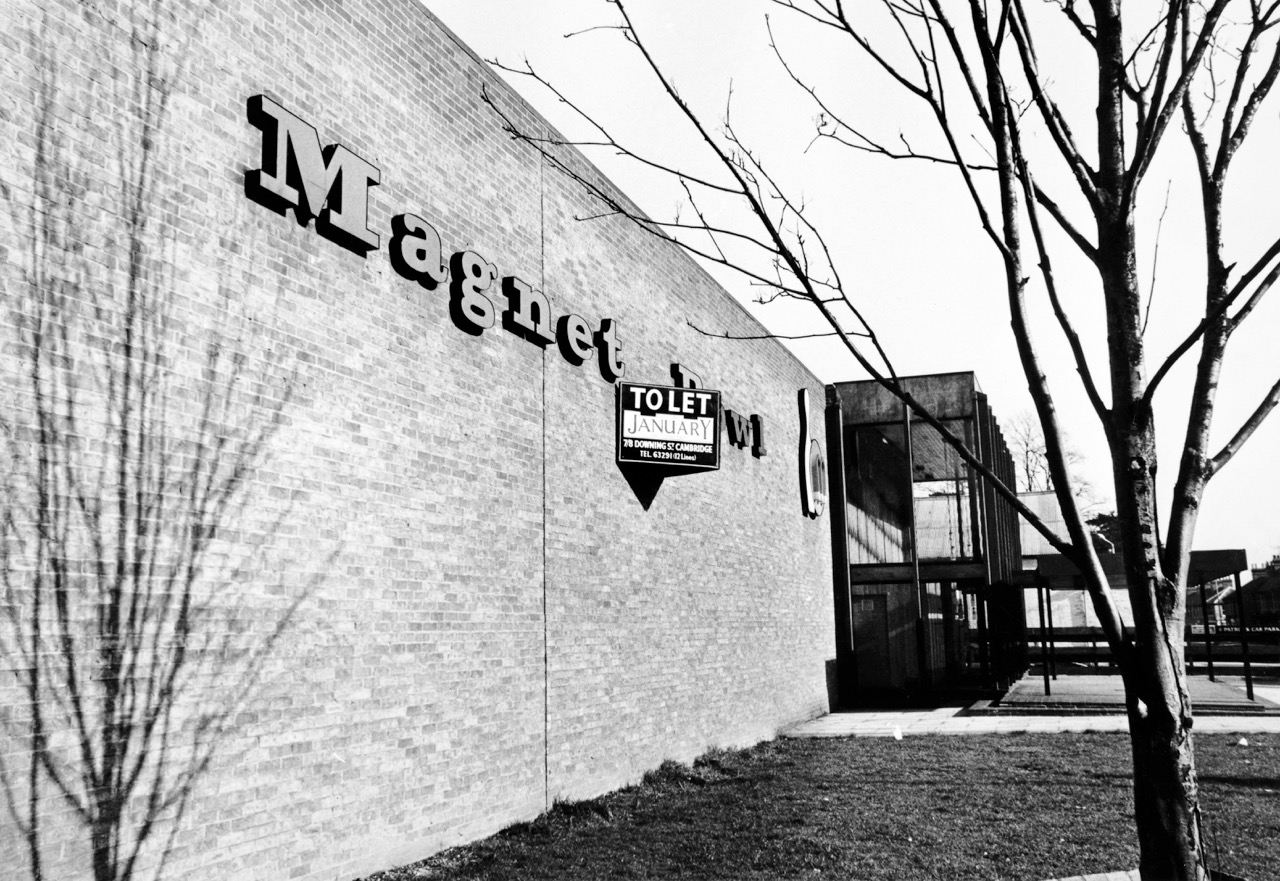
Magnet bowling alley,1970. Cambridgeshire Collection, B.MILL.K70 1657
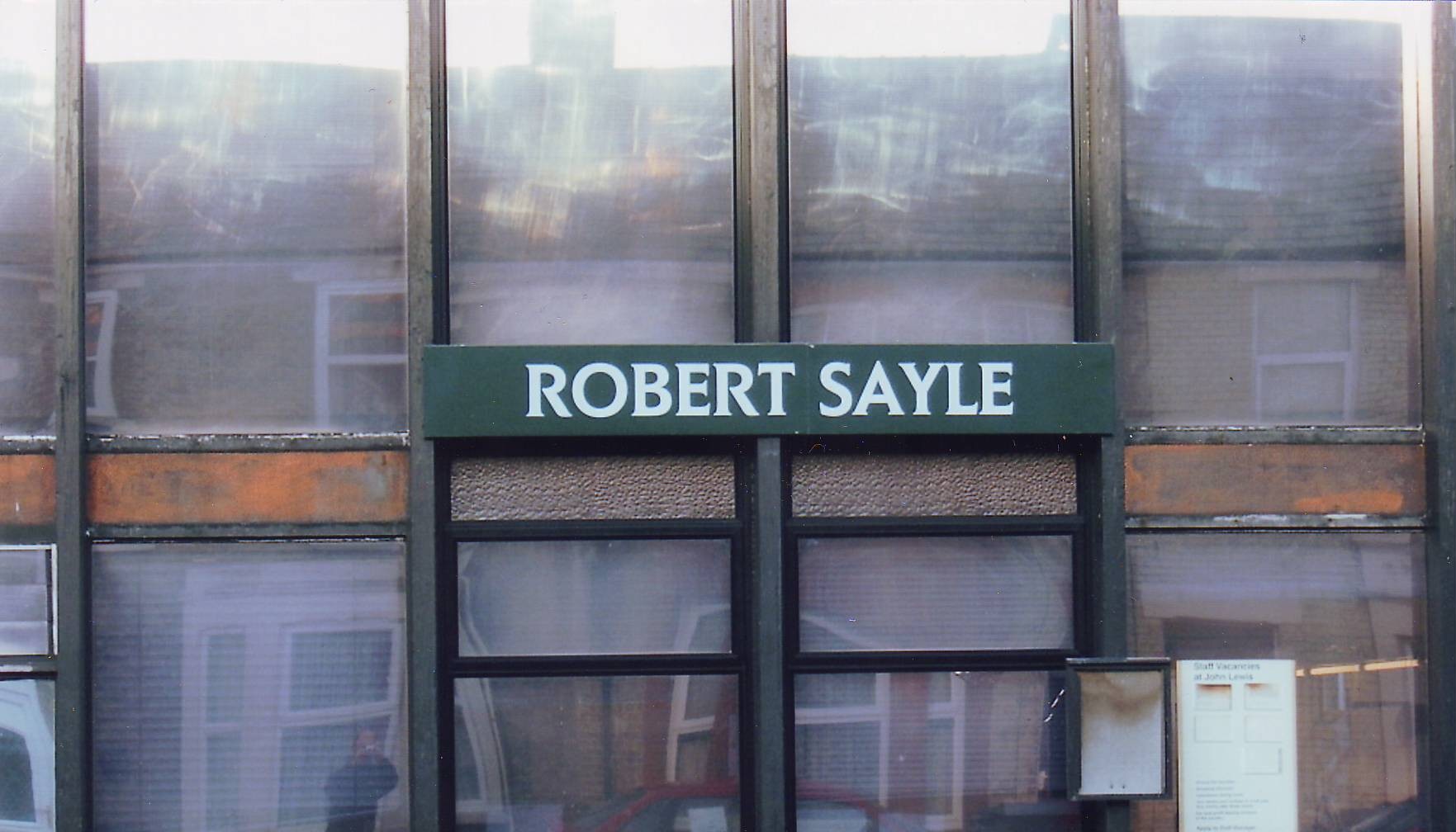
Robert Sayle Magnet Service Building, 2004
Further Information
- Read the complete report on Romsey Town Cement Works (PDF)
- Cement Plants and Kilns in Britain and Ireland
- Robert Sayle Memory Store
- Cambridge Mosque plans
- The Cam Foundry
Projects
Contribute
Do you have any information about the people or places in this article? If so, then please let us know using the Contact page or by emailing capturingcambridge@
Licence
This work is licensed under CC BY-NC-SA 4.0