Search by topic
- archaeology
- Building of Local Interest
- chapel
- charity
- church
- crime
- dressmaker
- fire
- Great Eastern Railway
- Listed building
- Mapping Relief
- medieval
- oral history
- poverty
- Public House
- Religious House
- Roman
- scholar
- school
- Then and Now
- tudor
- women
- work
- world war one
- world war two
Search by text
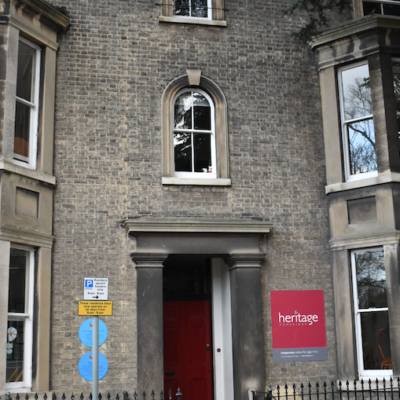
9 Queen Anne Terrace
History of 9 Queen Anne Terrace
1901
Mabel FitzGerald, widow, 42, b Ireland
Helen FitzGerald, 15, b Ireland
Susan Baker, 23, servant, b Barrington
1911
Agnes Russell Weekes, daughter, 30, tutor university correspondence college, b Rochester Kent, unenfranchised
Rose Weekes, daughter, 36, author, b Rochester Kent, unenfanchised
Emily Hutchings, servant, 33, cook, b Berks
Note this excerpt from the Cambridge University Web Site, Centre for Material Texts:
The centenary of a milestone in the history of women’s voting rights yesterday coincided with my graduate student Molly Yarn handing in the latest instalment of her PhD on female editors of Shakespeare in the late 19th and early 20th centuries. One of the women whose history she has been unearthing is Agnes Russell Weekes, who produced editions of As You Like It, The Tempest and Cymbeline for the University Tutorial Series. Weekes had a degree from University College, London; she worked as a tutor and co-wrote novels with her sister, with whom she lived at 9 Queen Anne Terrace in Cambridge. In 1911, Agnes (aged 30) and Rose (aged 36) filled in their census form. In the ‘INFIRMITY’ column, which invited you to note whether anyone included on the form was ‘lunatic’, ‘imbecile’, or ‘feeble-minded’, they wrote ‘unenfranchised’.
Agnes and Rose Weekes were among the thousands of suffragists who either boycotted the census or who used their forms to write messages of protest, such as Dorothy Bowker’s ‘No Vote – No Census. I am Dumb politically. Blind to the Census. Deaf to Enumerators. Being classed with criminals lunatics & paupers I prefer to give no further particulars’. It’s nice to have this opportunity to celebrate the courage of their protests.
1913
Mrs Weekes
1932
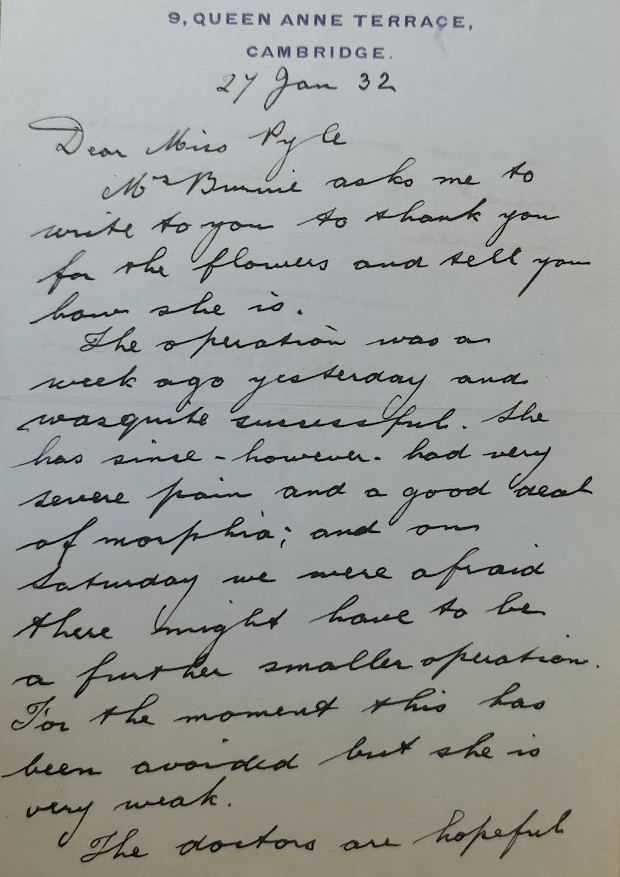
1932 letter to Constance Pyle
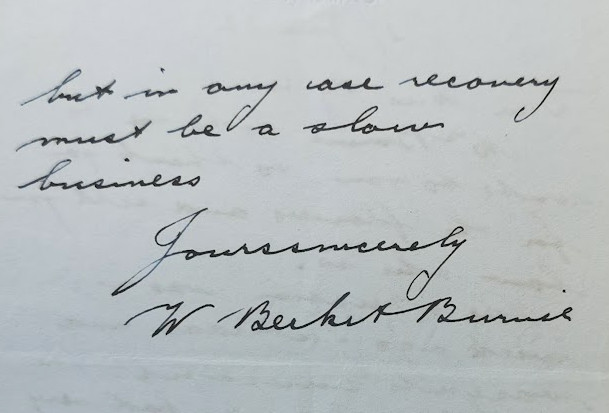
1932 letter to Constance Pyle
1962
United Cambridge Hospital Nurses Hostel
Projects
Contribute
Do you have any information about the people or places in this article? If so, then please let us know using the Contact page or by emailing capturingcambridge@
Licence
This work is licensed under CC BY-NC-SA 4.0