Search by topic
- archaeology
- Building of Local Interest
- chapel
- charity
- church
- crime
- dressmaker
- Great Eastern Railway
- Listed building
- Mapping Relief
- medieval
- oral history
- poverty
- Public House
- railway worker
- Religious House
- Roman
- scholar
- school
- Then and Now
- tudor
- women
- work
- world war one
- world war two
Search by text


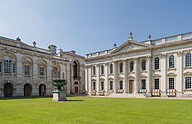
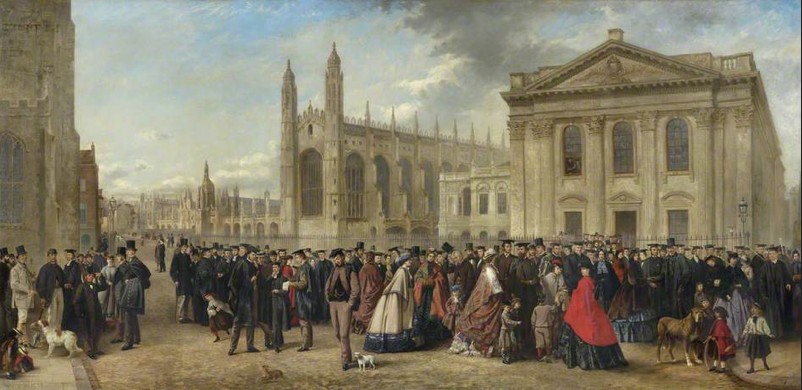 Degree Day by Robert Farren 1863 (Trinity Hall, Cambridge University)
Town and Gown: The Struggle and Story in Cambridge
The long history of conflict and cooperation between Cambridge townspeople and the University—known as “Town and Gown”—has shaped the city’s streets, governance, and identity from the medieval period
For centuries, Cambridge has been defined by the relationship between its residents (“the Town”) and the University community (“the Gown”). This dynamic has produced moments of tension, negotiation, and gradual integration.
In the medieval period, disputes over trade, rents, and legal authority were common. The University held significant privileges, often placing scholars beyond the jurisdiction of the town’s authorities. These imbalances led to repeated clashes, including riots and legal battles.
One of the most notable outcomes was the increasing control of the University over key aspects of town life. The appointment of University officials, regulation of markets, and control over lodgings often placed townspeople at a disadvantage. Institutions such as the Spinning House, where women accused of associating with students could be detained, reflect this unequal relationship.
Over time, however, the relationship evolved. By the 18th and 19th centuries, commercial growth, civic reform, and expanding municipal governance began to rebalance power. The rise of local industry, new housing, and civic institutions helped strengthen the identity of Cambridge as both a university city and a place of independent urban life.
Today, the legacy of Town and Gown can still be seen in Cambridge’s layout, institutions, and culture. Streets, colleges, markets, and public buildings all tell a story of negotiation between two communities sharing the same space.
Core Conflict and Authority
University Power and Legal Privilege
Trade, Inns and Economic Tension
Mill Road Depot / industrial sites
Housing Streets and Everyday Interaction
Reform, Balance and Modern Cambridge
Industrial Cambridge Entries (e.g. Chivers)
Science and technology sites (e.g. Cambridge Science Park)
Projects
Contribute
Do you have any information about the people or places in this article? If so, then please let us know using the
Contact page or by emailing
capturingcambridge@
Licence
This work is licensed under
CC BY-NC-SA 4.0


 not including content on external links as indicated
by
not including content on external links as indicated
by .
.