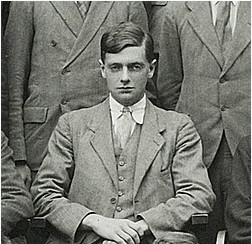
Oliver Gatty
Riversdale, Grantchester
History of Riversdale

Grantchester, OS 1881
1853
Widnall family move into the Old Vicarage from the Nursery House.
Page Widnall decided to rename the property Vine Cottage with a much reduced garden. On the former nursery garden he built a new 5 bedroomed house called Riversdale yielding £50 a year in rent.
1866 Smith family arrive in Grantchester. William Greene had married Charlotte Smith in 1854.
See chapter on ‘The Greenes‘ in Widnall, by Christine Jennings, 2003.
1871 Riversdale
William Greene, 46, law student, b Bury St Edmunds Suffolk
Charlotte, 36, b Brigg Lincs
Florence, 15, b Middlesex
William G, 14, b Essex
Alice M, 13, b Essex
Mary C, 10, b Essex [Charlotte Mary, known as Polly]
Charles H, 6, b Oxon
Edward, 4, b Oxon
Fred W, 3, b Grantchester
Benjamin, 1, b Grantchester
Helen C, 6 mos, b Grantchester
Martha Hammond, 28, servant, b Norfolk
Alice M Mary Whiting, 21, servant, b St Ives
Sarah Green, 30, servant, b Oxon
William Green died in 1881 in St Kitts where the family plantation was situated. He had been born in 1824 in Bury St Edmunds, son of Benjamin Greene, founder of the Green King brewery.
In 1861 the Greene family is at Takeley in Essex. Charlotte Greene, aged 29 is listed as married and head of family, a farmer of 170 acres employing 7 men and 3 boys. Charlotte Mary is 6 months old.
In 1891 some of the Greene family were living at the Old Vicarage
For detailed description of Riversdale and the Greene family see Mary Greene’s autobiography, The Joy of Remembering.
See also information about Benjamin Greene who founded the Greene King brewery.
1881 Riversdale
Arabella Cowland, unmarried, 66, annuitant of private means, b Devon
Alma Dickerson, servant, 25, cook, b Abington
Harriet, servant, 19, housemaid, b Beds
1900
Dr and Mrs Assheton
1939 Riversdale
Oliver Gatty and engineer Alfred Chessum were fatally injured while conducted an ARP experiment.
Salisbury Times, 14 June 1940
LOCAL SCIENTIST’S DEATH
Experiment in Cambridge
The tragic circumstances connected with the death at the age of 32 of Mr. Oliver Gatty, of Grantchester, Cambridge, the elder son of Lady Gatty, of New Hall, Figheldean, were revealed at the inquest at Cambridge on Saturday. Mr. Gatty, who was regarded as one of Britain’s most brilliant research scientists, was killed as a result of an experiment in connection with A.R.P. which took place in a Cambridge meadow last week. With him was killed Alfred Chessum, an engineer, aged 32, of Harston, Cambridge.
Professor E. K. Rideal, Professor of Colloid Science at Cambridge, giving evidence, said: “This accident, arising out of developments which Mr. Gatty had made in A.R.P. work, has terminated a life of exceptional brilliance. It brings home to us the fact that it is not only on the fields of Flanders and in the port of Calais that men are giving their lives for their country.” He added that Mr. Gatty, who had had a most distinguished career as a physical chemist at Oxford, gave up a Fellowship at Balliol College there to work at Cambridge.
“The world,” he said, “is poorer by the death of a scientist of exceptional promise. Two universities have lost one of their most brilliant sons, and there is a gap in my department which can never be filled again.”
Walter John Pamplin, of Shelford Road, Cambridge, stated that he supplied a steam boiler for Mr. Gatty to carry out experiments.
A verdict of “Death by misadventure” was recorded in each case.
A Tribute
The following tribute appeared in the “Times” on Monday from a correspondent:—
By the death of Oliver Gatty at Cambridge on June 5th, at the age of 32, from an accident while he was engaged on research in the service of his country, British science has lost an investigator of great originality and promise. He was the elder son of the late Sir Stephen Gatty and of Lady Gatty and a great-nephew of Walter Morrison, of Malham. Both at Winchester and Balliol he was outstanding at work and at games, and for his great personal charm. He got a “first” in Chemistry in 1930, and his early researches showed him to be a physical chemist of exceptional calibre. In 1931 he was elected to a Tutorial Fellowship at Balliol, but his real interest lay in research rather than teaching, and in 1933 he resigned to work for a time at Rothamsted. Then his interest in living processes took him to Professor James Gray’s laboratory at Cambridge, where he worked on the electrical properties of frogskin and the role of calcium in contracting muscle. It was a gallant attempt to bridge the gap between thermodynamics and biophysics, a task for which he was well fitted by the extraordinary range of his mental activities, which also made him a most stimulating influence in the laboratory. Recently he was working on the relationship between the properties of living and non-living surfaces with Professor Rideal.
Gatty was a natural mathematician, largely self-taught, with an unusual facility for applying mathematical analysis to any problem, and that background probably accounted for the completeness and coherence of his various studies, such as his earlier thermodynamical papers and his long monograph with Spooner, published by the Clarendon Press in 1938, on the electrical properties of corroding metals. He had many interests outside his work; in 1932 he went to the Ottawa Conference as secretary to Mr. Leo Amery, and in 1933 he was on the Spitzbergen Expedition. He made many friends, who loved him for his gaiety, his whimsical humour, his generosity, and his modesty, and he won their admiration by the courageous determination with which he carried through any task. In 1939 he married Penelope Noel, only daughter of the Rev. H. Bernard Tower and Mrs. Tower, of 6, Evelyn Gardens, S.W.
Sources
- Newspaper
Projects
Contribute
Do you have any information about the people or places in this article? If so, then please
let us know using the Contact page or by
emailing capturingcambridge@
Licence
This work is licensed under CC BY-NC-SA 4.0


 not including content on external links as indicated by
 .
.