Search by topic
- archaeology
- Building of Local Interest
- chapel
- charity
- church
- crime
- dressmaker
- Great Eastern Railway
- Listed building
- Mapping Relief
- medieval
- oral history
- poverty
- Public House
- railway worker
- Religious House
- Roman
- scholar
- school
- Then and Now
- tudor
- women
- work
- world war one
- world war two
Search by text


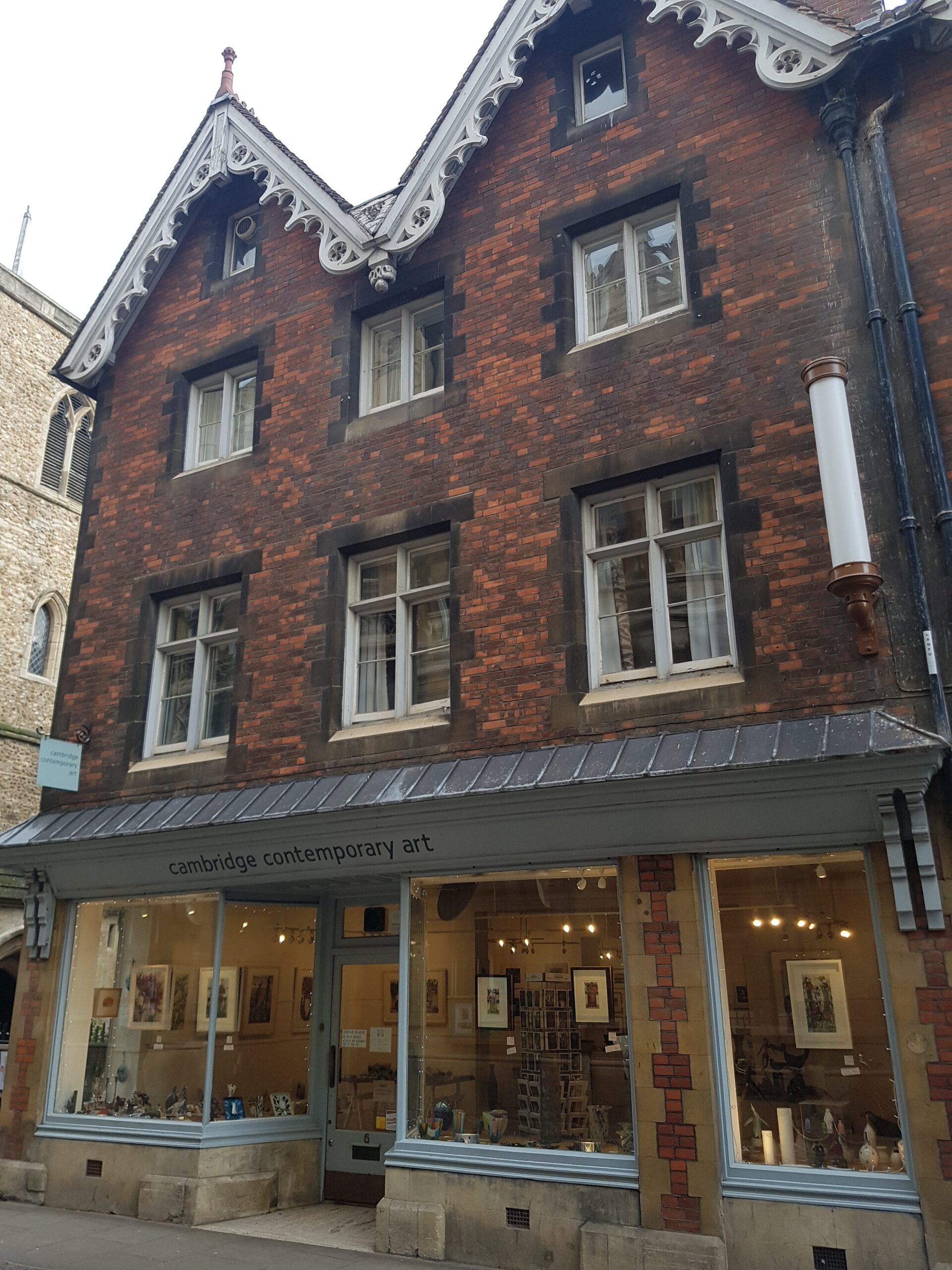
5-6 Trinity Street
History of 5-6 Trinity Street
1761
At approx. this location Woollard business was based. Family records state that it was 4 Trinity Street.The Woollards were a family who traced their origin to the early 17th cent in West Wratting. Their business started as a grocers but was extended to include fine china and glass.
Gilbert Woollard (b.1722 d.1759) was the son of Daniel and Elizabeth (née Bell) of West Wratting. He married in 1759 Joanna Campin of Cambridge at St Clements. Their son Gilbert (1760-1825 joined the Cambridgeshire Regiment Militia, rose to Paymaster, and served for over 40 years through the Napoleonic Wars.
William Hanchett Hattersley (1819-1902) was the son of Thomas Hattersley who had married Mary Ann Woollard (daughter of Gilbert Woollard (1760 -1825). After his parents had died he was brought to Cambridge by Mary and Ann Woollard c.1833/4 to live with them and enter the family business.
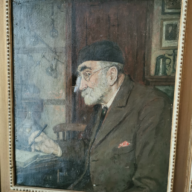
William Hatchett Hattersley (1819-1902) was a benefactor of St Mary’s. His family lived from 1877 to 1917 at Camden House, on Parker’s Piece.
1795
Gilbert Woollard bequeathed grocer business to his daughters Anna and Mary, later joined by his granddaughter Elizabeth.
William Hanchett Hattersley (1819-1902) was the son of Thomas Hattersley who had married Mary Ann Woollard (daughter of Gilbert Woollard (1760 -1825). After his parents had died he was brought to Cambridge by Mary and Ann Woollard c.1833/4 to live with them and enter the family business.
1850
By c.1850 William Hanchett Hattersley was head of the business and moved it up-market including china, glass an fine wines, built up a clientele that included the Prince of Wales when an undergraduate at Trinity College.
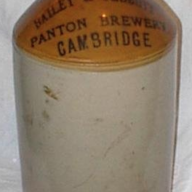
The Cambridge ale jug was found in digging the foundations of Hattersley Bros (grocers) in 1850.
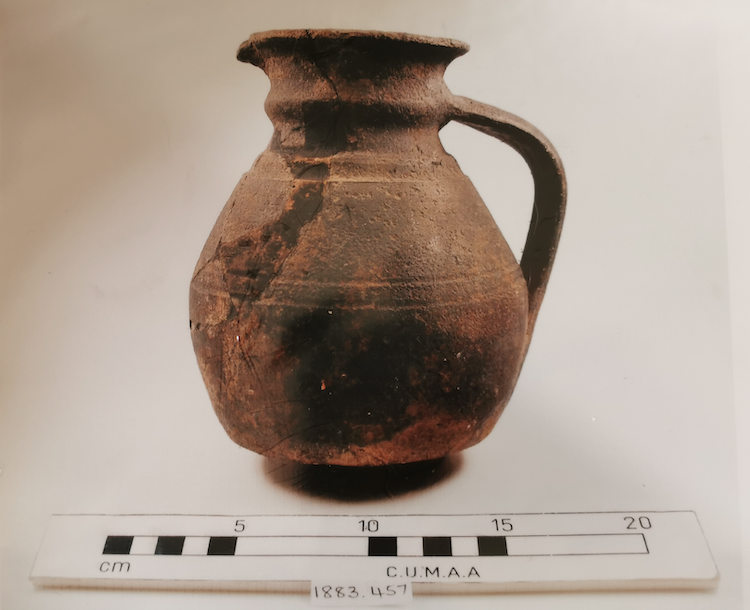
Cambridge ale jug, found 1850, Trinity Street
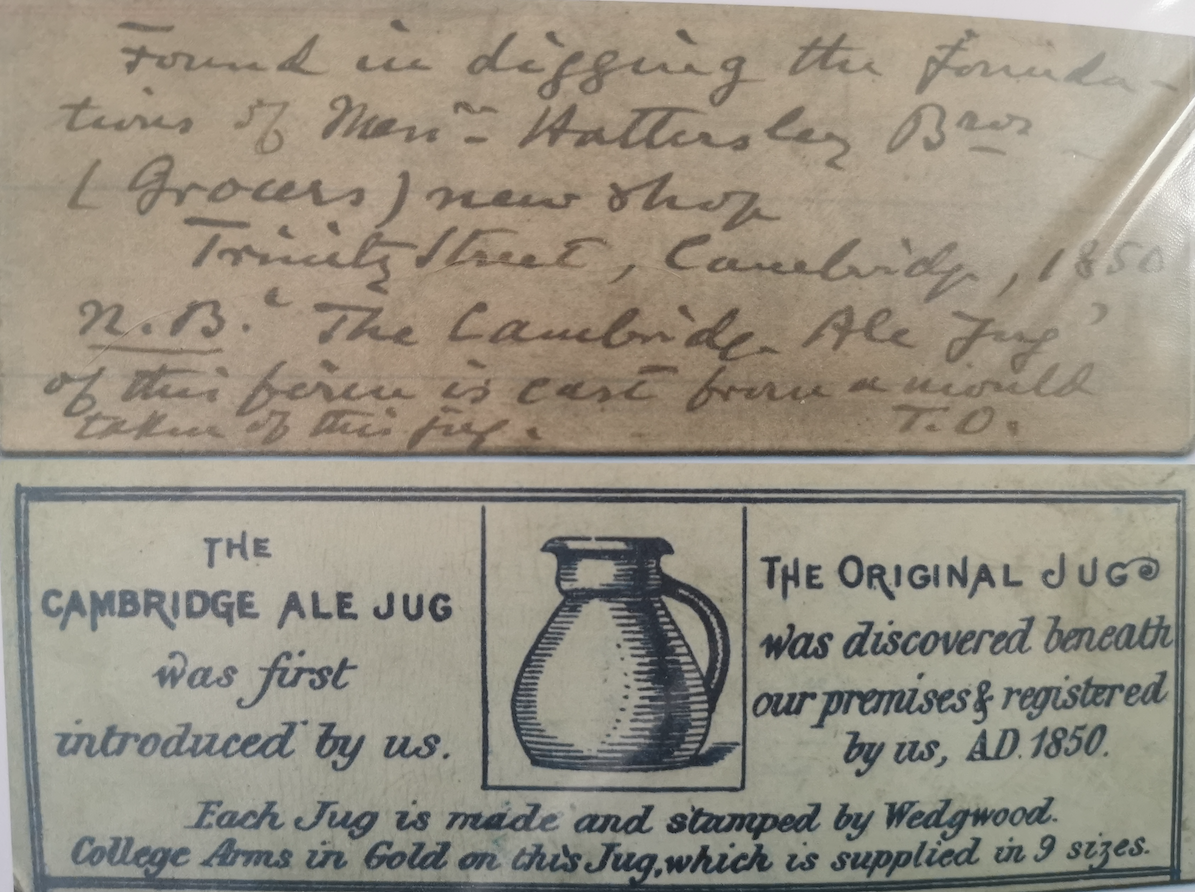
Record of Cambridge Ale Jug, found 1850, Trinity Street
In 2017 Imogen Gunn of the Museum of Archaeology and Anthropology, confirmed that this was a 14th century jug. The business had seen this a marketing opportunity and in collaboration with Wedgwood produced a range of different sized replicas of the jug under the name ‘Cambridge Ale Jug.’ The bases were stampled ‘Cambridge Ale Jug – sold by – Wollard & Co.’
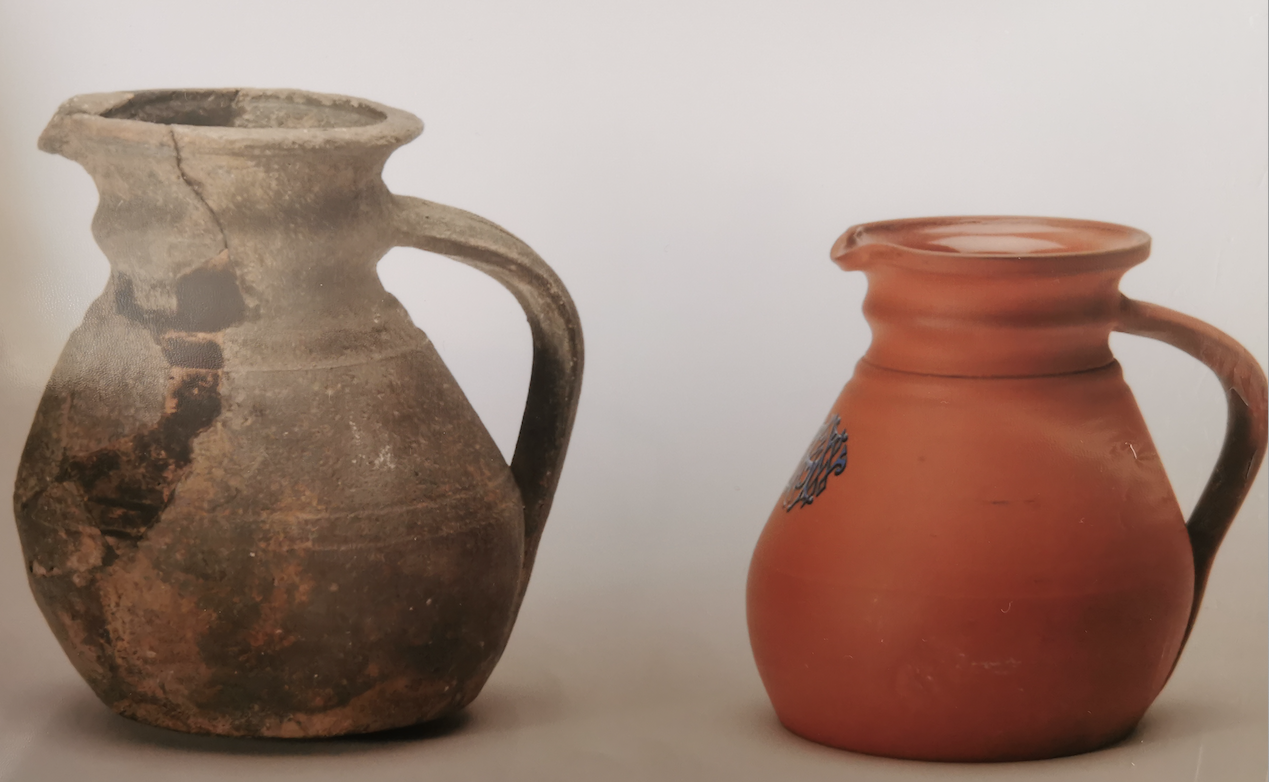
Cambridge Ale Jug replica
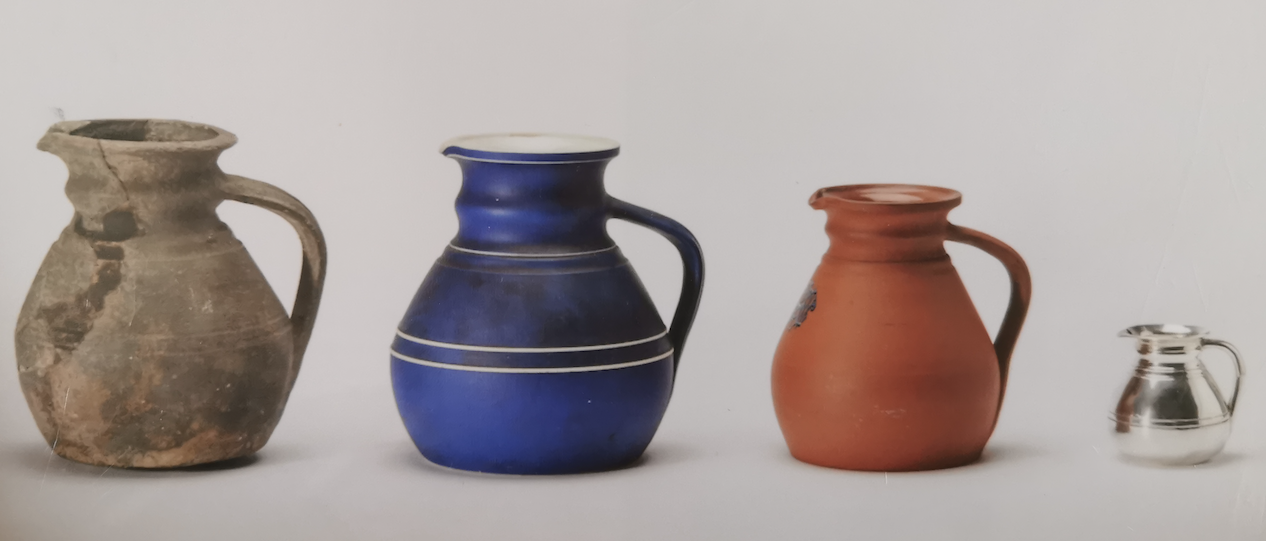
Cambridge Ale Jug replicas
1871
William H Hattersley, 52, grocer china glass dealer (empl. 8 persons), b Ely
Ann Edwards, friend, 68, widow, housekeeper, b Godmanchester
G W Hattersley, nephew, 16, clerk, b Stafford
Elizabeth Stubbings, 19, cook, b Gt Wilbraham
Esther Webb, 19, housemaid, b Cambs
William Maul, 14, house boy, b Cambridge
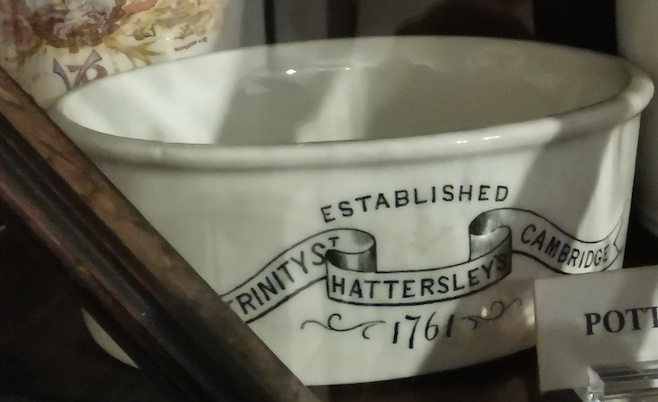
5 – 6 Trinity Street, Hattersley’s © Museum of Cambridge
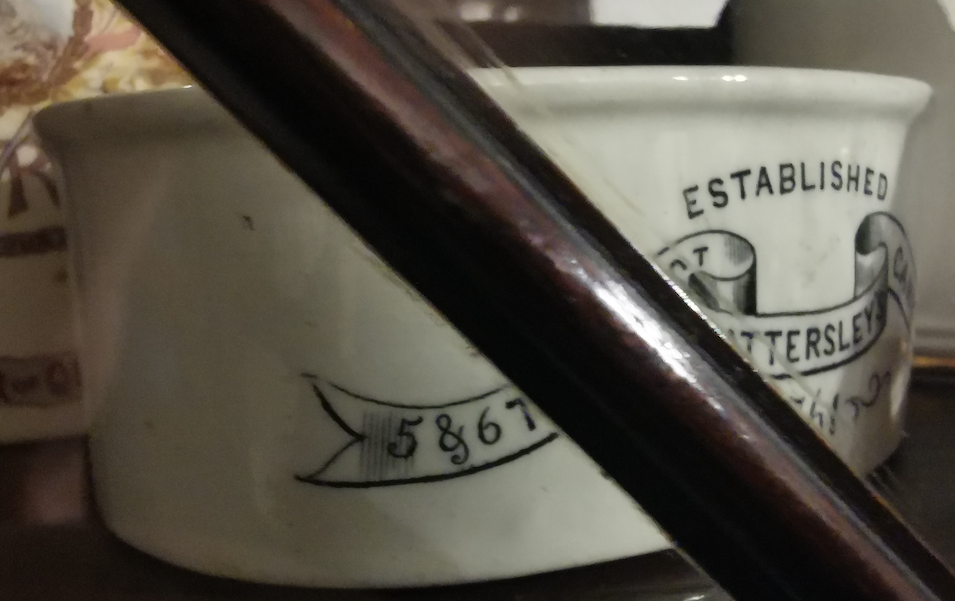
5 – 6 Trinity Street, Hattersley’s © Museum of Cambridge
1877
The Hattersley family moved to Camden House. Family notes state that W H Hattersley was described as ‘an intelligent and culture man, a friend of his neighbours in Trinity Street, the booksellers Alexander and Daniel Macmillan.’ He was particularly interested in the School of Art for which he raised a large sum of money. he was a patron of Charles Brock who became an illustrator of Macmillan’s books. he served on the committee of the Free Library, was on the board of Addenbrooke’s Hospital and had a deep concern for the Waifs’ and Strays’ Home.
William Hatchett Hattersley was a benefactor of St Mary’s. His family lived from 1877 to 1917 at Camden House, on Parker’s Piece.
1881
1888
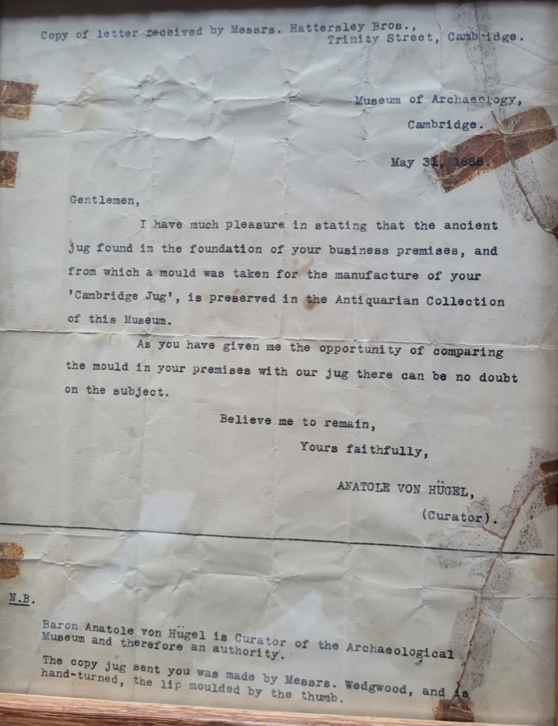
1888 letter from Anatole von Hugel re Cambridge Jug
1891
Gilbert Woollard Hattersley, 36, grocer, b Staffs
Hermine A R, 30, b Germany
Gilbert R, 6,
Harold W, 4,
Ada Brown, 21, servant,
Emma Brown, 20
1901
Gilbert Woollard Hattersley
Hermine Roeper
Gilbert Roeper
Harold Woollard
May Murdoch, cook
Kate Dilley, servant
In 1911 the family were living at Camden House
1911
(5)
Frederick Johnson, 37, college servant, b Wicken
Sophia, 37, b Wicken
Reginald, 14, b Chesterton
1913
Hattersley Bros., grocers, china, glass, and lamp depot, wine, spirit, and bottle beer merchants
Projects
Contribute
Do you have any information about the people or places in this article? If so, then please let us know using the Contact page or by emailing capturingcambridge@
Licence
This work is licensed under CC BY-NC-SA 4.0